Yes, memorial photo plaques can gradually change or fade over a long period, particularly when they are exposed continuously to sunlight, rain, frost and changing temperatures. However, high-quality memorial plaques are specifically produced for outdoor use, so significant fading should not be expected in the same way as it might be with an ordinary printed photograph.
The lifespan and appearance of a memorial photograph depend on several factors, including the plaque material, manufacturing process, image quality, position on the memorial and level of environmental exposure.
Somerville Stone offers ceramic photo plaques produced from photographs supplied by families, along with hand-etched and laser-etched image options. The company notes that high-quality memorial plaques are manufactured for outdoor exposure, although some gradual change can occur over a long period and direct sunlight can influence performance.
For families considering a photograph as part of a headstone, it is therefore useful to understand both what modern photo plaques can withstand and what may affect their appearance over many years.
How are memorial photo plaques different from ordinary photographs?
A memorial photo plaque is not simply a printed photograph placed outdoors.
Ordinary photo paper would quickly be affected by moisture, ultraviolet light and temperature changes. Memorial plaques instead use materials and production methods intended to cope with prolonged outdoor exposure.
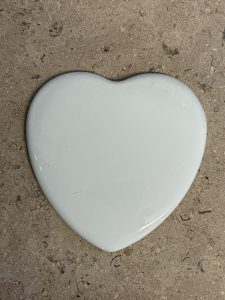
Somerville Stone produces ceramic photo plaques from customers’ original photographs. The original photograph is not altered during the process and is returned afterwards.
Ceramic or porcelain-style memorial photographs typically create a durable, smooth surface that can be attached securely to a suitable headstone.
Depending on the chosen format, a memorial image might be:
- Produced as a separate ceramic plaque
- Created in colour, black and white or sepia
- Laser etched directly into suitable dark stone
- Hand etched into the memorial surface
Each method creates a different appearance and ages differently.
A separate photo plaque can provide a highly recognisable portrait with natural colour, while etched imagery generally becomes part of the stone itself.
Why can a memorial photo plaque fade?
A cemetery memorial is permanently exposed to outdoor conditions.
Even materials specifically designed for exterior use experience environmental stress over time.
Ultraviolet light
Direct sunlight is one of the most obvious influences on colour.
Ultraviolet radiation can gradually affect pigments and surface finishes in many materials. High-quality memorial plaque manufacturing is designed to minimise this problem, but the amount of direct sunlight a memorial receives can still affect its long-term appearance.
A south-facing memorial in an open cemetery may receive considerably more direct sunlight than one positioned in a shaded churchyard.
Somerville Stone’s existing guidance explains that high-quality plaques are designed for outdoor exposure but that the quality of the product and degree of direct sunlight can affect how the image performs over a long period.
This is why it is difficult to give one precise number of years before any visible change occurs.
Rain and moisture
Rain itself should not damage a properly manufactured outdoor memorial plaque under normal conditions.
However, constant wetting and drying places demands on the plaque, its surface and the way it is fitted to the memorial.
The fixing is particularly important.
If a plaque becomes loose or moisture finds its way behind a damaged fitting, deterioration may occur around the attachment even if the image itself remains intact.
Professional fitting therefore contributes to the overall longevity of the finished memorial.
Frost and temperature changes
British memorials experience repeated changes between cold winters, warmer summers and daily temperature fluctuations.
Materials naturally expand and contract slightly as temperatures change.
A properly manufactured plaque and suitable fixing system should be selected with outdoor conditions in mind, but cracks or physical damage can make a plaque more vulnerable.
This is one reason why a damaged plaque should be assessed rather than left indefinitely.
Do ceramic memorial photo plaques last well outdoors?
Ceramic photo plaques are specifically intended to create a permanent or very long-lasting photographic feature on a memorial.
Their main advantage is that they allow families to retain the appearance of a conventional portrait while using a format designed for exterior conditions.
Somerville Stone currently offers memorial photo plaques as part of its memorial range and describes ceramic plaques as an option that can be fixed to a memorial using an original photograph supplied by the customer.
A good plaque should remain clear for many years, but “outdoor resistant” should not be interpreted as meaning that no physical change could ever occur.
Cemetery memorials can remain in position for generations. Over such long periods, some gradual alteration in colour, gloss or surface appearance is possible.
The better question is therefore not whether a plaque will remain absolutely identical forever, but whether it has been produced and fitted appropriately for long-term exterior use.
Does the quality of the original photograph matter?
Very much so.
The durability of the plaque and the visual quality of the photograph are separate issues.
A plaque might remain physically sound for decades while still looking disappointing from the start if the supplied image is blurred, heavily compressed or poorly lit.
A strong source photograph makes it easier to create a clear and recognisable finished portrait.
Somerville Stone advises that a mobile phone image may be suitable where it is sharp, well lit and high resolution. The original image file is preferable to a screenshot or photograph copied from social media because compression can remove detail.
Before choosing an image, look closely at the face.
Ideally, it should be:
- Clearly in focus
- Large enough within the original image
- Evenly lit
- Free from heavy shadows across the face
- Taken at a sufficient resolution
- Representative of how family and friends remember the person
A professional memorial supplier may be able to crop the photograph or remove distracting background elements, but there is a limit to how much detail can be recovered from a poor-quality original.
Does colour fade faster than black and white?
The precise performance depends on the manufacturing process, so it would be misleading to assume that every colour plaque will necessarily fade faster than every monochrome one.
Colour, black-and-white and sepia photographs can all be suitable for memorial use.
The choice is often aesthetic.
A colour portrait can feel immediate and familiar, particularly where preserving the person’s appearance as remembered is important.
Black-and-white or sepia photographs can give the memorial a more restrained appearance and may complement traditional stonework particularly well.
Rather than choosing a finish solely because of concerns about fading, families should ask how the specific plaque is manufactured and whether it is intended for long-term exterior exposure.
Can photographs be etched directly into the stone instead?
Yes, depending on the chosen memorial material and design.
Somerville Stone offers both hand-etched and laser-etched images as alternatives to separate ceramic photo plaques.
Laser etching is particularly associated with polished dark granite because removing or altering the surface creates a light image against the dark stone.
This method can produce detailed monochrome portraits, landscapes and decorative artwork.
Because the image is created directly on the memorial, there is no separate plaque or fitting.
This changes both the appearance and the way the image ages.
An etched portrait does not rely on colour pigments in the same way as a colour photographic plaque. Instead, its longevity depends on the stone surface, depth or character of the engraving and environmental weathering.
For families who like highly detailed black-and-white imagery, engraving may therefore be worth discussing alongside ceramic plaques.
Where should a memorial photo plaque be positioned?
Position is partly an aesthetic decision, but it can also influence exposure.
A photograph is often positioned above or beside the principal inscription so that it becomes part of the overall memorial design.
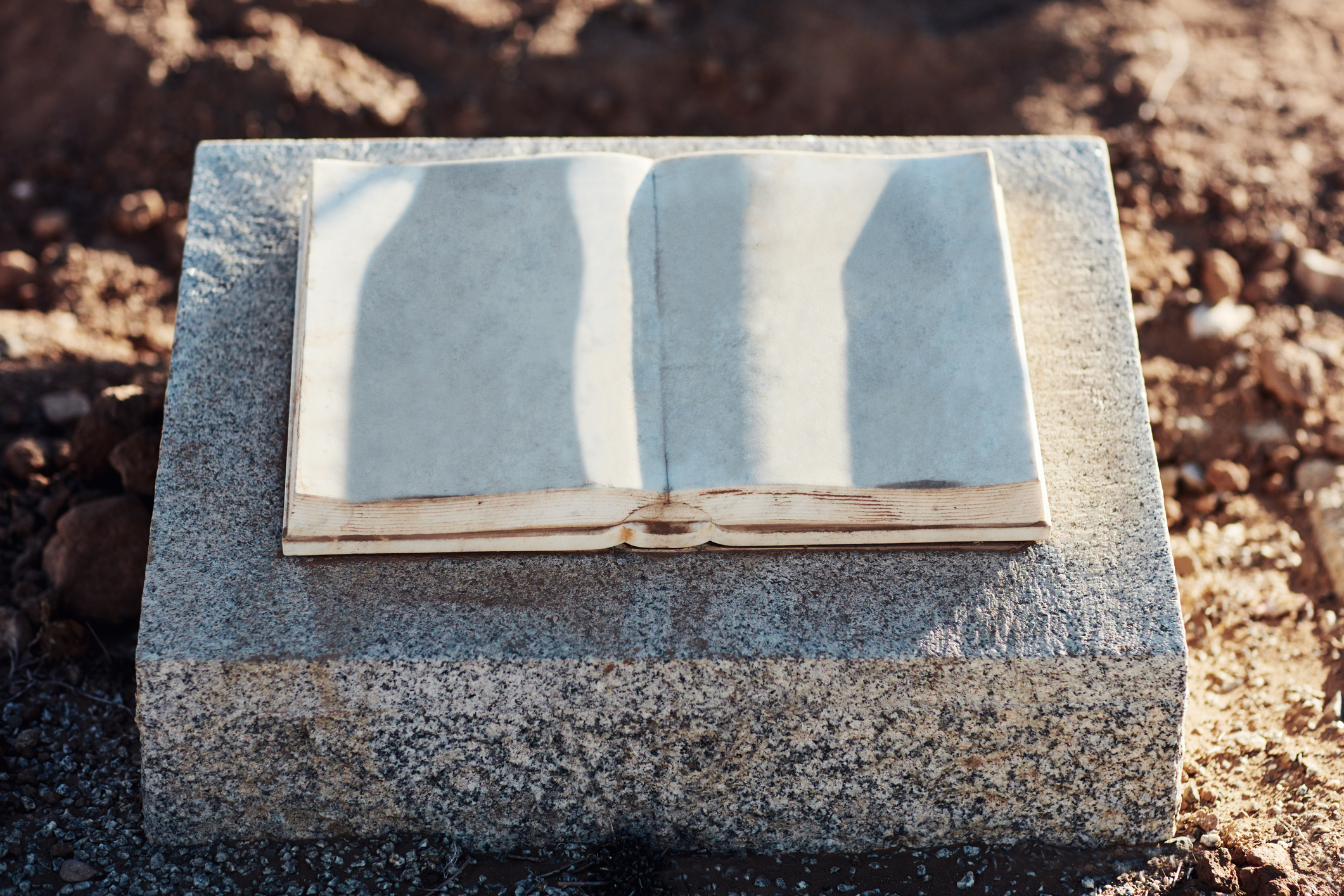
On a memorial book, one page might carry a photograph while the other contains the main inscription.
On an upright headstone, a smaller oval or rectangular plaque can sit above the name or within a deliberately reserved area.
The plaque should not look like an afterthought.
Somerville Stone’s guidance on photo plaques emphasises that photographs should be selected and positioned carefully, considering the image, plaque material, burial ground rules and long-term exposure.
A balanced layout also leaves enough room around the photograph for lettering to remain clear.
This becomes particularly important where a second inscription may need to be added to the memorial in future.
Can a faded or damaged photo plaque be replaced?
Usually, yes.
A memorial photo plaque is a separate component, so replacement may be possible if it becomes damaged or its appearance deteriorates significantly.
Somerville Stone advises that replacement is generally easier where the original digital photograph and plaque specifications have been retained.
Keeping the original photograph is therefore worthwhile even after the memorial has been completed.
Families may want to store:
- The highest-resolution version of the photograph
- Any edited version used for the plaque
- The plaque dimensions
- The chosen shape and finish
- A photograph of the finished memorial
If replacement is required many years later, this information can make it considerably easier to reproduce a similar result.
The headstone itself should also be checked before a replacement plaque is fitted.
If the existing plaque has been broken by impact or movement, it is sensible to confirm that the memorial remains structurally sound.
What happens if the plaque becomes cracked?
Physical damage is different from gradual fading.
A crack may result from impact, accidental damage, vandalism or, less commonly, problems associated with the plaque or fixing.
A cracked plaque should be inspected rather than aggressively cleaned or repaired with general household adhesive.
The correct approach will depend on how it has been attached to the memorial and whether the underlying stone has also been damaged.
In many cases, replacement will produce a better and more durable result than trying to disguise a significant crack.
An experienced monumental mason can also check whether the original attachment method remains suitable.
How should a memorial photo plaque be cleaned?
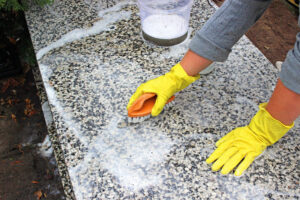
Gentle cleaning is generally the safest approach.
The plaque may collect dust, rain marks, algae or environmental deposits in the same way as the surrounding memorial.
Avoid treating it like an indoor ceramic object.
Abrasive scouring pads, strong household chemicals and metal brushes can damage surfaces or surrounding stone.
Pressure washing should also be avoided around memorial features unless a suitable professional method has specifically been recommended.
Use a soft cloth or similarly gentle cleaning method appropriate to the particular plaque, and seek professional advice if significant staining cannot be removed easily.
The intention should be to remove loose dirt rather than repeatedly scrub the surface until it appears completely new.
Do cemetery and churchyard rules allow photo plaques?
Not always.
This is an important consideration before a photograph is ordered.
Somerville Stone specifically advises that some churchyards do not allow photographic memorial features.
Burial ground regulations can govern much more than the overall size of a headstone. They may also restrict materials, finishes, ornamentation, photographs and additional fittings.
A photo plaque that is acceptable in one cemetery might therefore be refused in another.
Families should establish whether a photograph is permitted before finalising the memorial design.
This is particularly important in older churchyards, where regulations may aim to preserve a relatively traditional and consistent appearance.
Is a photo plaque suitable for every memorial?
Not necessarily.
A photograph can be extremely meaningful, but it should support the memorial rather than overwhelm it.
The size and shape of the headstone, amount of inscription text and other decorative elements all affect whether a plaque will fit comfortably.
A relatively small memorial containing a long inscription may have limited room.
Likewise, a headstone that already contains extensive carving may look visually crowded if a large photographic plaque is added.
In those cases, families may prefer a smaller portrait or consider etched imagery.
The person’s photograph should also feel like a natural part of the tribute.
Some families find a portrait deeply comforting, while others prefer remembrance to be represented through words, flowers, symbols or carved artwork.
There is no obligation to use a photograph simply because the option exists.
How can you help a memorial photo plaque age well?
Long-term performance starts with decisions made before installation.
Choose a product specifically intended for memorial and outdoor use rather than adapting an ordinary photographic item.
Supply the highest-quality original image available and review the final proof carefully.
Also think about how the photograph relates to the complete memorial. A plaque positioned with sufficient surrounding space is less likely to interfere with future inscriptions or other features.
Professional fitting matters too.
A plaque that is securely and appropriately attached has the best chance of remaining part of the memorial for many years.
Finally, keep the original digital image and details of the plaque. Even a high-quality memorial feature may eventually require replacement after decades of outdoor exposure or accidental damage.
Frequently Asked Questions
How many years will a memorial photo plaque last?
There is no universal lifespan because manufacturing quality, plaque material, sunlight and environmental exposure all affect performance. High-quality memorial plaques are specifically produced for outdoor use and should be expected to provide a long-lasting tribute, although gradual change can occur over an extended period.
Can an old photograph be used for a memorial plaque?
Often, yes. The result depends on the quality and condition of the source image. A clear original photograph or high-resolution scan will generally provide more usable detail than a small, blurred or heavily compressed copy.
Can a photo plaque be fitted to an existing headstone?
Potentially. The suitability depends on the memorial material, available space, condition of the stone and burial ground rules. The existing headstone should be assessed before the plaque is attached.
Memorial photo plaques are designed to endure outdoor conditions, but no feature exposed permanently to the British weather should automatically be assumed to remain completely unchanged forever.
High-quality ceramic plaques can provide a clear and recognisable portrait for many years, while laser and hand etching offer alternatives where families prefer the image to be incorporated directly into the stone.
The best results begin with a suitable photograph, a properly manufactured plaque, thoughtful positioning and professional installation. Burial ground regulations should also be checked before the final design is approved.
Somerville Stone produces ceramic memorial photo plaques from photographs supplied by families and can also provide hand-etched and laser-etched imagery. The team can advise on how a photograph can be incorporated appropriately into a new or existing memorial.
Phone: 02392 824457
Email: info@somervillestone.co.uk
Find out more: https://somervillestone.com/