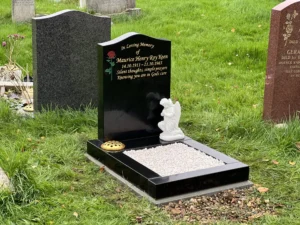
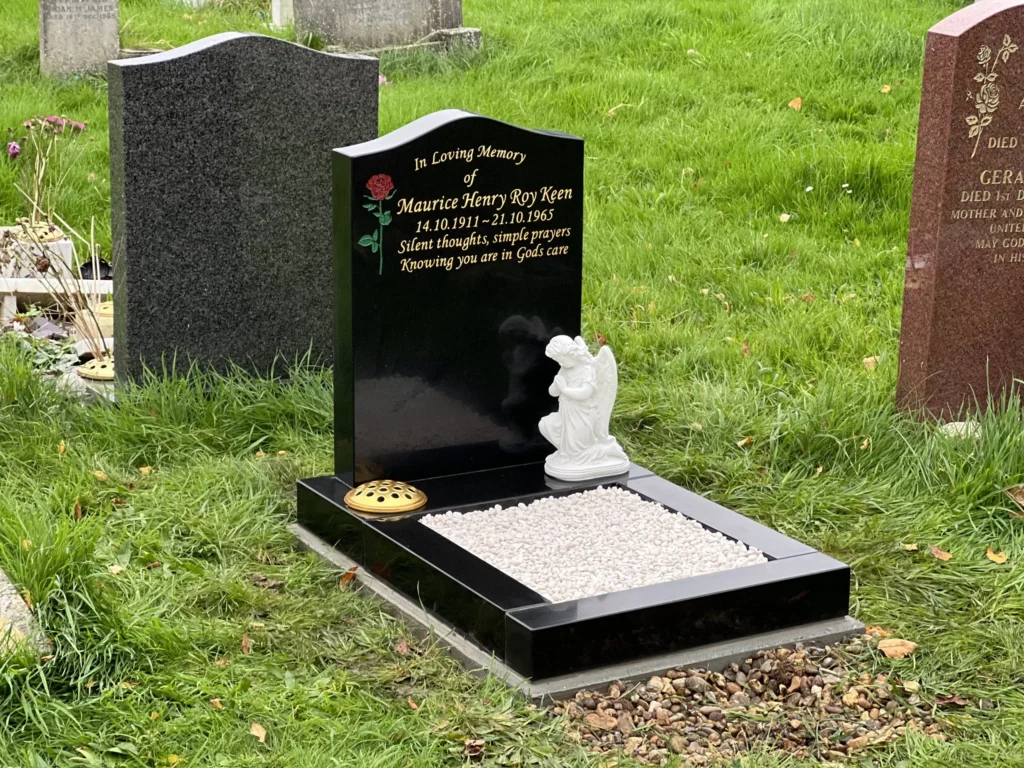
Families choose memorial kerb sets because they create a clearly defined, substantial and highly personal grave design. Unlike a headstone that marks only the head of a burial plot, a kerb set frames the grave itself and can incorporate features such as stone chippings, a cover slab, a planting area, a vase or additional inscriptions.
For some families, this fuller style of memorial feels more complete. It creates a dedicated place of remembrance and allows the entire grave space to form part of the tribute.
Memorial kerb sets also have strong traditional associations. They are commonly found in established cemeteries and family burial plots, where they can complement nearby memorials and help create a sense of continuity between generations.
However, kerb sets are not permitted in every burial ground. They also require careful design, suitable foundations and ongoing maintenance. Families should therefore consider both the emotional appeal and the practical responsibilities before placing an order.
What is a memorial kerb set?
A memorial kerb set is a group of stone sections installed around the perimeter of a grave. The kerbs form a defined border, usually extending from the headstone to the foot of the burial plot.
The basic structure often includes two long side kerbs and a shorter section across the foot. At the head of the grave, the kerbs may connect to an upright headstone, a base or another memorial feature.
Some designs are simple and low-profile. Others are taller, more decorative or combined with a large headstone and additional stonework.
A kerb set may include:
- An upright headstone
- A stone base
- Side and foot kerbs
- Corner posts
- Vases or flower containers
- A full or partial cover slab
- Decorative stone chippings
- A central planting area
- Additional inscription panels
The exact arrangement can be adapted to the family’s preferences and the burial ground regulations.
Why do kerb sets feel more substantial?
A headstone provides a focal point at one end of a grave. A kerb set defines the full burial space.
This can make the memorial feel more substantial because the grave is marked as a complete area rather than by a single upright stone. The defined boundary may create a stronger sense of place for visiting relatives and friends.
For some families, this matters emotionally. The kerbs can make the grave feel cared for, protected and clearly associated with the person being remembered.
A full grave design may also provide more visual balance when a large headstone is selected. The kerbs extend the memorial along the plot and connect the upright section with the rest of the space.
This does not mean a kerb set is necessarily more meaningful than a simple headstone. A small memorial can be equally personal. The appeal lies in the type of presence the family wants the grave to have.
Why are memorial kerb sets associated with tradition?
Kerbed memorials have been used for generations and are a familiar feature in many British cemeteries. Older family plots often contain substantial kerb surrounds, carved corner posts and decorative grave covers.
This traditional appearance appeals to families who want a memorial that feels established and formal. A kerb set can sit naturally among other historic or family memorials, particularly where similar designs already exist.
Some families also choose kerbs because previous relatives have been commemorated in the same way. Matching or complementing an existing family memorial can create a visual connection between graves.
The design does not have to be old-fashioned. Contemporary kerb sets can use clean lines, polished granite and restrained ornamentation. The traditional concept can therefore be adapted to suit both classical and modern preferences.
How can a memorial kerb set be personalised?
A major reason families choose kerb sets is the amount of design flexibility they offer.
A single headstone has a limited surface area. A full kerb memorial can provide additional space for inscriptions, decorative stonework, flowers and materials that reflect the individual.
Choice of headstone
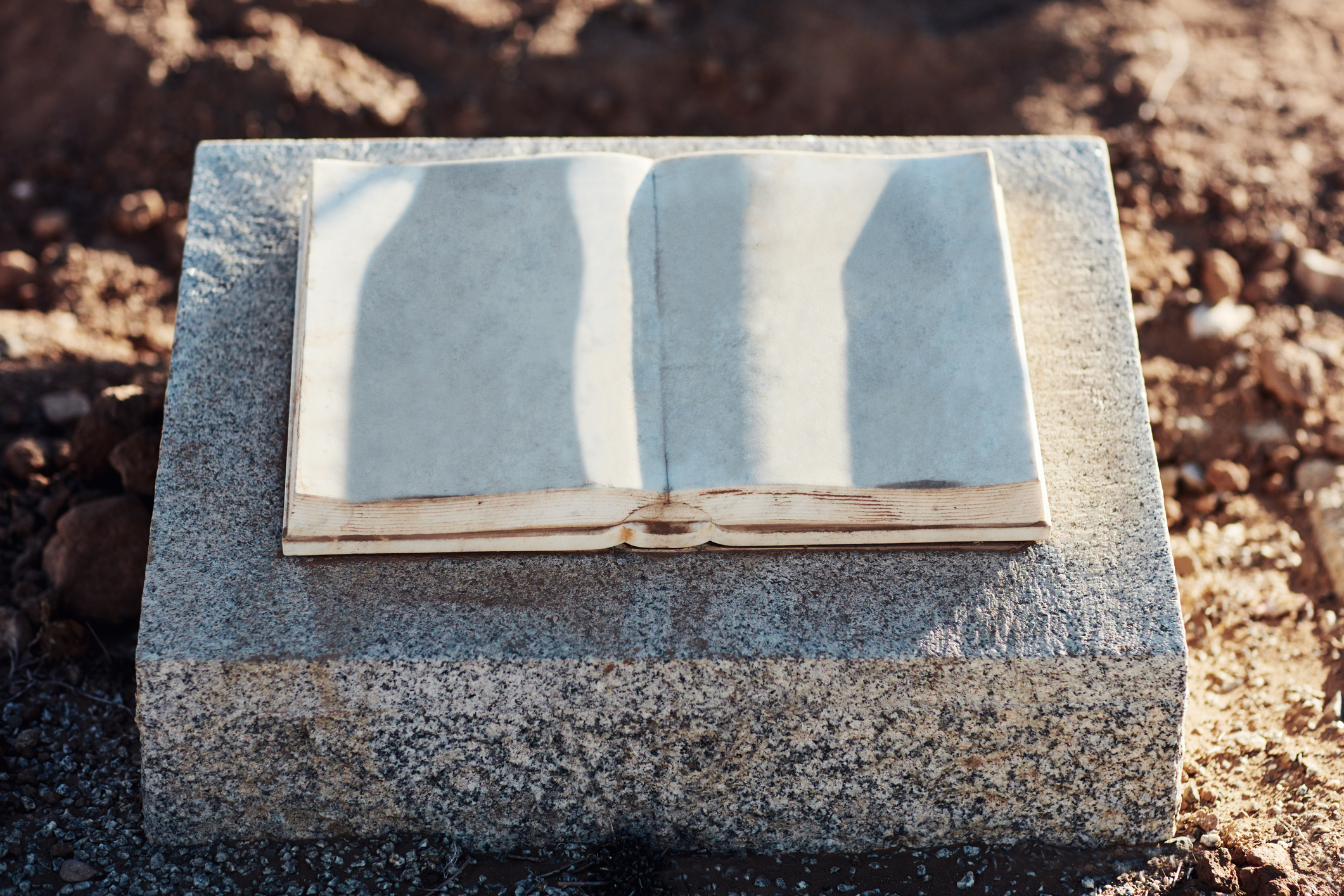
The kerbs can be paired with many headstone shapes, including rounded, heart-shaped, book-shaped, cross-shaped and rustic designs.
The headstone can remain the main focus, while the kerbs provide structure and visual continuity.
Additional inscription space
Names, dates, verses and dedications are usually placed on the headstone, but further inscriptions may sometimes be added to the base, foot kerb or separate plaques.
This can be useful for family graves containing several burials. Additional space may be planned for future names and dates.
The layout should be considered carefully from the beginning. Adding lettering without a clear plan can make the memorial appear crowded or uneven.
Decorative features
Kerb sets can include carved flowers, religious symbols, corner posts, moulded edges and other ornamental details.
A family might choose a particular flower, emblem or stone colour because it had personal significance. Decorative elements can also be repeated across the headstone and kerbs to create a consistent design.
Stone finishes
The surface may be polished, honed, rubbed, textured or left with a more natural appearance, depending on the material and burial ground rules.
A polished granite kerb set can look formal and highly finished. A less reflective natural stone may suit a traditional cemetery or churchyard setting.
Can memorial kerb sets include stone chippings?
Yes. Stone chippings are commonly placed within the area enclosed by the kerbs.
They provide a decorative surface and can reduce the amount of bare soil visible on the grave. Chippings are available in different colours and sizes, allowing families to complement the memorial stone.
White, grey, black and mixed natural tones are among the possible choices. The most suitable option will depend on the stone, surrounding memorials and cemetery rules.
Chippings can make the grave look neat, but they are not maintenance-free. Leaves, soil and plant growth may collect between the stones, and the chippings can gradually move or become discoloured.
A weed-resistant membrane may sometimes be placed beneath them, although this should be installed correctly and permitted by the cemetery.
Families should also consider whether very light chippings will remain clean in the location. Graves beneath trees or close to busy roads may require more frequent attention.
Can a kerb set include a planting area?
Many families choose a central planting area within the kerbs. This creates space for seasonal flowers, small plants or other appropriate memorial planting.
A planted grave can feel softer and more natural than a fully covered design. It also allows relatives to care for the plot and change the display throughout the year.
The planting area can occupy most of the grave or be limited to a smaller section near the headstone or foot.
Before planning this feature, families should check what the burial authority permits. Some cemeteries restrict the size or type of planting to simplify grounds maintenance.
The practical demands should also be considered. Plants need watering, pruning and replacement, and some species may spread beyond the kerbs.
Low-growing, manageable plants are usually more suitable than large shrubs or species with invasive roots.
What is a full cover slab?
A full cover slab is a large stone section placed over most or all of the grave space within the kerbs.
This creates a formal, finished appearance and reduces the amount of soil or planting that needs to be maintained. The slab may be flat, slightly raised or shaped to suit the overall design.
A cover can also provide additional space for ornamentation, plaques or carved details. Some designs include a raised central panel, decorative edging or integrated flower holders.
However, full covers make the memorial heavier and more complex to install. They require appropriate foundations and must comply with burial ground regulations.
Families should also understand that a covered grave may still need cleaning. Polished surfaces can show dust, water marks, leaf stains and organic growth.
Can kerb sets be used for cremation memorials?
Smaller kerbed designs are sometimes used for cremation plots, subject to the rules of the burial ground.
These mini kerb memorials create a defined space around a cremation tablet, book memorial or compact headstone. They may include chippings, a small planting area or a cover slab.
The dimensions are usually much smaller than those of a full burial plot. Because cremation sections are often laid out with uniform spacing, the cemetery may impose strict limits on size and design.
A mini kerb can be particularly suitable where two or more sets of ashes are to be commemorated together. The design may allow separate inscription areas while keeping the memorial visually connected.
Permission should always be confirmed before the stone is ordered.
Which materials are used for memorial kerb sets?
Kerb sets can be made from several natural stones, although granite is one of the most common choices.
Granite
Granite is hard, dense and available in many colours. It can be polished to create a formal appearance and is generally resistant to weathering.
Its strength makes it suitable for long kerb sections, bases and cover slabs. It can also support engraved or sandblasted inscriptions.
Granite is often chosen by families seeking a durable memorial with relatively straightforward maintenance.
Marble
Marble offers a pale, traditional appearance and can be shaped into decorative kerbs and carved details.
It generally weathers more visibly than granite and may develop a softer, aged surface over time. Families should understand its maintenance needs before choosing it for a large memorial.
Limestone
Limestone can suit traditional or understated designs. Its natural colour may blend well with older cemetery surroundings.
It is more porous than granite and will change in appearance as it is exposed to weather and biological growth.
Sandstone
Sandstone offers warm colouring and a natural texture. It may work well for rustic or less formal memorials.
The specific stone must be suitable for exterior use and strong enough for the intended dimensions.
The chosen material should be considered alongside the local environment. Coastal exposure, shade, frost and nearby trees can all affect how the stone ages.
Are memorial kerb sets allowed in every cemetery?
No. Many burial grounds restrict or prohibit full kerb sets.
Modern lawn cemeteries are often designed to allow mechanical grass cutting. They may permit only an upright headstone on a base, with no kerbs, covers or surrounding objects.
Traditional cemetery sections may be more flexible, while churchyards can have separate diocesan rules controlling materials, dimensions and finishes.
Even within one cemetery, different sections may have different regulations. A kerb set permitted in an older part of the site may not be allowed in a newer lawn section.
Families should obtain written approval before manufacturing begins. The application may need to include:
- Memorial dimensions
- Stone type and colour
- A drawing of the design
- The complete inscription
- Details of ornamentation
- Foundation and fixing information
- The memorial mason’s credentials
Ordering a kerb set before permission is confirmed can lead to delays, redesign costs or refusal.
When can a kerb set be installed?
Memorials are not normally installed immediately after a burial. The ground needs time to settle, and the cemetery may specify a minimum waiting period.
Kerb sets are particularly dependent on stable foundations because they cover a larger area and contain several connected stone sections.
Installing the memorial too early can increase the risk of movement, uneven joints or sinking.
The appropriate waiting period depends on the burial ground, soil conditions and type of foundation. The memorial mason should liaise with the cemetery and inspect the plot before arranging installation.
Weather can also affect the timing. Very wet, frozen or unstable ground may not be suitable for foundation work.
Families should view the process as a long-term construction project rather than a simple delivery. Accurate preparation is essential to the safety and appearance of the finished memorial.
What maintenance does a kerb set require?
Because a kerb set covers and surrounds a larger area than a headstone alone, it can require more upkeep.
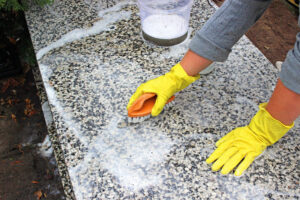
The stone surfaces may need periodic cleaning, particularly around joints, corners, lettering and decorative details. Chippings may need to be levelled or replaced, while planting areas require regular care.
Leaves, grass cuttings and soil can collect against the kerbs. If these materials remain damp, they may encourage algae, lichen or staining.
Families should avoid harsh household chemicals, wire brushes and uncontrolled pressure washing. The correct cleaning method depends on the stone and its condition.
The memorial should also be inspected for:
- Movement or leaning
- Opening joints
- Cracks or chipped edges
- Loose plaques or vases
- Deterioration around the foundation
- Unstable headstone fixings
A qualified memorial mason should assess structural concerns. Attempting to move or repair heavy stone sections without suitable equipment can be dangerous.
Are kerb sets suitable for family graves?
Kerb sets can be particularly appropriate for family graves because they provide a strong visual boundary and additional inscription space.
A family memorial may be designed to accommodate several names over time. The main headstone, base or foot section can be planned with future lettering in mind.
Matching materials and lettering styles can help maintain a consistent appearance as inscriptions are added.
However, future use must be discussed with the burial authority. The family should understand how many interments are permitted, whether the memorial will need to be removed temporarily and how additional lettering will be completed.
Planning from the beginning can avoid a situation where later inscriptions have to be squeezed into unsuitable spaces.
How much does a memorial kerb set cost?
The cost varies considerably because kerb sets range from simple surrounds to large, highly elaborate memorials.
The price may be influenced by:
- The stone type and colour
- The dimensions and thickness of the kerbs
- The size and shape of the headstone
- Whether a full cover slab is included
- The amount of carving or ornamentation
- The length and style of the inscription
- Cemetery fees
- Foundation requirements
- Delivery and installation
- Access to the grave location
A larger memorial uses more material and requires more labour to transport, prepare and install. Bespoke carving, corner posts and complex shapes can add further cost.
Families should request a complete written quotation. It should explain which fees are included and whether future lettering, cleaning or maintenance will be charged separately.
The cheapest quotation may not provide the same stone thickness, foundation method, craftsmanship or aftercare as a more comprehensive proposal.
What should families ask a memorial mason?
Before ordering a kerb set, families should ask practical questions about permission, design, installation and maintenance.
Useful questions include:
- Is this type of kerb set permitted in the chosen cemetery section?
- Which stones are suitable for the location?
- How will the memorial be founded and fixed?
- What is included in the quotation?
- Is space available for future inscriptions?
- How should the memorial be cleaned?
- What maintenance is likely to be required?
- Who will submit the cemetery application?
- How long should the family expect the process to take?
- Can examples of completed kerb sets be viewed?
A reputable memorial mason should explain the options clearly and avoid pressuring the family into choosing a larger or more elaborate design than they need.
Frequently Asked Questions
Can flowers be placed inside a memorial kerb set?
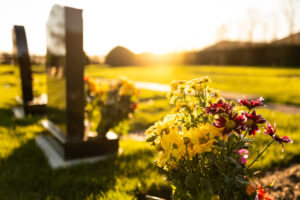
Yes. Families may use integrated vases, flower containers or a central planting area, subject to cemetery regulations. Flowers should be arranged so they do not interfere with surrounding graves or grounds maintenance.
Can chippings be changed later?
In most cases, decorative chippings can be removed and replaced. The family should choose a suitable material and check whether the cemetery has restrictions on colours or loose stone.
Can a kerb set be added to an existing headstone?
It may be possible, but the existing memorial, foundations and grave dimensions must be assessed. The burial authority will also need to approve the alteration.
Are kerb sets harder to maintain than ordinary headstones?
They usually require more attention because there is more stone surface, more joints and a larger enclosed area. Chippings, planting and cover slabs each have different maintenance needs.
Can two graves share one kerb memorial?
Some double or family grave arrangements can incorporate shared stonework, but this depends on plot ownership, cemetery rules and the available space. The design must be approved before work begins.
Choosing a memorial kerb set with confidence
Families often choose memorial kerb sets because they provide a complete, clearly defined and highly personal grave design.
They can combine an upright headstone with kerbs, chippings, planting areas, cover slabs, vases and additional inscription space. This flexibility allows the memorial to reflect personal taste, family tradition and the character of the person being remembered.
A kerb set can also create a lasting place for relatives to visit and care for. Its presence may feel formal, protective and substantial.
However, these memorials require more planning than a standard headstone. Cemetery permission, foundation design, stone selection, maintenance and future inscriptions all need to be considered.
The most successful kerb memorials balance visual impact with practicality. They suit the burial plot, comply with local regulations and provide a dignified tribute without becoming unnecessarily complicated.
For guidance on memorial kerb sets, natural stone options and personalised grave designs, contact Somerville Stone on 02392 824457, email info@somervillestone.co.uk, or visit Somerville Stone. The team can help you explore suitable designs and understand the requirements of the chosen burial ground.