Adding a photo plaque to a memorial can make the tribute feel more personal, recognisable and emotionally meaningful. Names, dates and carefully chosen words remain central to most headstones, but a photograph can add another dimension by showing the person as their family remembers them.
For many visitors, seeing a familiar face creates an immediate connection. It can bring back memories of a smile, an expression or a particular period in the person’s life. This may be especially important for younger relatives or future generations who did not have the opportunity to know them personally.
Photo plaques can be added to many types of memorial, including upright headstones, cremation tablets, memorial books, kerb sets and smaller family markers. They are available in different shapes, sizes and finishes, allowing families to choose an option that complements the stone rather than overwhelming it.
However, a memorial photograph should be selected and positioned carefully. Image quality, plaque material, burial ground regulations and long-term exposure all need to be considered before a final design is approved.
Why do families add a photograph to a memorial?
A written inscription records essential details, but it cannot always communicate the individuality of the person being remembered. A photograph can capture something more immediate.
The image may show a characteristic smile, a calm expression or the way the person presented themselves in everyday life. This helps the memorial feel connected to a real individual rather than functioning only as a formal grave marker.
Families often choose photo plaques because they can:
- Make the memorial feel more personal
- Help visitors recognise the person immediately
- Preserve a familiar image for younger generations
- Complement a meaningful inscription
- Create a visual connection between several family memorials
- Reflect a particular stage or memory from the person’s life
The photograph does not have to be formal. Some families prefer a portrait taken for an official occasion, while others choose a relaxed image that better reflects the person’s character.
The most meaningful choice is usually the image that feels most recognisable to those closest to them.
How can a photo plaque make a tribute more personal?
Personalisation is about making the memorial specific to one individual. Stone colour, shape, lettering and ornamentation all contribute to this, but a photograph provides a direct visual representation.
A photo plaque can help distinguish the memorial from standard designs, particularly where cemetery regulations limit the available shapes, finishes or wording.
For example, two headstones may follow the same permitted dimensions, but the addition of a carefully chosen portrait can give one a much stronger personal identity.
The image can also work alongside other features. A memorial may include a photograph with carved flowers, a religious symbol or wording that reflects the person’s role within the family.
A balanced design might combine:
- A portrait above the inscription
- A small image beside a floral carving
- A photograph on one page of a memorial book
- Separate portraits on a joint memorial
- A plaque centred within a heart-shaped panel
The aim should be to create a coherent tribute. The photograph, inscription and ornamentation should support one another rather than competing for attention.
How can memorial photographs support future generations?
One of the strongest benefits of a photo plaque is its value to people who visit the memorial many years later.
Children, grandchildren and later descendants may know the person through family stories but have few opportunities to see physical photographs. A memorial image can preserve a visible connection in a place dedicated to remembrance.
This can help a grave become part of a family’s shared history. Visitors can connect a name and date with a face, making the person feel more present within the family narrative.
This may be especially significant on older family memorials containing several names. Without photographs, later generations may find it difficult to understand the relationships between those commemorated.
A photo plaque can provide a simple visual record, although families should also preserve original images separately. A memorial plaque is not a replacement for a family photograph archive, but it can serve as a lasting public tribute.
What types of photo plaques are available?
Memorial photographs can be produced using several methods. The most suitable option depends on the memorial material, desired appearance and level of detail.
Ceramic and porcelain photo plaques
Ceramic and porcelain plaques are among the most familiar choices. The photograph is reproduced onto a weather-resistant surface and fired or sealed as part of the manufacturing process.
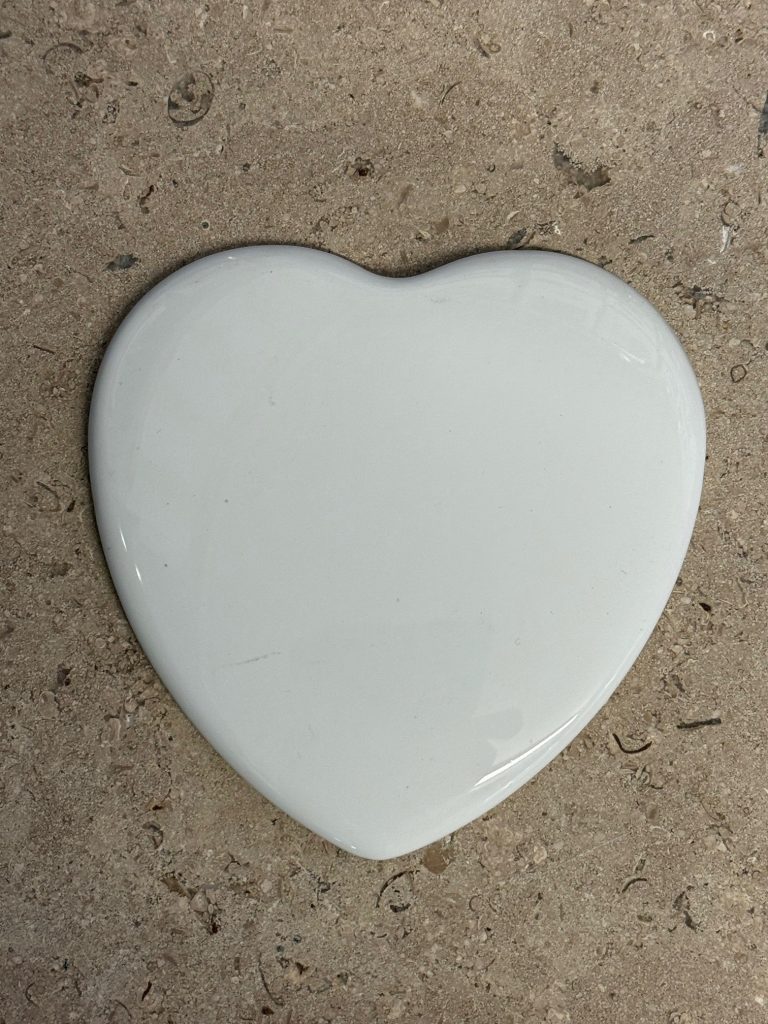
These plaques are often oval, rectangular, round or heart-shaped. They can be produced in colour, black and white or sepia tones.
A ceramic plaque provides a distinct framed image that can be attached to granite, marble and other suitable memorial stones.
Its smooth surface can create a clear, polished appearance. Frames are sometimes available in metal-effect or decorative finishes, although all fittings should be suitable for long-term outdoor use.
Enamelled memorial photographs
Enamelled images are created to withstand outdoor exposure and can provide strong colour and clarity.
They may be suitable for families who want a vibrant portrait or an image with visible background detail.
The final appearance will depend on the original photograph and production process. Very subtle colours or low-contrast images may not reproduce as strongly as expected.
Laser-etched portraits
Laser etching is commonly used on polished dark granite. The process creates the image directly on the stone surface rather than adding a separate plaque.
This can produce detailed monochrome portraits and scenes. Because the image is integrated into the memorial, there is no raised plaque edge or separate fitting.
Laser etching works particularly well when the contrast between the polished stone and the engraved image is strong. Black granite is often chosen for this reason.
Hand-etched images
A skilled craftsperson can create a portrait or image by hand on suitable polished stone. This method can offer a more interpretive and artistic result than a directly reproduced photograph.
Hand etching may be used to simplify a background, emphasise facial features or combine several visual references into one design.
It requires specialist skill and is likely to cost more than standard production methods.
Which photographs work best?
The quality of the original image has a major effect on the finished plaque.
A clear, well-lit photograph with a visible face will usually produce the strongest result. The subject should not be too small within the frame, especially if the final plaque is compact.
An ideal photograph generally has:
- Good focus
- Clear facial detail
- Balanced lighting
- Strong contrast between the person and background
- Sufficient resolution
- No major damage or heavy fading
- A natural and recognisable expression
Professional portraits can work well, but they are not essential. A carefully chosen family photograph may be more meaningful even if the background needs to be removed or adjusted.
Images taken from a great distance are more difficult to enlarge. Similarly, photographs with heavy shadows, reflections or motion blur may lose detail when reproduced.
The memorial supplier should assess the image before production and explain whether retouching, cropping or background removal is recommended.
Can an old or damaged photograph be used?
In many cases, yes. Older photographs can sometimes be restored digitally before being transferred to a plaque.
Common improvements include:
- Removing scratches or dust marks
- Repairing small tears
- Adjusting brightness and contrast
- Cropping distracting background areas
- Converting the image to black and white
- Sharpening facial details
- Combining suitable parts of more than one image
However, restoration has limits. A severely blurred or very small photograph cannot always be turned into a sharp portrait without creating artificial-looking detail.
Families should provide the best available original. A scan or digital copy should be made at high quality, and the physical photograph should be handled carefully.
It is also important to agree what level of alteration is acceptable. Some families want the image cleaned while retaining its original age and character. Others prefer a more polished finish.
The final proof should be reviewed carefully before the plaque is manufactured.
Where can a photo plaque be positioned?
The position of the plaque affects both appearance and readability.
On a traditional upright headstone, a photograph may be placed above the inscription, near one shoulder or between decorative elements. Central placement creates a strong focal point, while a smaller side position may feel more subtle.
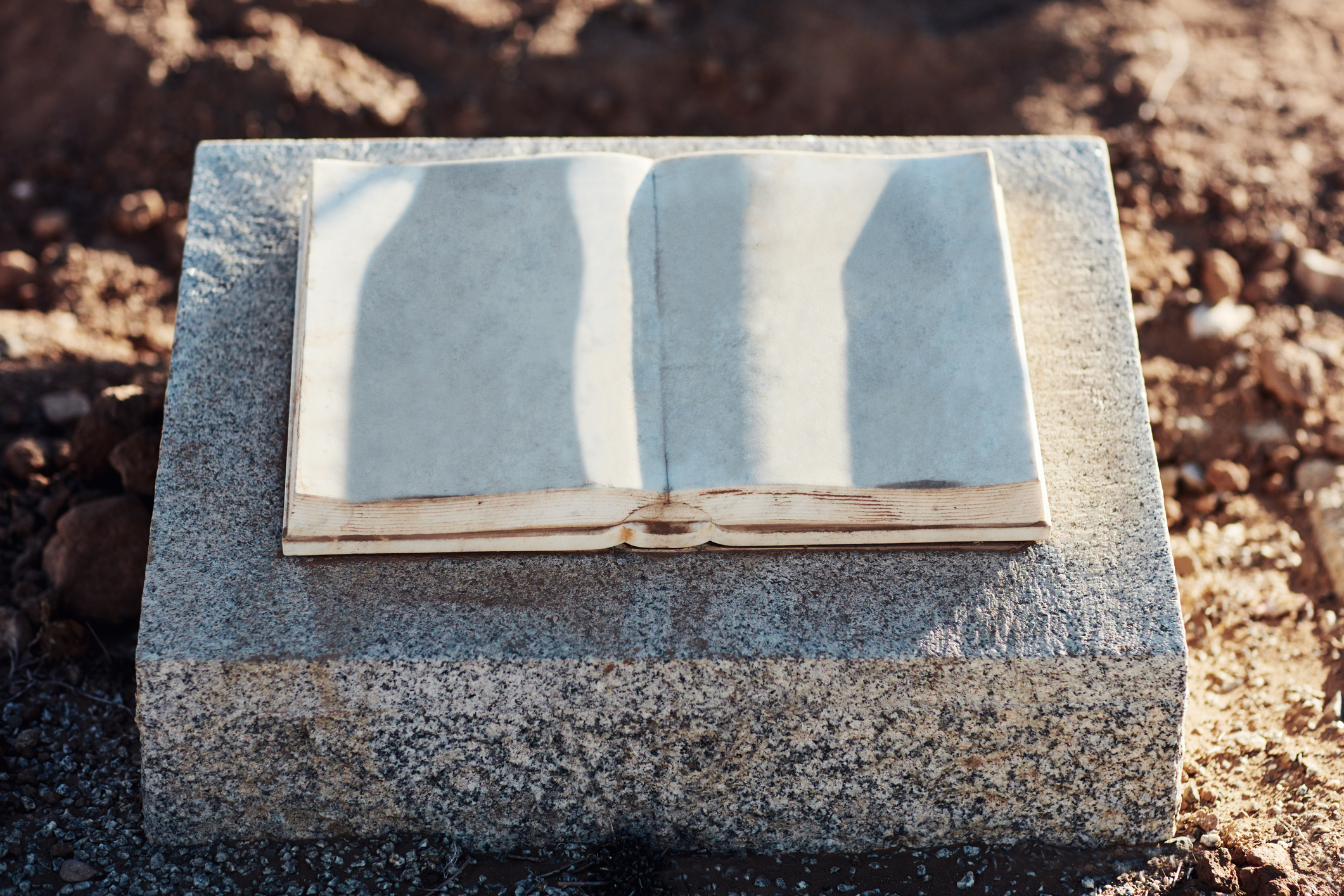
On a memorial book, the photograph can be placed on one page with the inscription arranged on the other. This creates a natural division between image and text.
A cremation tablet may have limited space, so the plaque needs to be proportionate. A small oval portrait can often be incorporated without reducing the lettering area too greatly.
Joint memorials may include two photographs. These can be positioned side by side, on separate pages or near the corresponding inscriptions.
The stone mason should prepare a scaled layout showing the plaque, lettering and ornamentation together. This helps the family judge whether the design feels balanced before work begins.
Can several people be included in one image?
Yes, but group photographs require careful consideration.
A picture of a couple may work well on a joint memorial, especially when both faces remain clear at the intended plaque size. A larger family photograph may become difficult to read once reduced.
The more people shown, the smaller each face will appear. Background objects and clothing patterns can also make the image feel visually crowded.
If a group photograph has strong sentimental importance, the supplier may be able to crop it around the most relevant people. In some cases, separate images can be combined into one composition.
This should be handled sensitively. The final image needs to look natural and respectful rather than obviously assembled.
For a memorial commemorating two people, separate individual portraits may provide better clarity than one group photograph.
How durable are outdoor photo plaques?
Purpose-made memorial photo plaques are designed for exterior use, but their longevity depends on quality, installation and exposure.
Ceramic and porcelain plaques are produced to resist rain, frost and sunlight. High-quality examples can retain their appearance for many years, although all outdoor materials will experience some environmental effects over time.
The location of the grave can influence how the plaque ages. Constant sunlight may gradually affect colour, while shaded and damp conditions can encourage surface deposits around the edges.
Coastal sites expose memorials to salt and wind. Cemeteries near busy roads may experience more atmospheric dirt.
The attachment method is also important. The plaque should be securely fitted using a system suitable for the memorial stone and the outdoor environment.
Poor-quality adhesives or unsuitable metal fixings can fail, stain the stone or allow moisture to enter behind the plaque.
Families should ask what guarantee applies to the image and fitting, and whether replacement is possible if accidental damage occurs.
Are photo plaques easy to maintain?
Photo plaques usually require only gentle cleaning, but the correct method should be confirmed with the supplier.
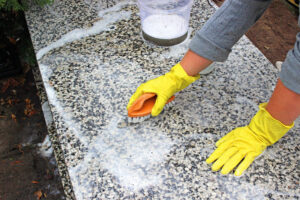
A soft cloth and clean water may be enough to remove light dirt. Abrasive pads, metal brushes and strong chemicals should be avoided because they can scratch the surface or damage printed detail.
Pressure washing should not be directed at the plaque or its edges. Excessive force can weaken the fitting or drive water behind it.
The surrounding stone may need a different cleaning approach from the photograph. Marble, granite, limestone and sandstone each respond differently to cleaning products.
Families should inspect the plaque periodically for:
- Cracks or chips
- Movement around the fitting
- Gaps at the edges
- Discolouration or staining
- Damage caused by grounds equipment
- Deterioration of a decorative frame
A loose or damaged plaque should be assessed by a memorial mason rather than removed without advice.
Are photographs permitted in every cemetery?
No. Cemetery and churchyard regulations vary.
Many local authority cemeteries allow photo plaques within specified dimensions. Others may limit the number, shape or position of photographs.
Churchyards can have stricter rules, particularly where the authorities aim to preserve a traditional appearance. A photograph may require special permission or may not be accepted at all.
Different sections of the same burial ground can also have separate regulations. A modern cemetery area may permit photographs while a historic section does not.
Families should confirm permission before ordering. The memorial application may need to show:
- The plaque dimensions
- Its proposed position
- Whether the image is colour or monochrome
- The frame design
- The complete memorial layout
Manufacturing a plaque before approval could lead to unnecessary cost if the design is refused.
Can a photo plaque be added to an existing memorial?
In many cases, a photo plaque can be added later.
The memorial must first be assessed to confirm that there is enough suitable space and that the stone is in good condition. The proposed position should not interfere with lettering, joints or structural features.
Permission may still be needed from the burial authority, even though the headstone is already installed.
The memorial mason should also check that the plaque will sit properly on the surface. Highly textured, curved or weathered stone may require a different fitting approach.
If the existing memorial has become unstable, structural work should be completed before adding decorative elements.
A scaled mock-up can help the family understand how the new plaque will affect the original design.
How much does a memorial photo plaque cost?
The cost depends on the size, shape, material, image preparation and installation method.
A standard oval ceramic portrait using a clear photograph may be relatively straightforward. A large custom-shaped plaque, restored historic image or hand-etched portrait will usually cost more.
Possible cost factors include:
- Digital image restoration
- Background removal
- Colour correction
- Bespoke plaque dimensions
- Decorative framing
- Multiple portraits
- Hand etching
- Cemetery application fees
- Fitting to an existing memorial
- Removal and refixing of the stone if required
Families should ask whether the quotation includes image preparation, a proof, manufacturing and installation.
It is sensible to review and approve the final image before production. Changes may not be possible once a ceramic or enamelled plaque has been made.
What should families consider before choosing a plaque?
A photograph can strengthen a memorial, but it should form part of a thoughtful overall design.
Families should consider whether the chosen image will remain meaningful over time. A heavily cropped or overly edited photograph may look modern now but feel less authentic later.
The plaque should also be proportionate to the memorial. A very large photograph can dominate the inscription, while one that is too small may be difficult to see.
It can help to ask:
- Does this image reflect how the person is best remembered?
- Is the face clear at the proposed plaque size?
- Does the photograph complement the stone and lettering?
- Is the plaque permitted in the burial ground?
- Is the material suitable for long-term outdoor exposure?
- Can the plaque be replaced if it is damaged?
- Has the final proof been checked by several family members?
Families should also check names, dates and wording at the same time. Seeing the full memorial layout together reduces the risk of one feature appearing out of place.
Can a photograph be combined with other personal details?
Yes. A photo plaque can sit alongside a range of other personalised elements.
A flower associated with the person may be carved beneath the portrait. A religious symbol can be positioned above it. A short phrase, nickname or family role may appear near the image.
Some families choose a photograph together with an engraved scene, such as a landscape, hobby or meaningful location.
These features should be used selectively. A memorial does not need to include every aspect of a person’s life. Too many images and symbols can reduce the impact of the most meaningful details.
A clear visual hierarchy is helpful. The photograph, name and main inscription should remain easy to identify.
Frequently Asked Questions
Can memorial photo plaques be produced in colour?
Yes. Many ceramic, porcelain and enamelled plaques can be made in full colour. Black-and-white and sepia finishes are also available and may complement traditional memorial materials.
Can a mobile phone photograph be used?
A mobile phone image may be suitable if it is sharp, well lit and high resolution. The original file should be supplied rather than a compressed screenshot or image copied from social media.
Will a photo plaque fade in sunlight?
High-quality memorial plaques are manufactured for outdoor exposure, but some gradual change may occur over a long period. The quality of the product and level of direct sunlight will affect its performance.
Can a broken memorial photograph be replaced?
Usually, yes. Replacement is easier if the original digital image and plaque specifications have been retained. The memorial should be checked before the new plaque is fitted.
Can a photo plaque be added to a marble headstone?
Yes, provided the marble is sound, the surface is suitable and the attachment method is appropriate. Cemetery approval may also be required.
Creating a more recognisable and lasting tribute
The main benefit of adding a photo plaque to a memorial is the personal connection it creates. A photograph allows visitors to see the person behind the name and can help preserve a familiar face for future generations.
Photo plaques can be used on many memorial designs and produced in colour, black and white or sepia. They may be attached as ceramic or porcelain plaques, etched directly into polished granite or created by hand for a more artistic result.
The strongest designs use a clear, meaningful photograph and position it carefully alongside the inscription. The plaque should suit the stone, comply with burial ground rules and be manufactured for long-term outdoor use.
Families should take time to select the image, review the proof and consider how the photograph will work as part of the complete memorial. When these details are handled thoughtfully, a photo plaque can turn a formal grave marker into a more immediate and deeply personal tribute.
For guidance on memorial photo plaques, personalised headstones and suitable natural stone designs, contact Somerville Stone on 02392 824457, email info@somervillestone.co.uk, or visit Somerville Stone. The team can help you explore respectful ways to incorporate a treasured photograph into a lasting memorial.