Modern memorial design offers far more scope for personalisation than simply choosing a headstone shape and inscription. Families can now incorporate flowers, religious symbols, landscapes, hobbies, animals and other meaningful images into a memorial, with computer-controlled engraving helping monumental masons reproduce complex designs accurately.
But can CNC engraving reproduce photographs and detailed artwork? The answer depends on what is meant by a photograph and the type of finish being sought.
CNC engraving is particularly effective for producing precise outlines, ornamentation, lettering and detailed artwork in stone. Highly complex designs can be translated into a format that guides computer-controlled machinery, allowing patterns and imagery to be reproduced consistently.
Photographic portraits are slightly different. A conventional photograph relies on thousands of subtle variations in light and shade rather than clearly defined lines. Reproducing this type of image may require specialist laser etching, hand etching or another technique designed specifically for tonal detail.
The right method therefore depends on the original image, stone and desired appearance.
What is CNC engraving on a memorial?
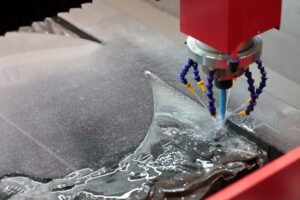
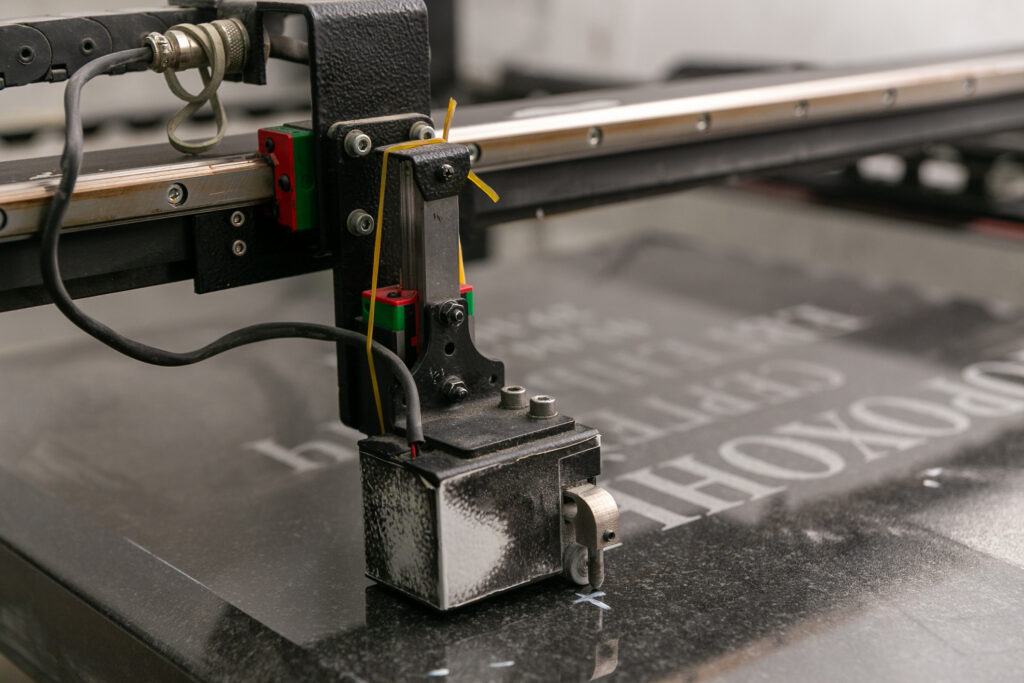
CNC stands for Computer Numerical Control.
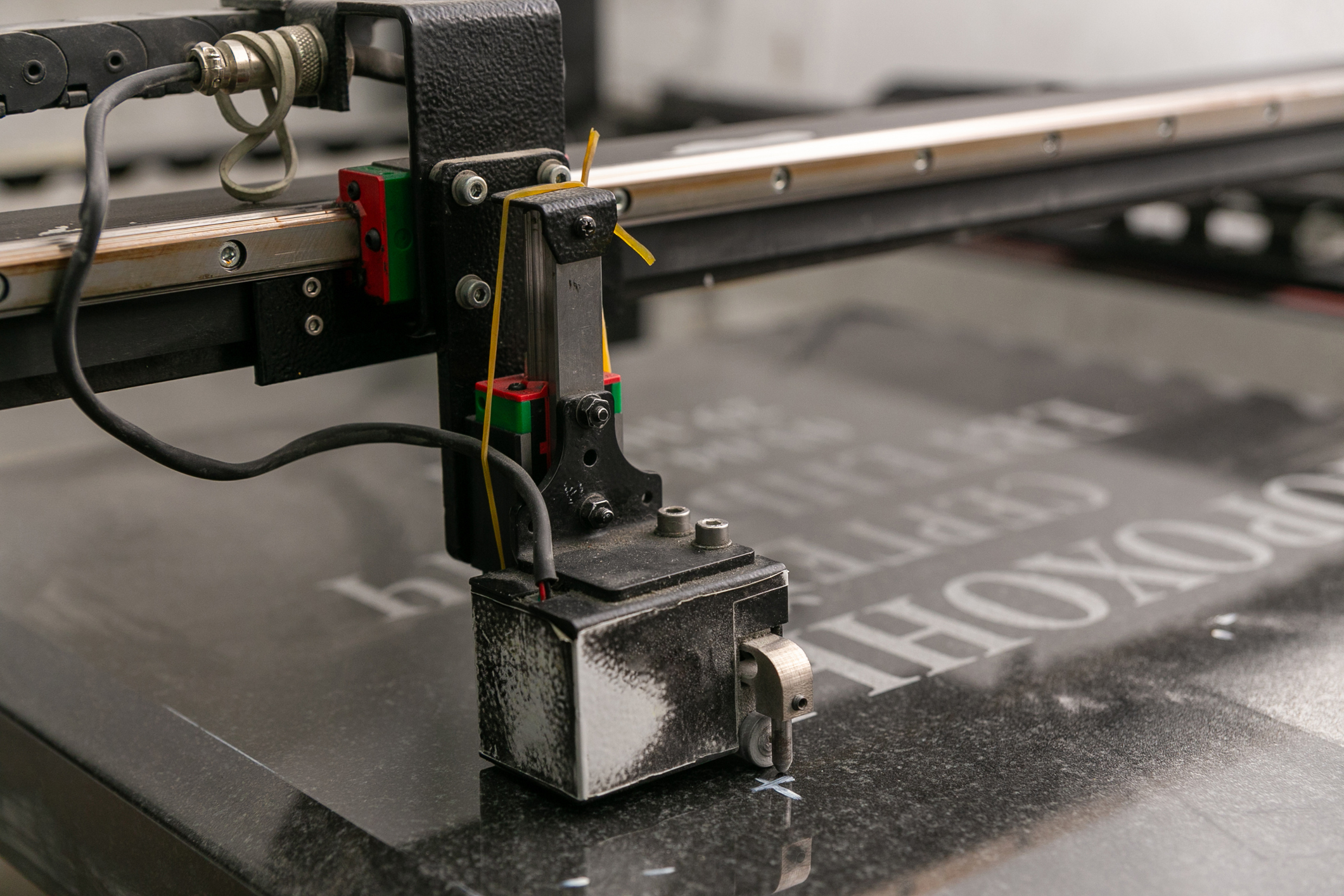
In simple terms, CNC equipment follows digital instructions to control the movement of machinery with a high degree of accuracy.
For memorial work, a design can first be prepared digitally and then translated into instructions that allow the equipment to create the required pattern in the stone.
Unlike freehand carving, where the mason develops the form directly with hand tools, CNC engraving follows a predetermined design.
This makes it particularly useful when precise lines, repeating elements or intricate ornamentation are required.
It can be used to help create features such as:
- Floral designs
- Borders and decorative patterns
- Religious symbols
- Animals and wildlife
- Hobby-related imagery
- Emblems and meaningful symbols
- Detailed ornamental artwork
The exact capability depends on the machinery, stone and intended depth of the finished design.
How does a design become a CNC engraving?
The process normally begins with an image or idea rather than the stone itself.
A family might provide a drawing, photograph of an object, existing design or explanation of something they would like incorporated into the memorial.
The design then needs to be adapted into a format suitable for engraving.
Preparing the artwork
Not every image can simply be sent directly to CNC machinery.
A photograph or illustration may contain backgrounds, shadows, tiny details and colour changes that do not translate effectively into engraved lines.
The artwork therefore often needs to be simplified.
For example, if a family wants a memorial to feature a favourite flower, the important elements may be the outline of the petals, stem and leaves rather than every variation in colour visible in the source photograph.
Removing unnecessary information helps create a cleaner engraved result.
Creating the digital design
Once the artwork has been refined, a digital version can be prepared.
The monumental mason can consider:
- Overall dimensions
- Position on the memorial
- Line thickness
- Level of detail
- Relationship to the inscription
- Depth of engraving
- Areas that need simplifying
This stage is important because something that looks excellent on a computer screen may not necessarily work at the same scale in stone.
Very fine lines can become difficult to distinguish, particularly when viewed from several feet away.
The design therefore needs to suit the physical memorial rather than simply reproduce every feature of the original artwork.
What types of detailed artwork work best?
CNC engraving is especially well suited to images with strong, recognisable shapes.
A design does not necessarily need to be simple, but it should have enough definition to translate clearly into engraved stone.
Floral designs are a good example.
A rose may contain many individual petals, but those petals can be represented using clear outlines and carefully controlled detail.
The same applies to leaves, trees, birds and many other natural forms.
Religious and cultural symbols
Crosses and other religious motifs can also be reproduced with considerable accuracy.
More elaborate designs may include ornamental borders or decorative patterns surrounding the central symbol.
For multi-faith memorials, appropriate symbols can potentially be incorporated where they are permitted by the burial ground and accurately reflect the wishes of the family.
Because CNC equipment follows a prepared design, proportions and symmetry can be controlled very carefully.
Hobbies and personal interests
Modern memorial artwork does not have to be limited to traditional flowers or religious imagery.
Families may want to represent an important interest or part of someone’s life.
Depending on the design, this could include imagery associated with music, gardening, sport, transport, animals, the countryside or a profession.
The challenge is deciding how much information is actually needed.
A recognisable silhouette or carefully simplified illustration can often communicate the idea more effectively than trying to reproduce an extremely complex scene in miniature.
Can CNC engraving reproduce a photograph?
This requires an important distinction.
A photograph is fundamentally different from line artwork.
Most photographs contain gradual tonal changes, including highlights, mid-tones, shadows, facial texture and background detail.
Traditional CNC engraving is generally strongest when it is following defined paths and shapes.
A photograph can sometimes be adapted into a more graphic design suitable for CNC work, but this may no longer look like a conventional photographic portrait.
For a highly realistic face, specialist etching techniques can often provide a more suitable result.
Laser-etched photographs
Laser etching is particularly useful for reproducing photographic detail on suitable dark polished stone.
Rather than carving the image as a series of conventional outlines, the process creates changes across the surface that form lighter and darker areas.
This allows much more subtle visual information to be represented.
From a normal viewing distance, these individual marks combine to create the appearance of a detailed monochrome image.
Portraits can therefore include features such as:
- Facial expressions
- Hair
- Clothing
- Highlights and shadows
- Subtle differences in tone
The technique can also work well for landscapes, buildings, vehicles and detailed scenes.
Hand-etched portraits
Hand etching offers another approach.
An experienced craftsperson develops the image manually, controlling the marks used to create light, shade and detail.
This gives the artist considerable freedom to interpret the photograph rather than relying entirely on an automated process.
The resulting portrait can have a distinctive artistic character.
For families considering a photographic memorial, the choice between laser etching, hand etching and another method should be based on the desired appearance rather than simply choosing whichever process sounds most advanced.
Does the original photograph need to be high quality?
Yes, particularly when realistic detail is required.
No engraving process can reliably recreate information that is not visible in the original image.
A small, blurred or heavily compressed photograph gives the person preparing the artwork much less information to work with.
For portrait engraving, a strong source image ideally has a clearly visible face, good focus and enough resolution to show important details.
Original digital files are generally preferable to screenshots taken from social media because online platforms often compress images.
However, families frequently need to work with older photographs.
An old print may be the only suitable image available, particularly when creating a memorial for someone who was photographed before digital cameras became common.
A good-quality scan can sometimes provide enough detail for an effective memorial image.
The best approach is to show the available photograph to the monumental mason before deciding on the final engraving method.
Which stone is suitable for photographic engraving?
The chosen stone has a major effect on how engraved artwork appears.
Dark polished granite is particularly associated with photographic laser etching.
The dark surface provides contrast when the engraving process exposes or alters lighter areas of the stone.
This allows detailed monochrome imagery to stand out clearly.
Black granite is therefore commonly considered where a family wants a portrait or highly detailed pictorial scene.
Other granite colours can also support engraving, but the amount of contrast may vary.
A design that appears extremely clear on black stone may be more subtle on lighter material.
The engraving method should therefore be considered at the same time as the stone rather than as an addition after the memorial has already been chosen.
Can CNC engraving reproduce very small details?
CNC equipment can achieve impressive precision, but that does not mean every tiny feature should be included.
There are practical limits determined by:
- The stone
- The engraving tool
- The depth of the design
- The size of the available area
- The intended viewing distance
- The complexity of the original image
A design that contains dozens of extremely fine overlapping lines may become visually confusing once reduced to fit a headstone.
This is where skilled design work remains important even though the machining process is computer controlled.
The strongest engraved memorials are not necessarily those containing the greatest possible number of details.
They are the ones where the right details have been selected.
Simplifying an image can actually make it more recognisable and give it greater visual impact.
Does CNC engraving make every memorial identical?
No.
CNC technology allows a design to be reproduced accurately, but the design itself can still be completely personal.
Families can work with a monumental mason to develop artwork around an individual idea rather than choosing only from standard templates.
The memorial might combine a personalised illustration with particular lettering, stone colour and inscription wording.
Even where an established ornament is selected, its size and placement can be adapted to suit the headstone.
Computer-controlled production therefore does not automatically mean mass-produced design.
It is a tool that can be used within bespoke memorial work.
How does CNC engraving compare with hand carving?
The two approaches create different visual effects.
Neither should be viewed simply as a more advanced replacement for the other.
CNC engraving
CNC engraving excels at precision.
It is well suited to controlled line work, symmetry, complex patterns and artwork that needs to follow an accurately prepared digital design.
Repeated decorative elements can also remain extremely consistent.
Hand carving
Hand carving gives the mason direct control over shape and depth.
A carved rose, leaf or other motif can develop a three-dimensional quality through differences in relief.
Small variations introduced by the craftsperson contribute to the individual character of the finished work.
Hand carving can therefore be particularly suitable for traditional memorials where craftsmanship and natural texture are central to the design.
Using different techniques together
A single memorial does not always have to rely on one decorative method.
Different processes can potentially be combined where each serves a clear purpose.
A memorial could, for example, use carefully controlled engraved ornamentation alongside traditionally carved elements.
The important consideration is visual consistency.
Adding several techniques simply because they are available can make a memorial feel crowded. Each element should contribute to the overall tribute.
How should detailed artwork be positioned on a headstone?
Position is as important as the quality of the artwork itself.
A highly detailed image can dominate a memorial if it is too large, while placing it in a small leftover space may prevent the detail from being appreciated.
The inscription usually remains the main source of information, identifying the person and recording the chosen words of remembrance.
Artwork should normally complement this rather than compete with it.
A design may work well:
- Above the inscription
- In one corner
- Alongside the wording
- As a central feature with text positioned around it
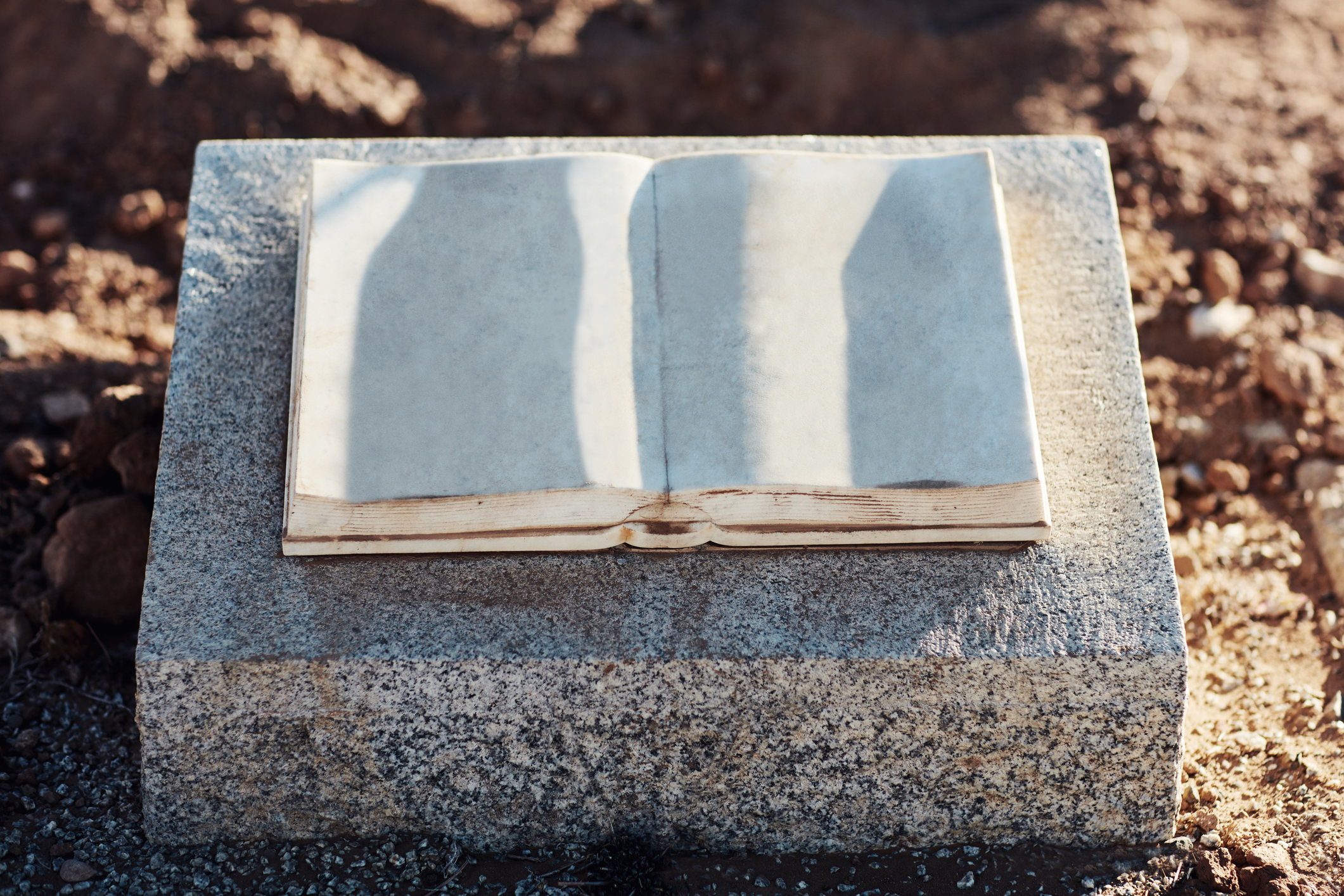
- On one side of a memorial book
- As part of a wider decorative border
Future inscriptions should also be considered.
If additional wording may be required later, sufficient blank space needs to remain available.
It is much easier to plan this at the beginning than to reorganise an already completed design several years later.
Are there restrictions on engraved artwork?
Potentially.
Cemeteries and churchyards can impose rules covering decorative imagery as well as the dimensions and materials of memorials.
Some locations are relatively flexible, while older churchyards may expect designs to remain more traditional.
Photographs, prominent imagery and particular symbols can sometimes require approval.
Families should therefore confirm what is permitted before commissioning extensive bespoke artwork.
The fact that a monumental mason is technically capable of producing a design does not automatically mean that the burial authority will approve it.
This is especially important for highly personalised memorials.
Checking the regulations early allows the design to be adapted before detailed production work begins.
Will CNC engraving last outdoors?
Engraving created directly in stone does not sit on the surface in exactly the same way as an ordinary printed image.
However, natural stone still changes gradually when exposed to outdoor conditions.
Rain, frost, pollution, biological growth and general weathering can alter its appearance over many decades.
The long-term visibility of an engraved design depends partly on how it has been created.
Strong, clearly defined artwork is generally easier to read as a memorial ages than extremely fine detail.
The material also matters.
A polished granite surface will weather differently from limestone or marble.
Families should therefore think about the appearance of a memorial over its whole lifetime, not only how impressive the detail looks when the stone is newly installed.
Frequently Asked Questions
Can a family photograph be turned into memorial artwork?
Often, yes. A photograph can potentially be used as the basis for an etched portrait or adapted into simplified artwork for engraving. The best technique depends on the quality of the photograph, stone and desired level of realism.
Is CNC engraving suitable for colour photographs?
CNC engraving itself produces a design in the stone rather than recreating the full colour information of an ordinary photograph. Families wanting a colour portrait may prefer a ceramic memorial photo plaque, while laser or hand etching can create detailed monochrome images.
Can handwriting or a personal drawing be reproduced on a headstone?
Potentially. Clear handwriting, drawings and other personal artwork can sometimes be converted into a suitable digital design for engraving. The original needs to contain enough definition, and the design may require adjustment so it works effectively at memorial scale.
CNC engraving has greatly expanded the range of detailed artwork that can be incorporated into modern memorials. Precise flowers, symbols, illustrations and other personalised designs can be prepared digitally and reproduced accurately in stone.
Photographs require a slightly different approach. While an image can sometimes be simplified into CNC-compatible line artwork, realistic photographic portraits are often better suited to laser or hand etching, particularly on dark polished granite.
The key is therefore to choose the process around the desired result.
A skilled monumental mason can assess the original image, recommend an appropriate stone and determine how much detail should be retained. This combination of digital technology and experienced memorial design allows families to create highly personal artwork without sacrificing clarity or balance.
Somerville Stone offers CNC ornament engraving alongside hand-carved, laser-etched and other personalised memorial options, helping families choose an approach suited to both the design and the stone.
Phone: 02392 824457
Email: info@somervillestone.co.uk
Find out more: https://somervillestone.com/