The latest trends in memorial design reflect a growing desire for tributes that feel personal, meaningful and connected to the life of the individual being remembered. Families still value traditional headstones and established forms, but many now want greater flexibility in the choice of stone, shape, ornamentation, inscription and finish.
Contemporary memorial design is not simply about creating something fashionable. A memorial must remain appropriate for its setting, comply with cemetery or churchyard regulations and continue to feel meaningful many years after installation.
Some of the most noticeable trends include more individual inscriptions, natural stone textures, carefully selected photographs, modern engraving techniques and designs that represent hobbies, beliefs or family relationships.
Traditional memorials also remain popular. Rather than disappearing, familiar forms such as crosses, books, heart-shaped stones and kerb sets are often being adapted with more personal wording and less formal decoration.
The strongest modern memorials tend to combine individuality with restraint. They reflect the person clearly without becoming overcrowded or dependent on short-lived visual fashions.
Why are memorials becoming more personalised?
In the past, families often selected from a relatively limited range of headstone shapes, inscriptions and standard ornaments. These designs provided dignified tributes, but they did not always reveal much about the person’s character or life.
Today, families are more likely to ask how the memorial can reflect the individual. They may want the stone to acknowledge a profession, interest, place, relationship or personal belief.
Personalisation can include:
- A favourite flower, tree or animal
- A symbol connected with a hobby or occupation
- A photograph or portrait
- A quotation with particular meaning
- An informal family name
- A landscape or local landmark
- A design based on the person’s handwriting
- Colours associated with a club, regiment or organisation
This shift does not mean every memorial needs to be elaborate. In many cases, one carefully chosen detail creates a stronger connection than several unrelated ornaments.
A simple carving of a garden flower may say more about someone who loved gardening than a large collection of generic decoration. Similarly, a short phrase regularly used by the person can feel more authentic than a long formal verse.
The trend towards personalisation is therefore less about adding more and more detail and more about choosing details with genuine significance.
Are families choosing less formal inscriptions?
Memorial inscriptions are becoming more varied and personal, although formal wording remains common.
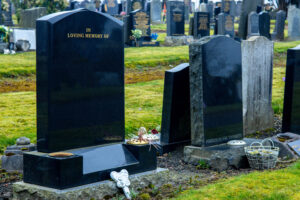
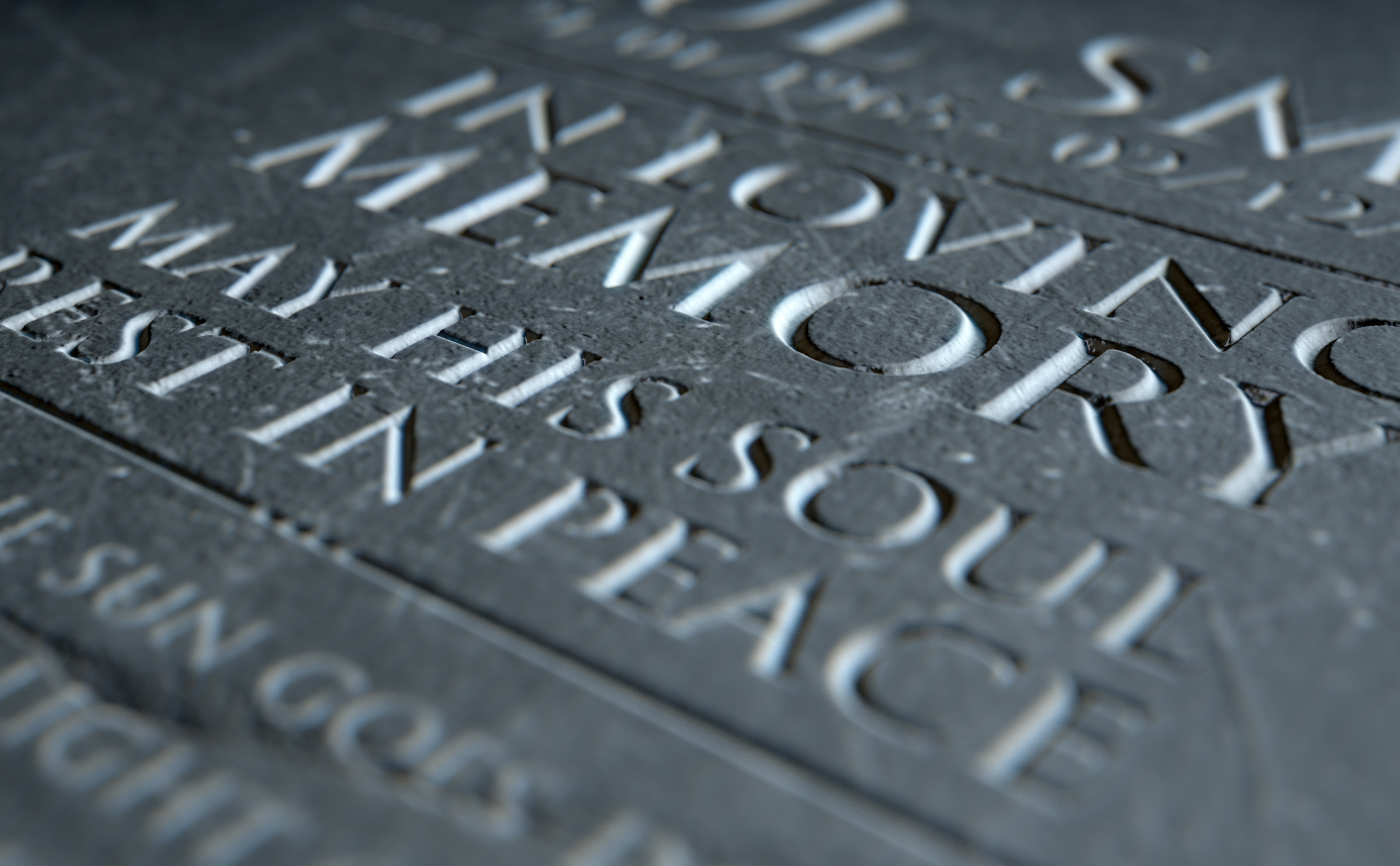
Traditional phrases such as “In Loving Memory” continue to be widely used because they are clear, dignified and familiar. However, families may now combine these words with affectionate names, references to family roles or a phrase that captures the person’s character.
A modern inscription might include a nickname used by relatives and friends, a short line from a favourite poem or a message written in a more conversational tone.
Families may also choose wording that acknowledges relationships more specifically. Rather than simply listing a name and dates, the inscription might describe the person as a much-loved parent, grandparent, partner, sibling or friend.
This can help the memorial feel warmer and more connected to those who visit it.
However, informal wording should still be considered carefully. A phrase that feels appropriate immediately after a death should also feel respectful and understandable decades later.
Churchyards and cemeteries may also regulate inscriptions. Some require formal approval for quotations, nicknames, symbols or wording that falls outside established conventions.
The best approach is to balance emotional authenticity with long-term meaning and the requirements of the burial ground.
Which headstone shapes are becoming popular?
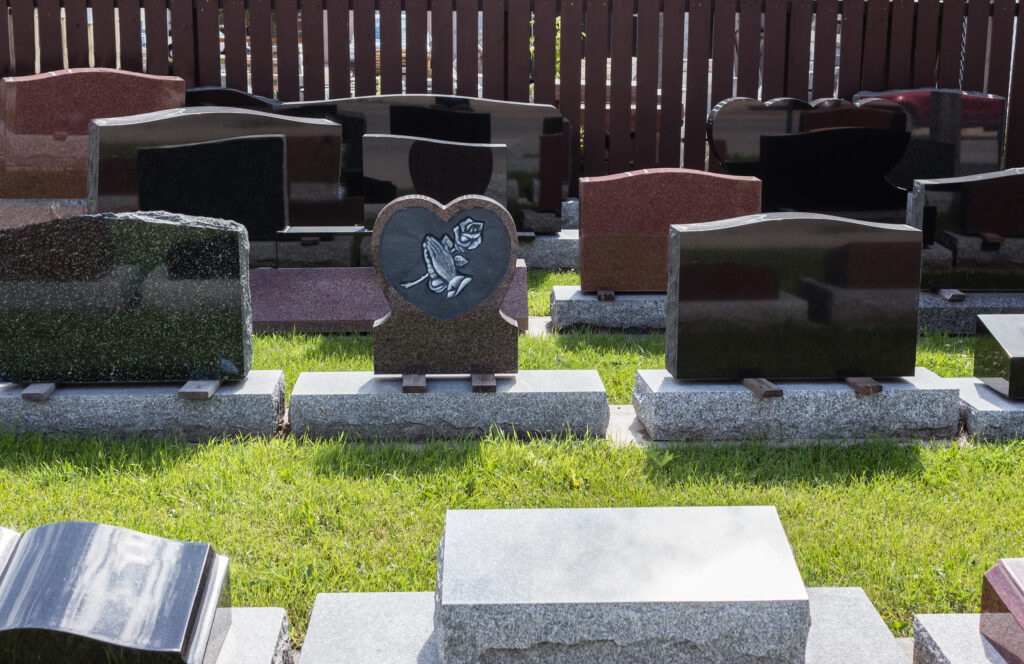
Traditional upright headstones remain the most common format, but families are increasingly exploring shapes that carry a particular symbolic meaning.
Heart-shaped memorials
Heart memorials continue to be popular because the form immediately communicates love and affection.
The heart may be used as the main headstone shape, incorporated into a larger design or carved as a smaller panel. Double-heart memorials can commemorate couples or two closely connected family members.
Modern versions often use polished granite, subtle floral decoration and carefully balanced lettering.
Book-shaped memorials
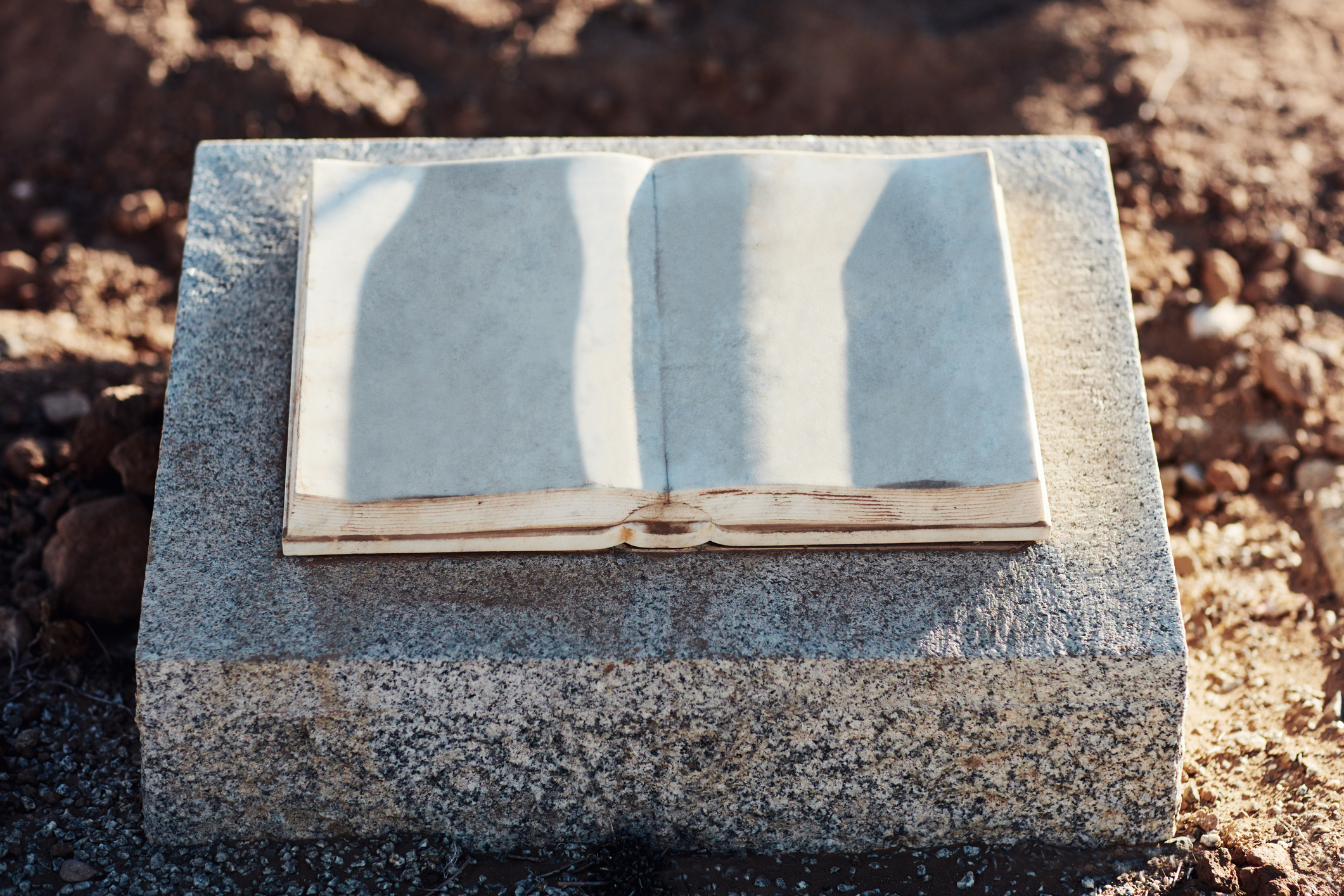
Open-book designs are popular for individual, joint and family memorials. The two pages provide separate areas for names, dates, verses and ornamentation.
The design can symbolise a life story, faith, learning or shared memories. It also provides a practical layout for two inscriptions.
Rustic and natural-edge stones
Natural-edge memorials are increasingly chosen by families who want a less formal appearance.
Rather than being cut into a completely symmetrical outline, the stone may retain an irregular edge or visible surface texture. This can suit people associated with nature, rural life, gardening or the outdoors.
Rustic designs often work well with simple hand-cut lettering and restrained carving.
Wave and asymmetrical shapes
Contemporary granite memorials may use flowing curves, waves or asymmetrical tops instead of a traditional rounded or square outline.
These forms can create a softer appearance while retaining a clean, modern finish.
The shape should still provide enough usable space for the inscription. An unusual outline can reduce the available lettering area if it is not planned carefully.
Compact cremation memorials
As cremation remains a common choice, smaller memorial formats continue to develop.
Sloping tablets, mini books, small hearts and compact kerbed designs can provide meaningful tributes within the dimensions permitted for cremation plots.
These memorials often use precise lettering and one carefully chosen image or symbol to make effective use of limited space.
Are natural finishes becoming more popular?
Yes. Although highly polished granite remains popular, there is growing interest in softer, more natural stone finishes.
A polished surface creates strong colour, clear reflections and excellent contrast for lettering. It can suit formal, contemporary and highly detailed memorials.
A honed, rubbed or textured finish has a quieter appearance. It may blend more naturally into a churchyard, woodland setting or older cemetery.
Natural finishes can also reveal more of the character of the stone. Grain, fossils, veining and tonal variation become part of the design rather than being hidden beneath a uniform polish.
Limestone, sandstone and some granites are particularly suited to understated finishes. Marble may also be selected for its pale colour and classical appearance.
Families are increasingly interested in how the memorial will sit within the wider landscape. A stone that looks impressive in a showroom may feel too reflective or formal in a historic churchyard.
The surrounding memorials, planting, architecture and burial ground rules should all influence the final choice.
How are photographs being used in modern memorials?
Photographs have become a familiar form of memorial personalisation.
Ceramic and porcelain photo plaques can reproduce a portrait in colour, black and white or sepia. Laser etching can create detailed monochrome images directly on polished dark granite.
Some families choose a formal portrait, while others prefer a relaxed photograph that captures the person’s familiar expression.
Photographs can also show couples, pets, meaningful places or important moments. However, smaller memorials may not provide enough space for a complex image.
The current trend is often towards careful integration rather than simply attaching a large portrait to the stone. The image may be placed within a carved panel, on one page of a book memorial or beside a restrained floral motif.
A well-positioned photograph can make a memorial immediately recognisable. It can be especially meaningful for younger relatives and future generations who may know the person mainly through stories.
Image quality remains important. Clear lighting, strong focus and visible facial detail produce better results than heavily cropped, blurred or low-resolution photographs.
Families should also check whether photographs are permitted. Churchyards in particular may place limits on images, colours and plaque styles.
What role does CNC engraving play in current memorial design?
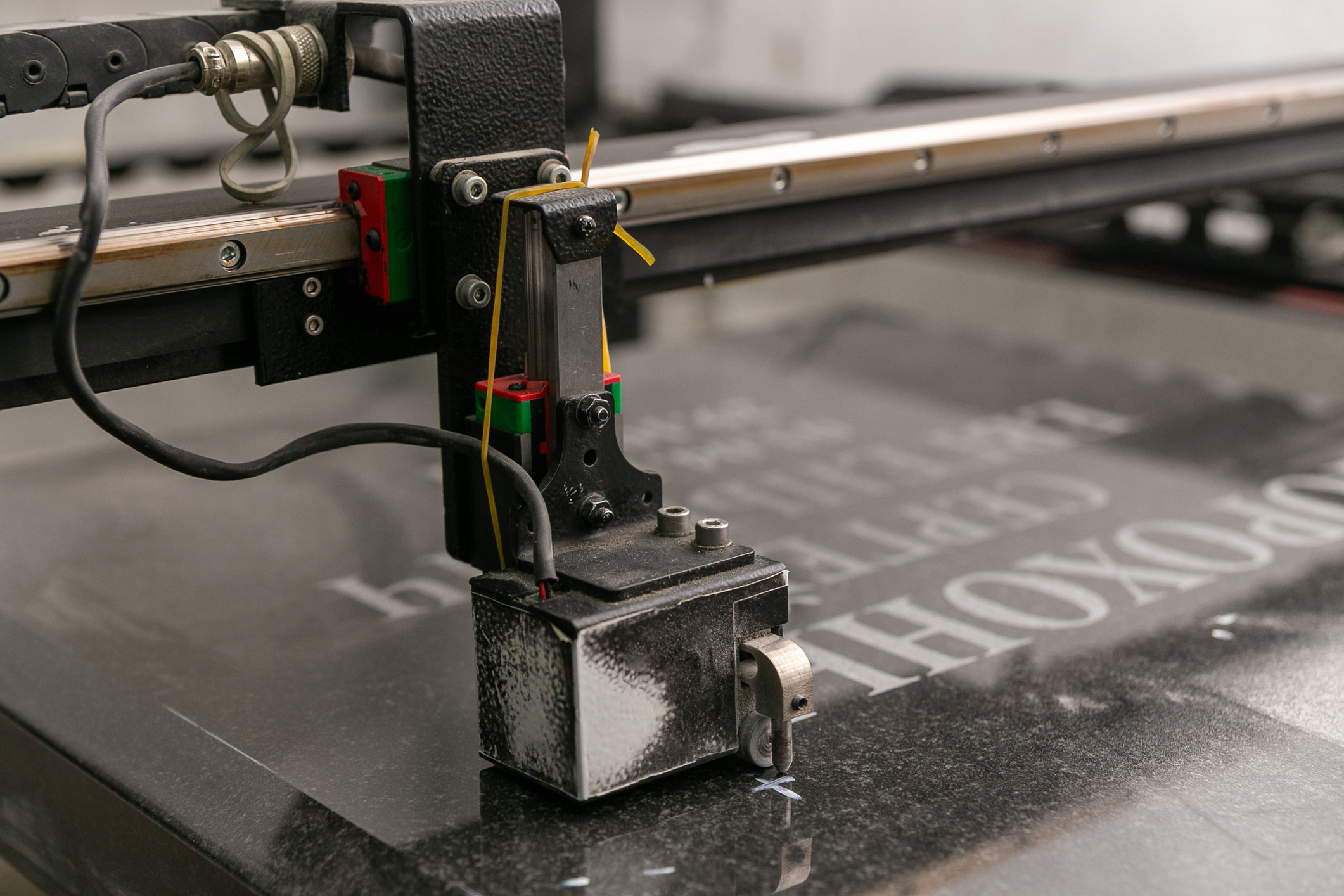
Computer-controlled engraving has expanded the range of designs that can be produced accurately in stone.
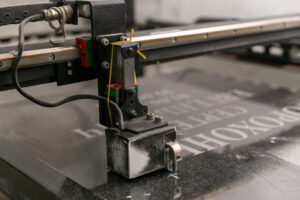
CNC engraving is well suited to lettering, floral patterns, religious symbols, borders, logos and line-based images. It allows repeated shapes and detailed layouts to be cut with consistency.
This is especially useful for:
- Geometric borders
- Celtic patterns
- Matching floral ornament
- Clean modern lettering
- Cultural or religious symbols
- Simplified hobby-related images
- Decorative panels
The technology also allows digital artwork to be scaled and positioned before production begins. Families can review a design proof and see how the inscription and ornamentation will work together.
However, the strongest CNC designs are not necessarily the most intricate. Very fine details can become difficult to read at memorial size or may weather poorly on certain stones.
The current trend is towards using CNC engraving selectively. It can provide clean detail while hand finishing adds depth or softness where needed.
This combination allows modern precision to support traditional craftsmanship rather than replace it entirely.
Is hand carving still popular?
Yes. Hand carving remains highly valued, particularly for families seeking individuality, texture and traditional workmanship.
Flowers, leaves, lettering, crosses and personal symbols can all be carved by hand. The craftsperson responds to the individual piece of stone rather than following only a programmed path.
This can create subtle variation and depth. Light moves differently across carved petals, recessed letters and raised ornament, giving the memorial a more sculptural appearance.
Hand carving is particularly suited to marble, limestone, sandstone and natural-edge memorials. Granite can also be carved, although its hardness makes the process more demanding.
One current design trend is the combination of hand carving with simpler overall layouts. Rather than covering the memorial with decoration, families may choose one detailed flower, bird or symbolic object as the main feature.
This can give the craftsmanship more impact and help the memorial remain visually balanced.
Are hobby-based memorial designs becoming more common?
Families increasingly want memorials to acknowledge activities and interests that formed an important part of the person’s identity.
Hobby-related details might include a fishing rod, musical instrument, football, gardening tool, sailing boat, motorbike, sewing motif or walking landscape.
These elements can be carved, engraved, etched or represented through a small symbol.
The most successful designs usually avoid trying to illustrate an entire life story. A single familiar object can be enough to suggest the person’s interests and prompt memories.
For example, a simple outline of a guitar may be more effective than a detailed stage scene. A carved rose and trowel may represent a love of gardening without making the memorial feel crowded.
Families should also consider whether logos, team crests or official badges can legally and appropriately be reproduced. Some organisations require permission, and burial authorities may restrict certain emblems.
The aim should be to create a respectful personal reference rather than turn the memorial into an advertisement or collection of symbols.
Are multi-faith and secular memorials influencing design?
Modern memorial design increasingly reflects a wider range of beliefs, identities and family traditions.
Some families choose well-established religious symbols, while others prefer natural imagery, abstract patterns or wording without any reference to faith.
Multi-faith memorials may incorporate symbols from more than one tradition, particularly where a couple or family has different religious backgrounds.
These designs require care and sensitivity. Symbols should be positioned respectfully and should not be combined in a way that misrepresents their meaning.
Secular memorials often focus on nature, love, family relationships or the person’s character. Trees, birds, stars, landscapes and simple geometric forms can create meaning without religious imagery.
The wider trend is towards designing the tribute around the individual rather than assuming that every memorial should follow one established formula.
Burial ground rules still apply. A cemetery may be flexible, while a churchyard may require wording and symbols that align with the character of the location.
Are environmentally conscious memorial choices increasing?
Some families are paying closer attention to the environmental impact of memorial materials, transport and long-term maintenance.
This can influence the choice of locally sourced stone, natural finishes and simpler designs that require less processing.
A natural stone memorial is inherently long-lasting, but different materials involve different extraction, cutting, polishing and transportation requirements.
Families may ask where the stone comes from, how it is processed and whether a locally available material would suit the design.
A less polished finish can sometimes reduce the amount of processing required, while a durable material may limit the need for replacement or extensive restoration.
Environmental considerations also extend to grave planting. Families may choose low-maintenance flowers, native plants or a modest planting area rather than plastic decoration.
However, the most environmentally responsible choice will vary. A stone transported a shorter distance is not automatically suitable if it weathers poorly in the intended location.
Durability, repairability, cemetery regulations and the family’s ability to maintain the grave should all be considered.
Are memorial gardens and family plots influencing design?
Memorials are increasingly being planned as part of a complete family or grave-space design.
A kerb set may include chippings, planting, integrated vases or space for future inscriptions. A family plot may use matching stones, repeated ornamentation or consistent lettering to create a visual connection between generations.
Couples may choose an open-book or double-heart design, while larger family memorials can reserve inscription space for future names.
This requires long-term planning. The memorial should look complete after the first inscription while allowing later additions to be made without creating an uneven layout.
Families are also considering the experience of visiting the grave. Planting areas, clear boundaries and carefully positioned flower holders can make the space feel more welcoming and cared for.
Not every burial ground allows extensive grave decoration. Lawn cemeteries may restrict kerbs, loose chippings and planting to make grounds maintenance easier.
The design should therefore begin with the regulations and available plot dimensions.
Are simpler memorials also a growing trend?
Yes. While personalisation has increased, many families are choosing simpler and more restrained designs.
Minimal memorials may use a clean stone shape, one typeface and a short inscription. A single small symbol or natural detail may provide the only ornamentation.
This approach can feel calm, dignified and contemporary. It also allows the quality of the stone and lettering to become more visible.
Simplicity can be particularly effective on:
- Dark polished granite
- Pale marble
- Fine-grained limestone
- Natural-edge stone
- Compact cremation tablets
- Modern asymmetrical headstones
A simple memorial is not necessarily easier to design. When there are fewer elements, proportion, spacing and craftsmanship become even more important.
The inscription must be positioned carefully, and every line needs to earn its place.
Families should not feel pressured to include photographs, long verses or multiple symbols simply because these options are available. A quiet design may reflect the individual more accurately.
Are traditional memorials going out of style?
No. Traditional memorials remain widely chosen and are unlikely to become irrelevant.
Crosses, upright headstones, kerb sets, marble memorials and hand-cut inscriptions continue to hold deep cultural and emotional significance.
The main change is that families often adapt traditional forms rather than accepting a completely standard design.
A cross memorial might include a more personal inscription. A traditional marble headstone may feature a photograph or a flower connected with the individual. A classic kerb set can use clean lines and a contemporary granite colour.
Traditional design offers familiarity and dignity. It may also be more appropriate in historic cemeteries and churchyards where modern shapes or highly polished materials are restricted.
The decision should not be driven by whether a style is currently fashionable. A memorial must remain meaningful beyond the present moment.
How are colours being used in contemporary memorials?
Granite is available in black, grey, blue, red, green and other natural variations, giving families more options than a single traditional tone.
Dark granite remains popular because it provides strong contrast for gold, white or silver lettering. Blue and grey stones can create a softer appearance, while red granite may offer warmth and distinction.
Colour can also be introduced through enamel, painted ornament, gold leaf, ceramic photographs and decorative chippings.
Modern designs often use colour sparingly. A small painted flower or gold inscription can create a focal point without overwhelming the stone.
Families should consider how colours will age outdoors. Paint and gilding may need renewal, while the natural colour of the stone will usually remain more stable.
Very bright or contrasting colours may also be restricted by the burial authority.
The surrounding setting should be taken into account. A strong red or highly polished black memorial may stand out significantly in a churchyard dominated by pale natural stone.
What should families consider before following a memorial trend?
A memorial is intended to remain in place for many years, so current design trends should be approached carefully.
The family should ask whether the feature reflects the person or simply appears fashionable now.
A useful decision process is to consider:
- Does the design have genuine personal meaning?
- Will the inscription remain appropriate over time?
- Does the style suit the cemetery or churchyard?
- Is the stone appropriate for the local environment?
- Will the ornament remain legible as it weathers?
- How much maintenance will be required?
- Is there room for future inscriptions?
- Has the burial authority approved the complete design?
It is also helpful to view full memorials rather than selecting isolated features from catalogues. A photograph, typeface or carved symbol may look attractive alone but not work well with the chosen headstone shape.
A scaled drawing can show how all the elements will fit together.
How can families avoid making a design feel overcrowded?
The growing range of available personalisation options can make it tempting to include too much.
A family may want to add a photograph, long verse, floral border, hobby image, religious symbol and several lines about relationships. Each element may be meaningful, but together they can compete for attention.
A more effective design normally establishes a clear order.
The person’s name should be easy to identify. The dates and main dedication should be readable. One principal image or symbol can then provide the focal point.
Secondary details should support the main tribute rather than distract from it.
Blank stone is also part of the design. Space around the inscription creates clarity and gives decorative elements more impact.
An experienced memorial designer can help families decide what to include, what to simplify and what may be better preserved elsewhere, such as in a family album or written remembrance.
What practical factors influence modern memorial design?
Even the most creative design must meet practical requirements.
The burial ground may control:
- Memorial dimensions
- Stone types
- Colours and finishes
- Permitted symbols
- Photographs
- Kerbs and covers
- Planting areas
- Inscription wording
- Foundation and fixing systems
The location also affects the choice. A coastal cemetery may expose the stone to salt and strong wind. A grave beneath trees may remain damp and develop organic growth more quickly.
The design must also accommodate future maintenance. Deep recesses, complex shapes and multiple attached elements can require more attention than a simple headstone.
Budget is another practical consideration. Hand carving, bespoke stone shapes, photo plaques and large kerb sets all involve additional labour or materials.
Families should receive a detailed quotation explaining design work, stone, lettering, cemetery fees, foundations, installation and any optional features.
Frequently Asked Questions
What is the most popular modern memorial style?
There is no single style that suits every family, but personalised upright headstones, heart memorials, book designs and natural-edge stones remain popular. The strongest choice is one that reflects the individual and suits the burial ground.
Are polished granite memorials still fashionable?
Yes. Polished granite remains popular because it is durable, available in many colours and suitable for precise lettering, photo etching and detailed ornamentation. Natural and honed finishes are also attracting more interest.
Can a traditional headstone include modern engraving?
Yes. Traditional stone shapes can be combined with CNC engraving, laser-etched portraits or contemporary lettering. The techniques should be planned together so the memorial retains a balanced appearance.
Are personalised memorials more expensive?
They can be, depending on the amount of bespoke design, carving, engraving and additional features. A small personal symbol may add relatively little, while a custom stone shape or sculpted design can increase the cost considerably.
Do memorial design trends differ between cemeteries and churchyards?
Yes. Cemeteries are often more flexible, while churchyards may require traditional materials, restrained designs and specific inscription styles. Rules vary between individual burial grounds, so approval must be confirmed.
Choosing a design that will remain meaningful
The latest trends in memorial design centre on individuality, natural materials, thoughtful symbolism and a balance between traditional craftsmanship and modern technology.
Families have more opportunities to personalise a memorial through photographs, CNC engraving, hand carving, distinctive stone shapes and informal inscriptions. Natural finishes, compact cremation memorials and simpler layouts are also becoming increasingly important.
However, a memorial should not follow a trend simply because it is currently popular. Its purpose is to commemorate one person or family in a way that remains respectful and meaningful over time.
The most successful designs begin with the individual. The stone, wording, symbols and finish are then selected to support that story.
By considering burial ground regulations, material durability, maintenance and future inscription needs, families can create a memorial that feels contemporary without losing the dignity and permanence expected of a lasting tribute.
For guidance on personalised memorial design, natural stone, engraving and inscriptions, contact Somerville Stone on 02392 824457, email info@somervillestone.co.uk, or visit Somerville Stone. The team can help you explore traditional and contemporary memorial options suited to your family’s wishes and the requirements of the burial ground.