
Granite is generally regarded as one of the longest-lasting headstone materials because it is hard, dense and highly resistant to weathering. A well-made granite memorial can retain its shape, lettering and overall appearance for many decades, particularly when it is properly installed and maintained.
However, durability is not determined by the stone type alone. The quality of the material, depth of the lettering, local weather conditions, memorial design, foundation and standard of installation all influence how well a headstone performs over time.
Marble, limestone and sandstone can also remain in place for generations. These materials tend to weather more visibly than granite, but many families value the softer, naturally aged appearance they develop.
The best headstone material is therefore not simply the one with the highest resistance to weather. Families should also consider the character of the stone, the burial ground setting, maintenance expectations and the style of memorial they want to create.
Understanding the strengths and limitations of each material makes it easier to choose a lasting tribute with realistic expectations.
Which headstone material is the most durable?
Granite is usually considered the most durable widely used material for modern headstones.
It forms under intense heat and pressure and contains interlocking mineral crystals. This structure makes it hard, dense and resistant to moisture, frost and surface erosion.
Granite is also less porous than many sedimentary stones. It absorbs relatively little water, which reduces the risk of damage caused by repeated freezing and thawing.
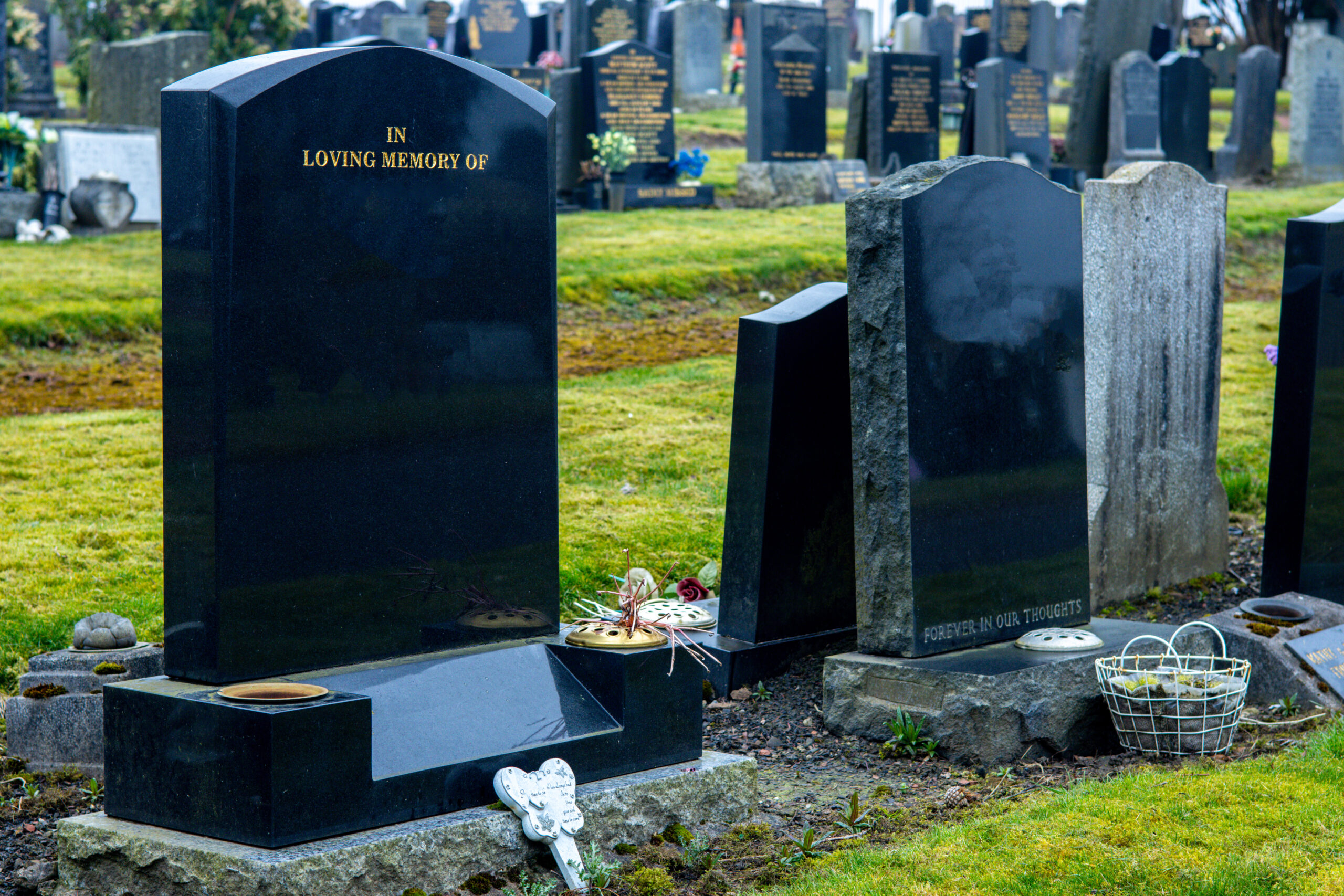
A high-quality granite headstone can retain crisp edges and clearly defined lettering for a long period. It can also be polished to produce a smooth finish that is easier to keep clean than a rough or open-textured surface.
This combination of strength, weather resistance and design flexibility explains why granite is so widely used for cemetery memorials.
However, not every granite is identical. Different colours and sources have different mineral compositions, grain sizes and levels of consistency. The supplier should select stone suitable for exterior memorial use rather than choosing solely by colour.
Why does granite last so well?
Granite performs strongly outdoors because of its mineral structure and low porosity.
Rainwater can enter tiny openings in natural stone. When temperatures fall below freezing, this moisture expands and can gradually widen cracks or weaken the surface.
Dense granite limits the amount of water that can enter, making it less vulnerable to this freeze-thaw cycle than more porous materials.
It also resists scratching and abrasion. Wind-blown particles, rain and routine cleaning are less likely to erode a polished granite surface quickly.
Granite can support several types of lettering and ornamentation, including:
- Sandblasted inscriptions
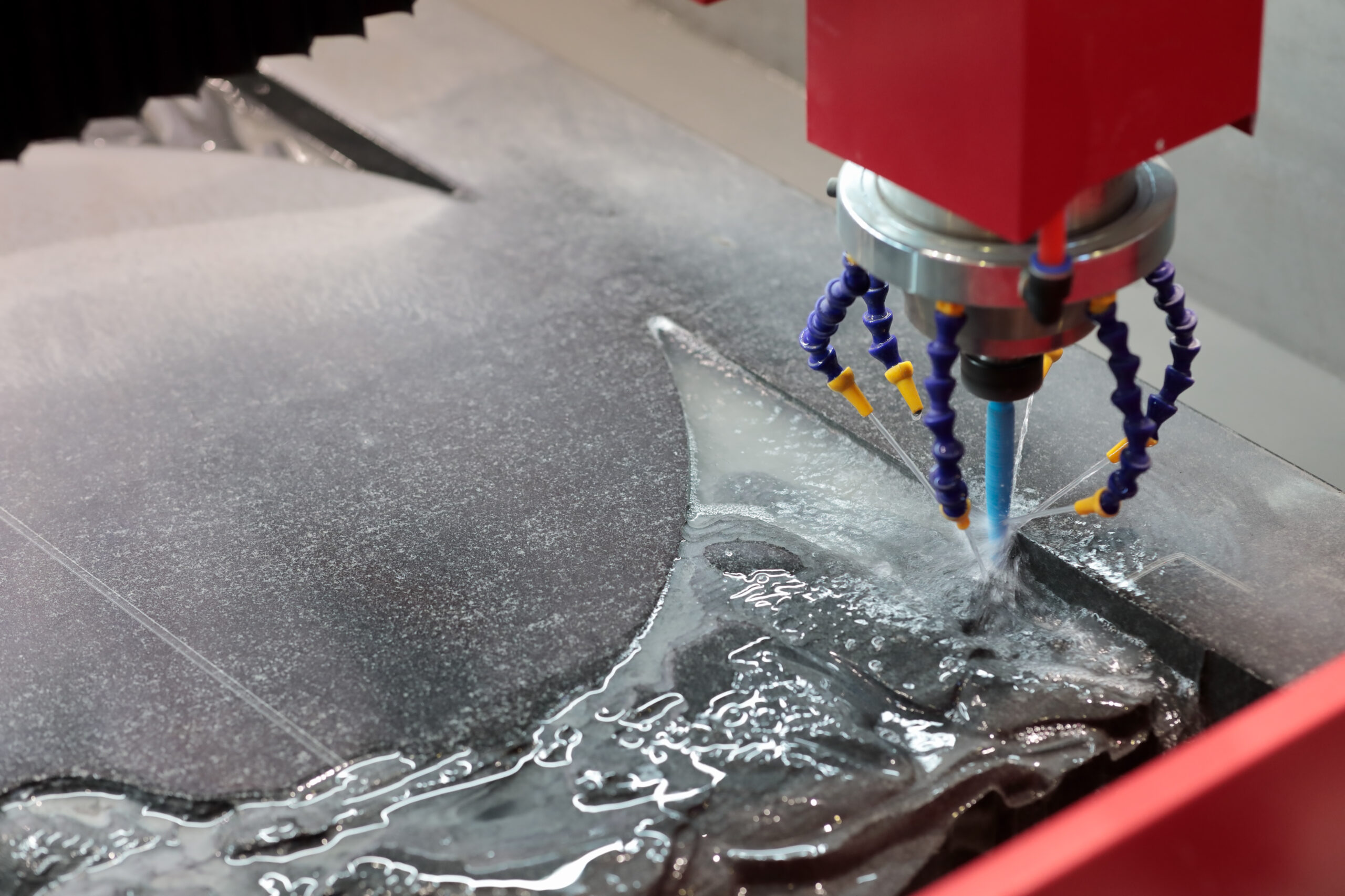
- CNC-cut lettering
- Laser-etched portraits
- Hand-finished details
- Painted or gilded lettering
- Deeply cut decorative motifs
The engraved stone itself can remain clear for many years, although colour infill, enamel or gold leaf may need renewal sooner than the headstone.
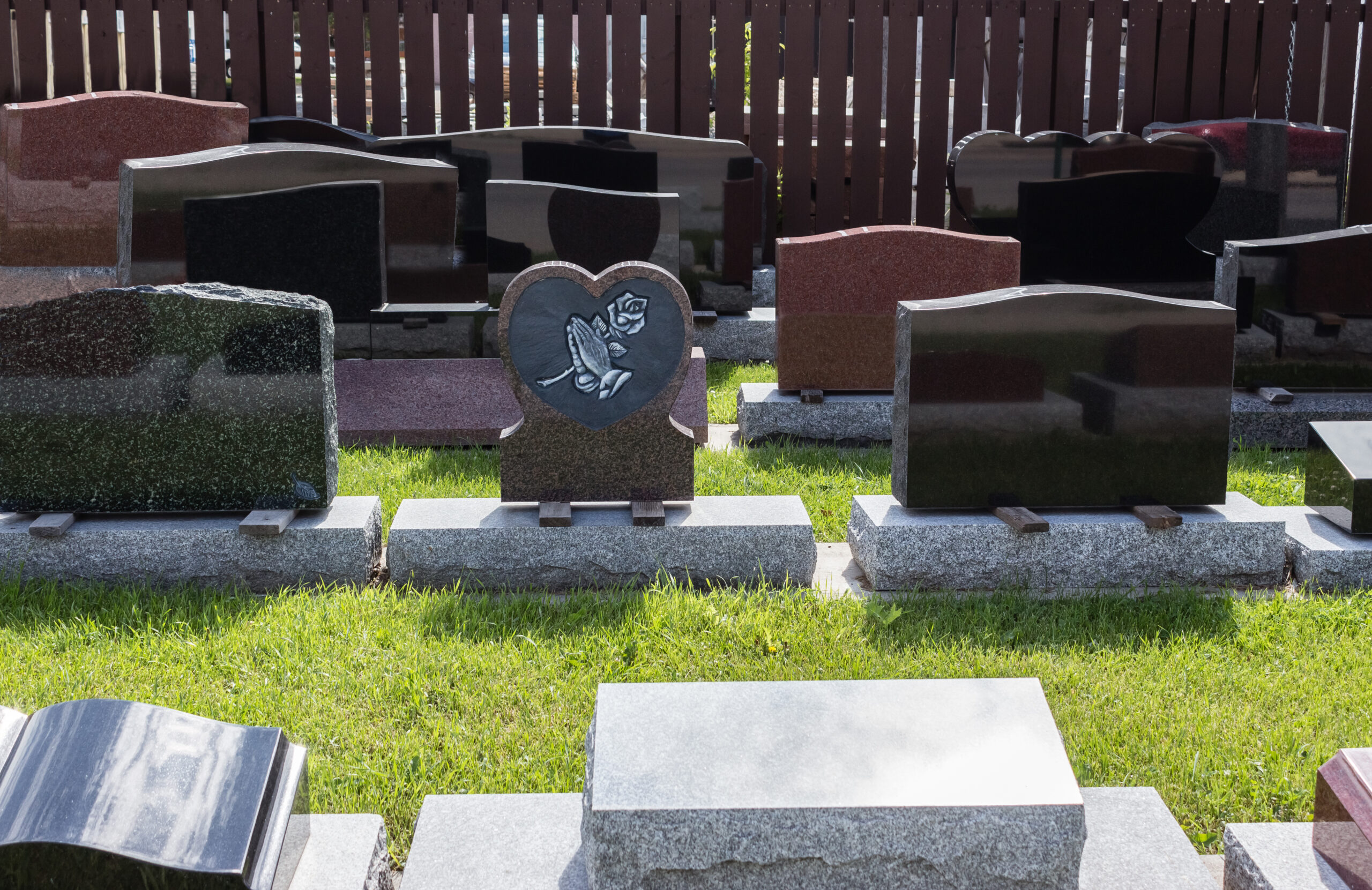
Granite is also available in many natural colours, including black, grey, blue, red and green. This allows families to choose a durable stone without being restricted to one appearance.
Does polished granite last longer than unpolished granite?
The finish can affect how the memorial looks and how easily it can be maintained, but both polished and unpolished granite can be durable.
A polished surface is smooth and less likely to trap dirt, moisture and biological growth. Rain can run off more readily, and light surface deposits are often easier to remove.
Polishing can also intensify the natural colour of the stone and create strong contrast with engraved lettering.
Honed, rubbed or textured granite has a less reflective appearance. It may be preferred in traditional churchyards or natural settings where a highly polished memorial would feel too formal.
These finishes expose more surface texture, which can hold moisture and dirt more readily. This does not mean they are unsuitable, but they may develop visible weathering sooner.
The edges and back of a memorial can also have different finishes from the front. Families should ask how each surface is likely to age and what maintenance will be required.
Burial ground regulations may restrict polishing, particularly in historic churchyards.
How long do marble headstones last?
Marble headstones can last for many decades and sometimes much longer. Numerous historic cemeteries contain marble memorials that have remained standing for generations.
However, marble weathers more visibly than granite.
Marble is largely composed of calcite, which can react with weak acids in rainwater and atmospheric pollution. Over time, this can soften the surface, reduce polished shine and make fine lettering less distinct.
The pale colour of marble can also show organic growth and atmospheric staining more clearly.
This does not mean marble is a poor memorial material. It has been used for monuments, sculpture and commemorative work for centuries. Its soft colouring, natural veining and suitability for carving give it a traditional and elegant appearance.
Families choosing marble should understand that it is likely to develop an aged patina. Carved details may gradually soften, and inscriptions may require restoration after many years.
A deeply cut, well-designed inscription will generally remain clearer than very shallow lettering.
The location has a major influence. Marble in a sheltered, relatively clean environment may age differently from the same stone in a coastal, industrial or heavily shaded cemetery.
Is marble less durable than granite?
In most outdoor memorial settings, granite is more resistant to weathering than marble.
Granite is harder and less reactive, while marble is more susceptible to surface erosion caused by acidic rain and pollution.
Granite is therefore often the preferred choice where families want crisp lettering, a polished finish and relatively low maintenance.
Marble may still be the stronger choice where traditional appearance, pale colouring and carved detail are more important.
Durability should not be treated as a simple contest. A memorial is both a physical structure and a personal tribute.
A marble headstone that weathers naturally may remain meaningful and structurally sound for generations, even if its surface no longer looks newly polished. Some families prefer this mellowed appearance because it blends naturally into an established cemetery or churchyard.
The decision should be based on how the family expects the memorial to age, not only how it looks on the day it is installed.
How durable are limestone headstones?
Limestone can create a long-lasting headstone when the correct variety is selected and the memorial is properly designed.
It has a strong connection with traditional British architecture and churchyards. Its warm, understated colouring often complements historic settings.
Fine-grained, dense limestone generally holds lettering and carving better than softer or more open-textured varieties.
However, limestone is more porous than granite and can absorb moisture. It may develop lichen, algae, moss and surface staining, particularly in damp or shaded locations.
Like marble, limestone contains calcium carbonate and can be affected by acidic rain and atmospheric pollution.
Over time, the surface may become rougher, and very fine details can lose clarity. Deep lettering, generous spacing and restrained ornamentation are therefore important.
A limestone memorial may remain structurally sound for a very long time while showing visible signs of age. This weathered character is often considered appropriate in churchyard settings.
Families should choose limestone with an understanding that it is not intended to retain a highly polished, unchanged appearance.
How long do sandstone headstones last?
Sandstone can last for generations, but its durability varies more widely than granite.
The term sandstone covers many different stones with varying grain sizes, mineral content and levels of porosity. Some are dense and highly suitable for external masonry, while others are softer and more vulnerable to erosion.
A high-quality exterior-grade sandstone can perform well when it is correctly selected, cut and installed.
Sandstone is often chosen for its warm colours, natural texture and compatibility with rustic memorial designs. It can blend well into rural churchyards and older cemeteries.
The grain of the stone influences the amount of detail it can hold. Bold lettering and simple carving are generally more durable than fine, shallow ornament.
Sandstone can absorb water, and repeated wetting and drying may contribute to surface deterioration. In some stones, thin layers can gradually separate or flake if the material has been cut in the wrong orientation.
The mason must understand the stone’s natural bedding and ensure it is used correctly.
Families considering sandstone should ask about the specific variety rather than assuming all sandstone performs in the same way.
Are slate headstones durable?
Slate can be an exceptionally durable memorial material when high-quality stone is selected and properly worked.
It has a fine grain and can hold sharp, detailed lettering. Traditional slate memorials can remain highly legible for long periods, and the material has a distinctive dark grey or blue-grey appearance.
Slate is formed in layers, so it must be sourced and cut carefully. Inferior material or poor workmanship can lead to splitting or delamination.
A good memorial-grade slate should be dense, consistent and suitable for long-term outdoor exposure.
Hand-cut lettering can look particularly effective in slate because the fine surface supports crisp lines and subtle detail.
Slate is often associated with restrained, traditional memorials rather than highly polished contemporary designs. Its natural appearance may be suitable for churchyards and heritage settings.
Availability, local regulations and cost may limit its use compared with granite, but it can be a strong long-term option.
Are manufactured materials suitable for permanent headstones?
Most permanent cemetery headstones are made from natural stone because it offers proven durability, visual dignity and resistance to outdoor conditions.
Concrete, reconstituted stone and composite materials can be used for some memorial products, but their performance varies.
These materials may crack, stain, fade or deteriorate differently from natural stone. Repairs can also be difficult if the original mix or colour is no longer available.
Metal plaques and markers can be long-lasting, although they may corrode, develop surface patination or require specialist maintenance.
The burial authority may control which materials are permitted. Some cemeteries accept a broad range, while churchyards often require natural stone that suits the character of the setting.
Families seeking a permanent headstone should ask for evidence that the proposed material is intended for exterior memorial use and accepted by the burial ground.
What causes headstones to deteriorate?
Even the strongest stone is affected by its environment.
Weathering is a natural process, but certain conditions can accelerate it.
Rain and moisture
Water can carry dirt and pollutants into the surface. Porous stones may remain damp for long periods, especially in shaded locations.
Repeated wetting and drying can weaken certain materials, while trapped moisture can encourage algae, moss and lichen.
Frost
Water expands when it freezes. If moisture has entered pores or small cracks, repeated freeze-thaw cycles can gradually damage the stone.
This risk is greater in porous materials and exposed locations.
Air pollution
Pollutants can react with marble and limestone, causing surface erosion and dark deposits.
Cemeteries near busy roads, industrial areas or densely populated locations may experience more atmospheric staining.
Salt
Coastal memorials may be exposed to salt carried by wind and rain. Salt can enter porous stone and crystallise as the surface dries, creating internal pressure.
Road salt and unsuitable cleaning products can create similar problems.
Trees and vegetation
Overhanging trees create shade and retain moisture. Falling leaves, sap and bird deposits can stain the surface.
Roots may also disturb foundations and contribute to movement.
Poor cleaning
Strong acids, bleach, wire brushes and aggressive pressure washing can permanently damage memorial stone.
An attempt to make an old headstone look brighter can remove part of the original surface or weaken lettering.
Structural movement
A durable stone can still lean, crack or become unstable if the foundation is unsuitable or the ground settles unevenly.
Installation quality is therefore just as important as material strength.
Does the thickness of the stone matter?
Yes. The thickness and proportions of the memorial influence its structural strength.
A tall, narrow headstone needs to withstand wind, accidental contact and natural ground movement. If the stone is too thin for its height and design, it may be more vulnerable to cracking or impact damage.
Large carved cut-outs, narrow necks and delicate projecting details can also create weak points.
The mason should select dimensions appropriate to the material. A shape that is safe in dense granite may need to be thicker or simplified when produced in a softer stone.
The base and foundation must support the weight correctly. A large kerb set or cover slab requires more extensive groundwork than a small upright memorial.
Families do not need to calculate structural requirements themselves, but they should choose a memorial mason who follows recognised fixing and installation standards.
Does lettering depth affect how long an inscription lasts?
Yes. Lettering must be deep and wide enough to remain legible as the stone weathers.
Shallow lettering can become difficult to read more quickly, particularly on marble, limestone and sandstone.
Very small letters and thin script strokes are also vulnerable. They may look elegant when new but lose clarity as the surface changes.
Granite can hold crisp sandblasted, cut or engraved lettering, while softer stones often benefit from deeper hand-cut letters.
Paint, enamel and gold leaf can improve visibility, but these finishes may fade or wear before the cut lettering itself deteriorates.
An inscription should ideally remain understandable even after the highlighting needs renewal.
Letter size, spacing and typeface matter as much as depth. Crowded wording can become hard to read even when the letters remain physically intact.
Families should prioritise long-term clarity over fitting the greatest possible amount of text onto the memorial.
Do carved details affect durability?
Carving can add individuality and meaning, but the design must suit the stone.
Deep, bold ornament generally lasts better than very fine surface detail. Flowers, borders and symbols should have enough depth and thickness to remain recognisable after years of weathering.
Thin projecting sections are more likely to chip or break. This is especially relevant for carved leaves, wings, fingers, narrow cross elements and delicate sculptural details.
A skilled carver will simplify an image where necessary and avoid creating weak areas.
The level of detail should also reflect the material. Fine marble can support more flowing carving than coarse sandstone, while granite requires specialist tools but can retain sharp edges for a long time.
CNC engraving and laser etching create different types of detail. Laser images may reproduce fine tonal variations on polished granite, while deep CNC-cut ornament provides greater physical relief.
The technique should be selected according to the intended appearance and expected long-term performance.
Does colour influence stone durability?
The colour itself does not determine whether a stone will last, but it often reflects differences in mineral composition.
Black, grey, red and blue granites can all be durable when they are of suitable quality. Some varieties have finer grains or more consistent mineral structures than others.
Very dark polished granite may show water marks, dust and scratches more visibly, even though the stone itself remains sound.
Lighter stones may show algae, atmospheric deposits and staining more clearly.
Natural variation is normal. Veins, mineral patches and tonal changes do not necessarily indicate weakness, but the stone should be inspected for flaws that could affect the memorial.
Families should choose colour for personal and visual reasons while relying on the mason to confirm that the specific material is suitable for exterior use.
Does the burial location affect which material will last longest?
Yes. The same stone can weather differently in two locations.
A coastal cemetery may expose the memorial to salt, strong wind and driving rain. Dense granite can be a practical choice in these conditions.
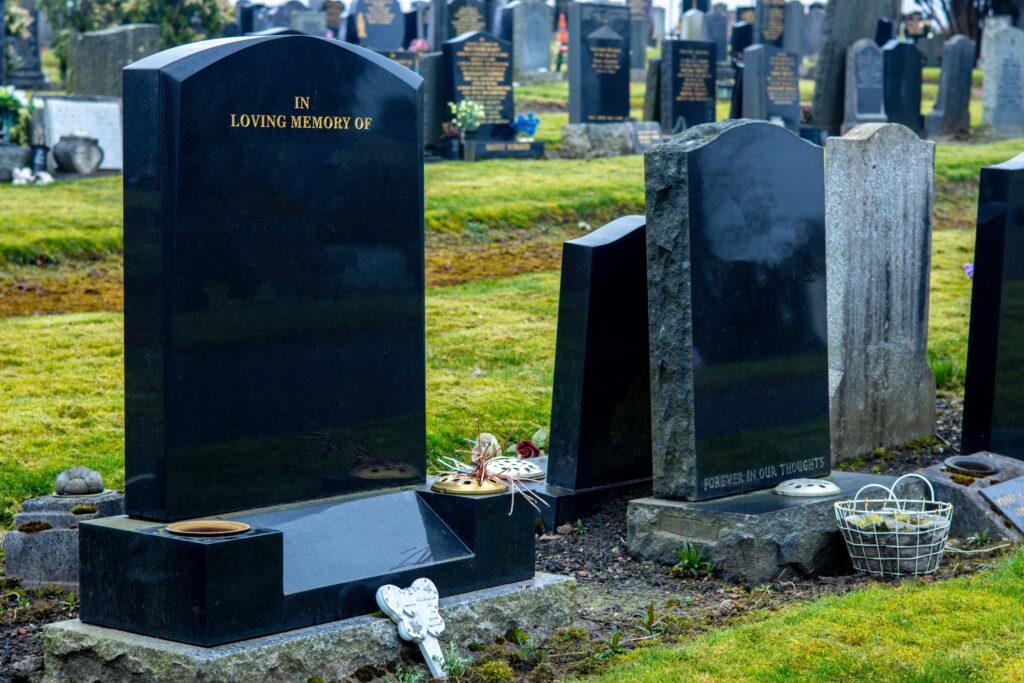
A shaded churchyard beneath trees may remain damp for much of the year. Marble, limestone and sandstone in this environment may develop organic growth more quickly.
An open upland cemetery may experience frequent frost and sudden temperature changes. Low-porosity materials can provide greater resistance.
Urban locations can expose stone to traffic pollution and atmospheric deposits. Marble and limestone may be more vulnerable to chemical surface erosion.
The burial ground’s maintenance practices also matter. Grass cutting equipment, irrigation and nearby planting can all affect the memorial.
A suitable material should therefore be chosen for the actual grave location rather than from a showroom sample alone.
Is a more expensive stone always more durable?
No. Price and durability are related in some cases, but they are not the same thing.
A rare granite colour may cost more because of sourcing, transport or availability, not because it is significantly stronger than a more common variety.
Detailed hand carving, large dimensions and complex polishing can also increase the price without changing the underlying durability of the stone.
Conversely, a simple headstone made from high-quality, appropriately selected material may perform extremely well at a more modest cost.
Families should compare quotations carefully. The price should be assessed alongside:
- Stone type and thickness
- Memorial dimensions
- Lettering and ornament
- Foundation and fixing method
- Cemetery fees
- Delivery and installation
- Design work
- Guarantees and aftercare
A lower quotation may use a thinner stone, simpler installation method or exclude certain fees.
Long-term value comes from appropriate materials, skilled workmanship and proper installation rather than price alone.
How important is professional installation?
Professional installation is essential.
A highly durable headstone can still become unsafe if it is fitted on an inadequate foundation or fixed incorrectly.
Burial plots settle over time, particularly after a recent interment. The memorial must be installed only when ground conditions and cemetery rules allow.
The foundation should be suitable for the memorial’s weight, dimensions and local soil conditions. Approved ground anchors, dowels and fixing systems may be needed to keep the headstone stable.
Kerb sets and full grave covers require particular care because several heavy stone components must remain aligned.
Poor installation can lead to:
- Leaning
- Open joints
- Cracking
- Uneven settlement
- Loose headstones
- Water collecting around the base
- Safety concerns for visitors and staff
Families should choose an experienced monumental mason who understands current memorial fixing requirements and the procedures of the burial authority.
Can an older headstone be restored?
Many older headstones can be cleaned, repaired or restored, depending on their condition.
Possible work may include:
- Gentle specialist cleaning
- Repainting or regilding lettering
- Recutting faded inscriptions
- Repairing minor chips
- Replacing failed joints
- Resetting a leaning memorial
- Installing updated fixings
- Adding a new inscription
Restoration should begin with an assessment. Aggressive cleaning or unnecessary resurfacing can remove historic material and reduce the memorial’s character.
A structurally unstable headstone must be made safe before cosmetic work is considered.
Some lettering may be too weathered to recut without compromising the stone. In these cases, a separate plaque or additional tablet may be more suitable.
Permission from the cemetery, church authority or grave owner may be required before work begins.
How can families help a headstone last longer?
The most effective approach is gentle, regular care rather than occasional aggressive cleaning.
Families should:
- Check the memorial periodically for movement, cracks or loose components.
- Remove fallen leaves and plant material before they stain the stone.
- Use only cleaning methods suitable for the specific material.
- Avoid bleach, acids, wire brushes and household descalers.
- Keep large plants and invasive roots away from the foundation.
- Ask a memorial mason to assess structural concerns.
- Renew lettering finishes when necessary.
- Retain the original design, photographs and order information for future repairs.
Cleaning frequency should be based on need. A memorial does not have to look newly installed at all times.
Lichen and natural weathering are not always signs of structural damage. In some churchyards, aged surfaces contribute to the historic character of the setting.
The goal should be preservation rather than making old stone appear unnaturally new.
What should families ask before choosing a material?
Families should ask the memorial mason practical questions about performance and maintenance.
Useful questions include:
- Is this exact stone suitable for long-term outdoor use?
- How will it respond to the conditions in this cemetery?
- Will the finish change noticeably over time?
- Which lettering method will remain clearest?
- Is the proposed carving suitable for the grain?
- How should the stone be cleaned?
- Is the material accepted by the burial authority?
- What thickness and foundation will be used?
- What guarantee applies to the stone and installation?
- Can examples of older memorials in the same material be viewed?
Seeing weathered examples can be more useful than looking only at new showroom samples.
A responsible mason should explain both the advantages and limitations of each option rather than presenting one material as perfect for every situation.
Frequently Asked Questions
Is granite always the best material for a headstone?
Granite is usually the most weather-resistant and low-maintenance choice, but it is not automatically the best for every family. Marble, limestone, sandstone and slate may better suit a traditional setting, preferred appearance or hand-carved design.
Which headstone material needs the least maintenance?
Polished granite generally requires the least routine maintenance because it is dense, smooth and resistant to moisture. It can still collect dirt and biological growth, particularly in shaded locations.
Can marble headstones last for over 100 years?
Yes. Many marble memorials remain standing after more than a century. Their surfaces and lettering may become weathered, but appropriate design, deep carving and careful maintenance can support long-term survival.
Does sandstone crumble easily?
Good-quality exterior sandstone does not simply crumble, but some varieties are more durable than others. The stone must be suitable for memorial use, cut in the correct orientation and designed with bold rather than very fine detail.
How often should a headstone be professionally inspected?
There is no single timetable for every memorial. Families should visually check it during visits and arrange professional assessment if it leans, moves, cracks or develops loose components. Burial authorities may also carry out periodic safety inspections.
Choosing a material that will endure
Granite is generally the longest-lasting and most weather-resistant headstone material. Its hardness, low porosity and ability to retain crisp lettering make it a practical choice for families seeking durability and relatively low maintenance.
However, other natural stones can also provide lasting and meaningful memorials.
Marble offers classical beauty and excellent carving qualities but develops more visible weathering. Limestone and sandstone provide traditional colour and texture, particularly in churchyard settings, although their porous surfaces require informed care. High-quality slate can hold exceptionally sharp lettering and remain durable when correctly sourced and worked.
The material should be selected according to the burial location, memorial design and way the family expects the stone to age.
Durability also depends on suitable dimensions, deep and legible lettering, professional installation and sensitive maintenance. A strong stone cannot compensate for inadequate foundations, while a carefully designed softer stone can remain dignified for generations.
By comparing materials honestly and considering both appearance and long-term performance, families can choose a headstone that provides a fitting tribute and continues to commemorate their loved one well into the future.
For guidance on durable headstone materials, memorial designs and suitable natural stone, contact Somerville Stone on 02392 824457, email info@somervillestone.co.uk, or visit Somerville Stone. The team can help you compare granite, marble and other memorial materials while considering your preferred design and the requirements of the burial ground.