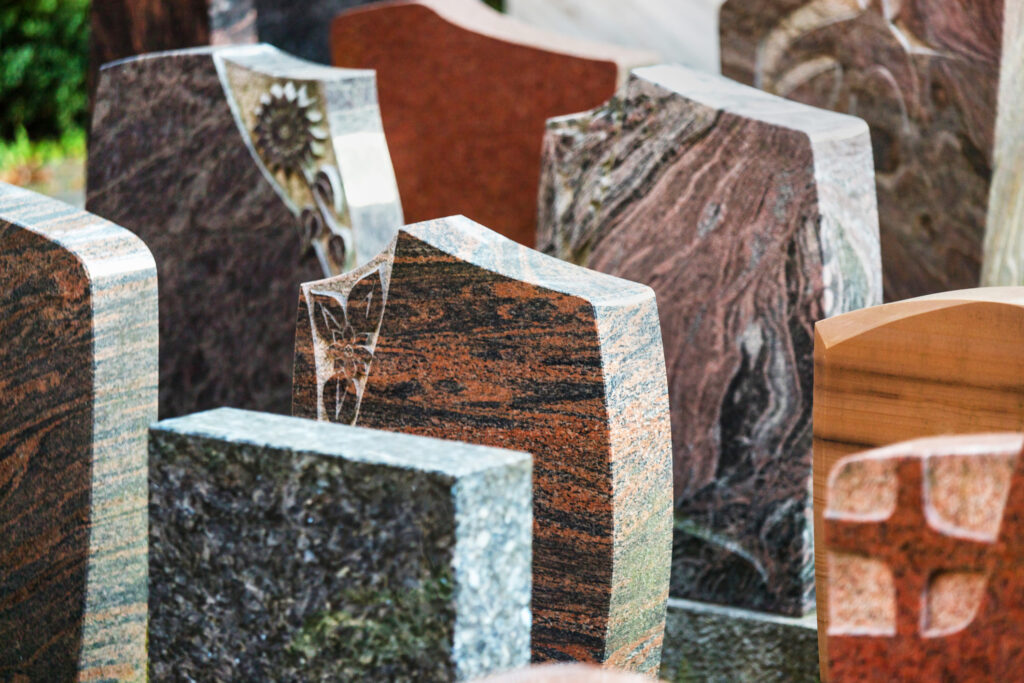
When choosing a memorial for a loved one, one of the most important decisions involves selecting the right material. Two of the most well-known options are granite and marble memorials, both of which have been used in cemeteries and churchyards for generations.
Although they can sometimes appear similar at first glance, granite and marble behave very differently over time. Their appearance, durability, maintenance requirements and suitability for certain cemetery settings can all influence which material is the better choice for a particular memorial.
Understanding these differences can help families make a more informed decision and choose a memorial that feels both meaningful and practical for the long term.
Supporting Questions
- What are the main differences between granite and marble?
- Which memorial material lasts longer outdoors?
- How do granite and marble differ in appearance?
- Are marble memorials harder to maintain?
- Which material offers the best long-term value?
What are the main differences between granite and marble memorials?
The primary difference between granite and marble memorials comes down to the composition and hardness of the stone.
Granite is an igneous rock formed under intense heat and pressure. It is extremely dense and durable, making it highly resistant to weathering and erosion.
Marble is a metamorphic stone created from limestone under heat and pressure. While it offers a classic and elegant appearance, it is softer and more porous than granite.
These physical differences affect how the memorial looks, performs and ages over time.
Granite characteristics
Granite memorials are known for:
- Exceptional durability
- Resistance to weather and moisture
- Wide colour availability
- Minimal maintenance requirements
- Sharp, long-lasting inscriptions
Marble characteristics
Marble memorials are often chosen for:
- Traditional appearance
- Softer, natural texture
- Historic and heritage appeal
- Light, elegant colouring
- Classic churchyard aesthetics
Both materials can create beautiful memorials, but they suit different priorities and environments.
Which memorial material lasts longer outdoors?
In the British climate, granite is generally considered the more durable option.
Rain, frost, pollution and temperature changes gradually affect all natural stone, but granite is particularly resistant to these conditions. This makes it a popular choice for families seeking a low-maintenance memorial that will retain its appearance for many decades.
Why granite lasts longer
Granite’s dense structure helps protect it against:
- Surface erosion
- Water absorption
- Frost damage
- Staining
- Fading inscriptions
This durability is especially important for polished memorials and fine lettering.
How marble changes over time
Marble naturally weathers more quickly. Over the years, exposure to rain and pollution can slowly soften carved details and inscriptions.
Older marble memorials in churchyards often develop a weathered appearance with softened edges and fading lettering. Some families appreciate this aged character, while others prefer a memorial that retains a cleaner appearance for longer.
In coastal areas or locations exposed to heavy pollution, marble may weather more noticeably than granite.
How do granite and marble differ in appearance?
Appearance is one of the main reasons families choose one material over another.
Granite memorial appearance
Granite offers a polished, refined finish with strong colour depth and contrast. It is available in a wide range of shades including:
- Black
- Grey
- Blue
- Red
- Green
- Brown
Highly polished black granite is especially popular because inscriptions remain highly visible and the stone retains its finish for many years.
Granite can also be finished in honed or rustic textures for a softer appearance.
Marble memorial appearance
Marble has a lighter, softer and more traditional aesthetic. White and light grey marble are commonly associated with historic memorials and older churchyards.
Marble often displays natural veining patterns, giving each memorial a distinctive appearance.
Many families choose marble because it feels:
- Elegant
- Timeless
- Traditional
- Classical
This style can suit heritage cemeteries or church settings particularly well.
Are marble memorials harder to maintain?
In most cases, yes. Marble generally requires more care than granite over the long term.
Cleaning marble memorials
Because marble is more porous, it can absorb moisture and become stained more easily. Moss, algae and surface weathering may become more visible over time.
Harsh cleaning chemicals should also be avoided because they can damage the stone surface.
Granite maintenance
Granite is easier to maintain due to its resistance to staining and weather damage. Simple occasional cleaning is often enough to keep the memorial looking presentable.
This lower maintenance requirement is one reason granite has become increasingly popular in modern cemeteries.
The Commonwealth War Graves Commission provides useful information on memorial stone care and preservation. Commonwealth War Graves Commission
Which material is better for inscriptions and decorative details?
Granite is usually better suited to long-lasting inscriptions because its hard surface retains carved and painted lettering more effectively.
Granite lettering
Polished granite creates strong visual contrast for:
- Gold leaf lettering
- Silver lettering
- White paint infill
- Etched artwork
- Photo plaques
The clarity of inscriptions often remains intact for decades.
Marble lettering
Marble can initially produce beautiful carved lettering, particularly in traditional hand-cut styles. However, because the stone is softer, weathering may gradually reduce the sharpness of inscriptions.
For families prioritising long-term readability, granite is often the preferred option.
Which material offers better value?
The answer depends on what families value most in a memorial.
Granite value
Granite often represents better long-term value because:
- It lasts longer
- It requires less maintenance
- Inscriptions remain clearer
- Repairs are less likely to be needed
Although some granite memorials can cost more initially, their durability may reduce future maintenance expenses.
Marble value
Marble may appeal to families seeking:
- Traditional aesthetics
- Heritage compatibility
- Softer natural appearance
- Historic churchyard character
For some families, the appearance and emotional connection associated with marble outweigh its maintenance considerations.
Are there situations where marble is preferred?
Yes. Despite granite’s durability advantages, marble still has an important place in memorial design.
Marble is often selected for:
- Churchyards with traditional memorial styles
- Restoration of historic graves
- Heritage-sensitive locations
- Classical or religious memorial designs
Some church authorities may even encourage lighter natural stone memorials to preserve the character of historic burial grounds.
In these situations, marble may feel more visually appropriate than polished granite.
How do cemetery regulations influence material choices?
Not all cemeteries allow every type of memorial material.
Some churchyards restrict:
- Highly polished black granite
- Brightly coloured stones
- Modern decorative finishes
- Large or elaborate memorials
Before ordering a memorial, it is important to confirm:
- Approved stone types
- Permitted finishes
- Size restrictions
- Design limitations
Experienced monumental masons can normally advise on local cemetery regulations and help families avoid approval issues.
Guidance on memorial safety and standards can also be found through the British Register of Accredited Memorial Masons. BRAMM memorial guidance
Frequently Asked Questions
Which is more durable, granite or marble memorials?
Granite is generally more durable because it is harder, denser and more resistant to weathering.
Do marble memorials crack more easily?
Marble is softer than granite and can be more vulnerable to weather-related wear over long periods.
Are granite memorials more expensive?
Costs vary depending on the design and finish, but granite can sometimes have a higher initial cost while offering better long-term durability.
Can marble memorials still look good after many years?
Yes. Many older marble memorials develop a naturally aged appearance that some families find beautiful and historically appropriate.
Which material is easier to clean?
Granite is usually easier to maintain because it is less porous and more resistant to staining and moss growth.
Choosing between granite and marble memorials ultimately comes down to personal preference, cemetery requirements and long-term expectations. Granite offers excellent durability and low maintenance, while marble provides a softer, more traditional appearance with strong historical character.
Both granite and marble can create respectful and lasting memorials when carefully designed and professionally installed. Speaking with an experienced monumental mason can help families understand which option best suits the setting, budget and style of tribute they wish to create.