Yes. Monumental masons in Hampshire can create bespoke memorials that go well beyond choosing a standard headstone and adding a name and dates. Depending on the burial ground, stone and proposed design, a memorial can be personalised through its shape, material, inscription, lettering, carving, engraving, imagery and other carefully selected details.
For many families, this flexibility is important. A memorial is intended to commemorate an individual, so it is understandable that a standard design may not always feel quite right.
Bespoke does not necessarily mean creating something unusually elaborate. A traditional upright headstone can still be highly personal when the proportions, inscription, lettering and decorative features have all been chosen for one particular person.
At the other end of the spectrum, families may want a more distinctive shape, hand-carved feature, memorial book, photograph or design connected with someone’s interests.
Somerville Stone confirms that its memorials can be customised and that families can work with the team on a custom design when they cannot find the right memorial among existing options.
The important point is that the finished memorial must combine personal meaning with practical considerations such as durability, available space and cemetery or churchyard regulations.
What does a bespoke memorial actually mean?
The word “bespoke” can cover a wide range of possibilities.
It does not necessarily mean that every part of the headstone has to be designed from scratch.
A family might begin with an existing memorial shape and personalise individual features. Alternatively, they may have a much clearer idea that requires a specially developed design.
A bespoke memorial could involve changes to:
- The shape and dimensions of the stone
- The type or colour of natural stone
- The inscription and its layout
- Lettering style and finish
- Hand-carved ornamentation
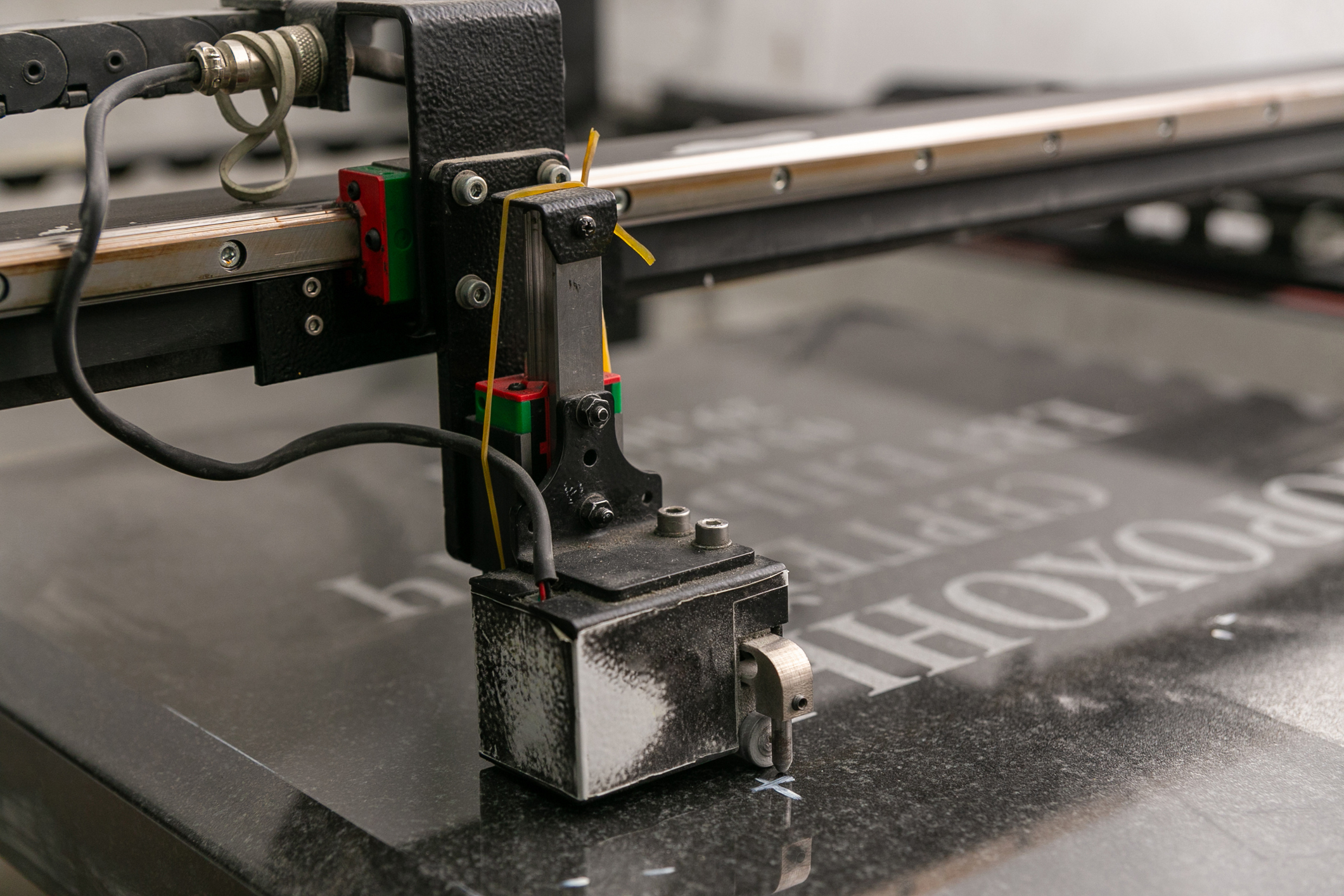
- CNC engraved artwork
- Photographs or etched portraits
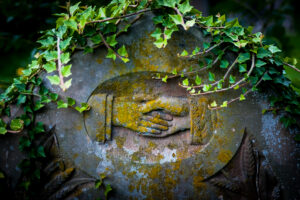
- Religious or cultural symbols
- Floral details or other meaningful imagery
- The arrangement of a kerb set, vase or associated features
Somerville Stone’s current memorial range shows that personalisation can extend across traditional cemetery headstones, memorial books, hand-carved work, kerb sets and other styles. Its own product information states that full customisation can be made to memorials to suit individual wishes.
The scale of personalisation should ultimately reflect the family rather than an expectation that a bespoke memorial needs to be complicated.
Can families bring their own memorial ideas?
Yes.
One of the advantages of working with a monumental mason is that families do not necessarily have to find an exact finished design in a catalogue.
They may have seen a feature on another memorial, have a sketch, photograph or piece of artwork, or simply know that they want the design to reflect an important aspect of someone’s life.
The mason can then assess whether the idea can be translated effectively into natural stone.
This assessment matters because a design that looks good on paper does not always work in exactly the same way on a headstone.
Stone has physical limits.
Fine details may need simplifying, shapes need to remain structurally sound and sufficient space must be left for the inscription.
A monumental mason can therefore help refine an idea rather than simply reproduce it without considering how it will perform as a memorial.
Somerville Stone specifically invites families who cannot find the right memorial to discuss designing their own custom stone.
How can the shape of a memorial be personalised?
The outline of a headstone has an immediate effect on its overall character.
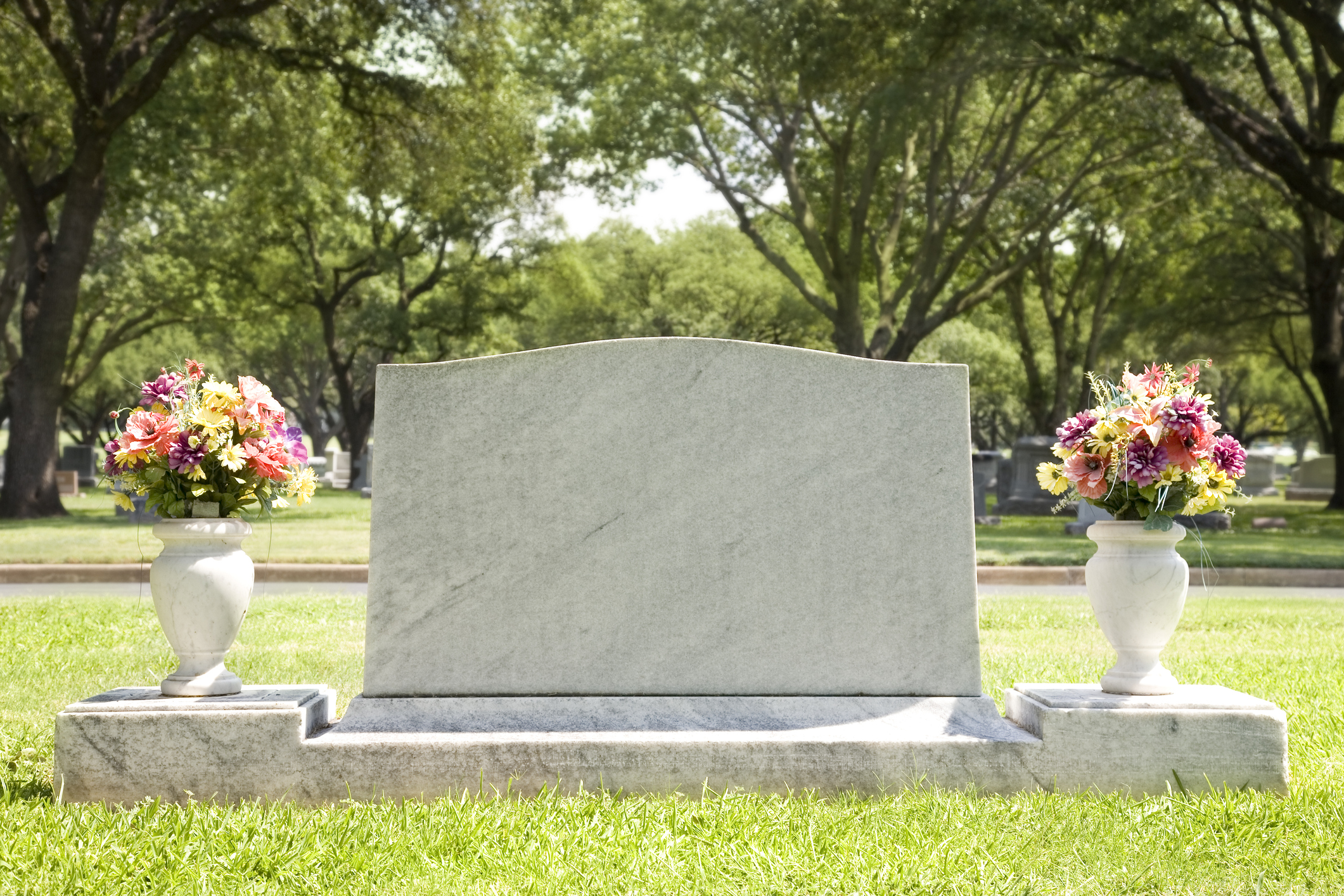
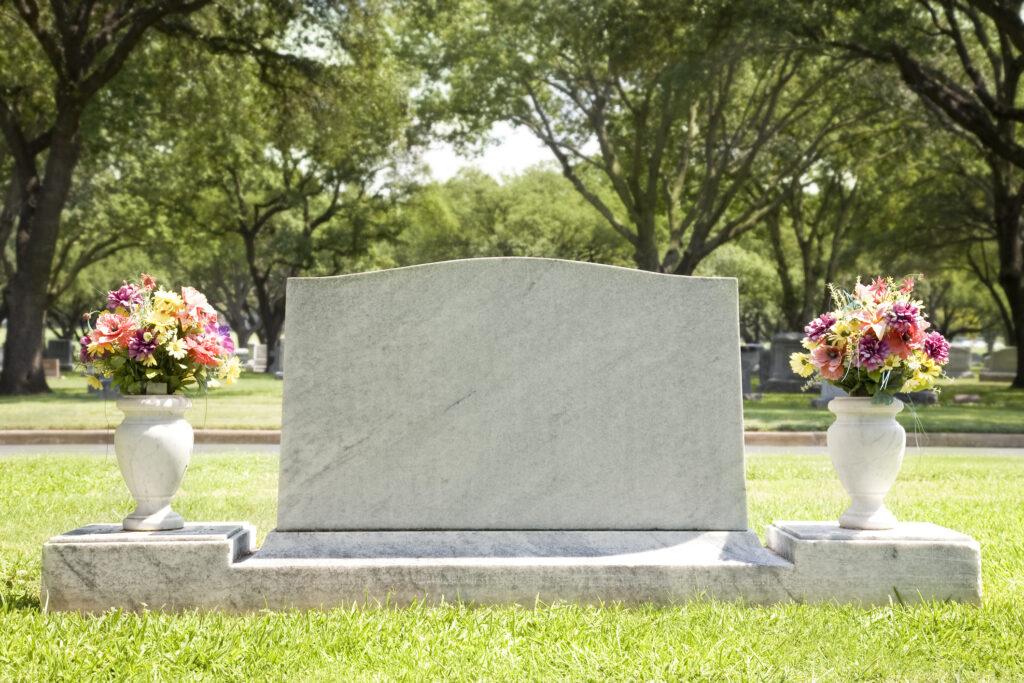
A conventional upright headstone can be adapted using curved shoulders, an ogee top, rounded sections or other established shapes.
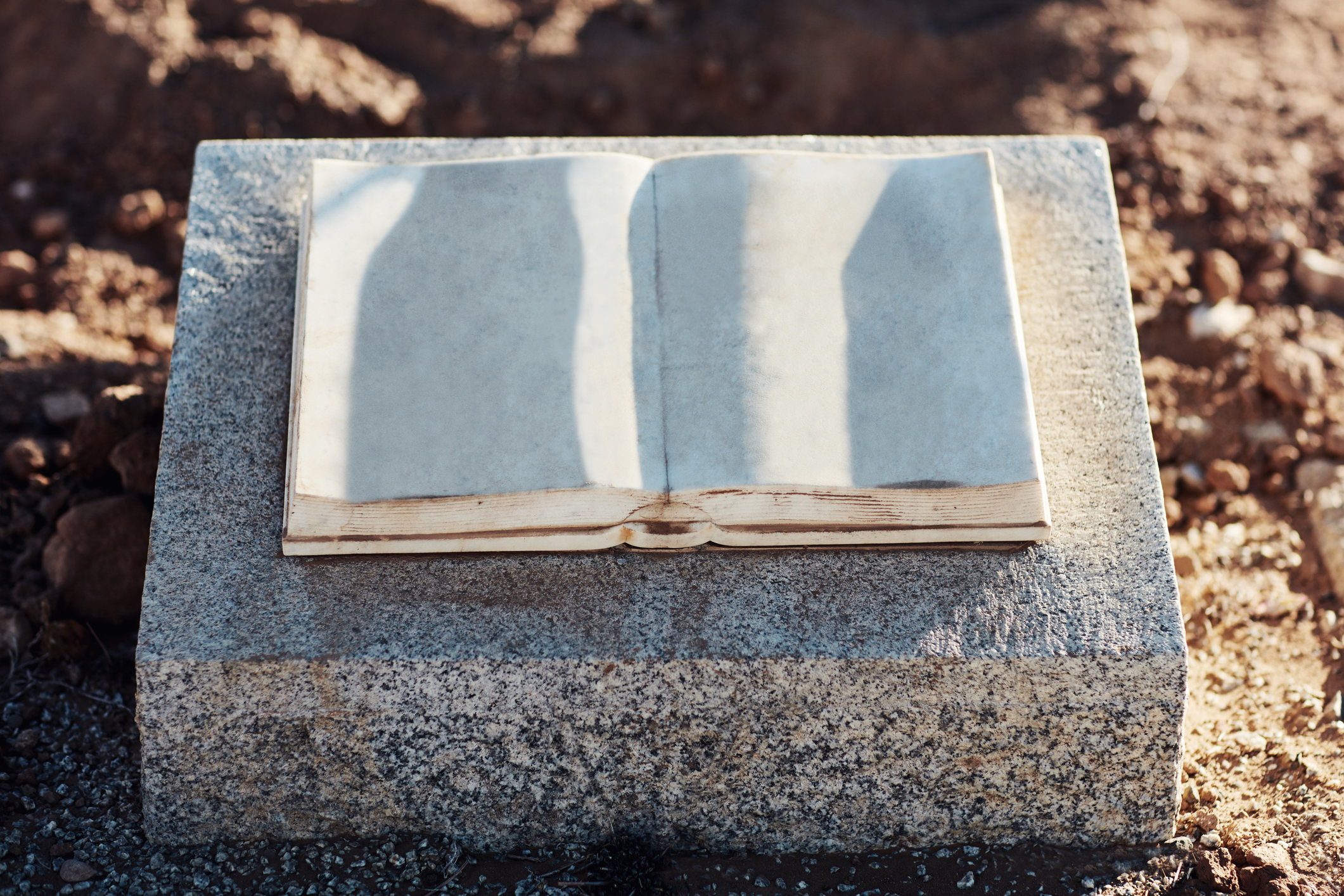
Families may also consider more distinctive forms such as heart memorials, open books or rustic stones.
A bespoke design might combine familiar elements rather than inventing a completely new form.
For example, a traditional upright stone could incorporate a specially shaped top based around a floral motif.
A book memorial might use page details, a carved spine or another feature that gives the design more individual character.
Somerville Stone’s recent guidance on memorial books explains that these designs can include curved pages, carved spines, folded corners, tassels, flowers and religious or personalised ornamentation.
This illustrates how even an established memorial category can be adapted significantly.
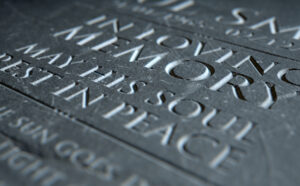
Can the inscription be bespoke?
Absolutely.
In fact, inscription design is one of the most important parts of personalisation.
Somerville Stone states that it does not rely on standard inscription templates and instead structures inscriptions around individual customer requirements.
Families can usually consider the wording, arrangement and style together.
The inscription may include:
The person’s name, dates, family relationships, a personal dedication, a verse, a religious passage or another short piece of wording that feels appropriate.
The visual layout matters as much as the words themselves.
A long inscription compressed into a small area can become difficult to read and may make an otherwise attractive headstone feel crowded.
Somerville Stone’s inscription guidance also highlights the importance of considering whether another inscription may need to be added in future.
This is particularly relevant for shared memorials.
Leaving appropriate space at the beginning can make it much easier to add a second inscription later while keeping the overall design balanced.
Can hobbies and interests be incorporated into a memorial?
Potentially, yes.
Personal interests can provide some of the most meaningful ideas for bespoke memorial decoration.
Somerville Stone’s own memorial brochure refers to personalised memorials that can reflect a loved one’s sport or hobby.
The design might use a small symbolic image rather than trying to illustrate an entire scene.
Someone who loved gardening might be represented through a particular flower.
A connection with music could potentially be reflected through a carefully designed musical motif.
Another person might be remembered through imagery associated with nature, a profession or another important interest.
The strongest approach is usually selective.
A memorial does not have to contain every important aspect of a person’s life.
One or two carefully chosen features can often communicate far more effectively than filling the stone with numerous unrelated symbols.
How can hand carving make a memorial more individual?
Hand carving is particularly suited to bespoke work because the craftsperson responds directly to the design and natural stone.
Somerville Stone’s guidance explains that hand carving can be used for inscriptions, flowers, leaves, religious or cultural symbols, decorative panels, figures and bespoke images associated with a person’s life.
The process creates depth and texture rather than simply placing a flat image on the surface.
Flowers are a common example.
A rose or lily can be carved with individual variations in petals, depth and form, creating a more sculptural result.
Religious imagery, angels and other figurative features can also be produced where suitable.
Somerville Stone’s current WG87 memorial, for example, incorporates two hand-carved angels positioned either side of a scroll and is described as fully customisable.
Hand carving may be particularly appealing to families who value visible craftsmanship and traditional masonry techniques.
Can modern engraving also be used for bespoke designs?
Yes.
A bespoke memorial does not have to rely entirely on hand work.
Computer-controlled engraving can be valuable where a design requires consistency, intricate line work or precise ornamentation.
This can be particularly suitable for flowers, symbols and other graphic artwork.
Photographic detail may require a different approach, such as laser or hand etching, depending on the stone and desired result.
Modern technology and traditional craftsmanship can therefore complement one another.
A family might choose a traditional natural-stone headstone with hand-carved ornamentation alongside precisely planned lettering.
Another memorial might use polished granite and detailed machine engraving to produce a much more contemporary appearance.
Bespoke memorial design is less about choosing one production technique and more about selecting the most appropriate technique for each element.
Can a photograph form part of a bespoke memorial?
Where burial ground regulations permit it, photographs can add another highly personal element.
Somerville Stone offers memorial photo plaques and also refers to hand-etched and laser-etched imagery among its options.
A photograph can provide an immediate visual connection to the person being remembered.
This can be especially meaningful for relatives who value seeing a familiar face when visiting the grave.
The photograph should be considered as part of the overall design rather than simply attached wherever space is available.
Somerville Stone’s guidance suggests that a portrait might sit above the inscription, beside another feature or on one page of a memorial book.
The image itself should also be chosen carefully.
A clear, recognisable photograph normally works better than one selected purely because it is formal.
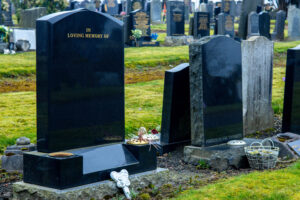
Can bespoke kerb sets be created?
Kerb sets offer another level of design flexibility because they involve more of the grave than a standalone headstone.
A traditional kerb memorial frames the burial plot and can potentially incorporate chippings, planting, a cover slab, vases and additional inscription areas.
Somerville Stone’s guidance on kerb sets explains that the surrounding stonework can be paired with a range of headstone shapes, including rounded, book-shaped, heart-shaped and rustic designs.
This makes it possible to create a coordinated memorial where the headstone and grave surround are considered together.
However, kerb sets are also a good example of why regulations need to be checked early.
Not all cemeteries allow full kerbs, and some only permit them in designated sections.
A bespoke proposal still has to work within the rules applying to the particular grave.
How do cemetery rules affect bespoke memorials?
This is one of the most important parts of the process.
A monumental mason may be capable of making a particular memorial, but the cemetery or churchyard must also permit it.
Regulations can affect:
- Maximum dimensions
- Stone type
- Surface finish
- Headstone shape
- Kerbs and grave surrounds
- Photographs
- Ornamentation
- Inscriptions
- Vases and other additions
Older churchyards can be particularly restrictive because local rules may aim to preserve the existing character of the site.
This does not prevent personalisation, but it may influence how that personalisation is expressed.
A relatively simple natural-stone headstone can still be highly bespoke through its lettering, inscription and carefully chosen hand carving.
Somerville Stone states that it can make council and church arrangements as part of its memorial service.
This can help families develop a design that is personal while still taking approval requirements into account.
Why does material choice matter in a bespoke design?
Different stones create very different visual effects.
Granite is widely used because it is hard, durable and available in numerous colours.
Dark polished granite can work particularly well with detailed etched designs and contrasting inscriptions.
Marble provides a lighter, more classical appearance and has a long association with decorative carving.
Limestone can produce a softer, traditional style that may be particularly appropriate in an older churchyard.
Somerville Stone also works with other natural memorial stones, so the material can form an important part of the overall design.
The stone should not be selected on colour alone.
The family should also consider how the chosen material works with the intended lettering, carving or imagery and how its appearance may change after prolonged exposure outdoors.
Does bespoke always cost more?
Not necessarily in a straightforward way.
The word bespoke can make people assume that a memorial will automatically become extremely expensive, but the final cost depends on what is actually being changed.
A relatively standard headstone with a personally structured inscription and one adapted decorative feature may involve less work than an elaborate catalogue design with extensive stonework.
On the other hand, a completely original shape, substantial hand carving or complex kerb arrangement will naturally require more material and skilled labour.
Cost can be influenced by:
The stone, overall size, complexity of cutting, amount of lettering, carving, engraving, additional features and installation requirements.
Families who have a particular budget should discuss it early.
A monumental mason can often suggest where personalisation will have the greatest visual or emotional impact without adding unnecessary complexity.
What should you ask a monumental mason before commissioning a bespoke memorial?
A good initial discussion should cover much more than appearance.
Ask whether the proposed material and design are suitable for the burial ground.
Confirm how the inscription will be laid out and whether space should be left for future wording.
If artwork is being included, find out which production technique is recommended and why.
It is also useful to establish what the quotation covers, including fitting and any cemetery or church fees that may apply.
Families should feel comfortable asking to see how the memorial will look before production begins.
A visual layout or artwork proof can help identify issues with spacing, proportions and decorative features while changes are still straightforward to make.
The aim should be to reach a design that feels considered rather than rushed.
Why choose a local Hampshire monumental mason?
Working with a monumental mason familiar with Hampshire can be particularly useful when the memorial is being installed locally.
Local experience can help with practical aspects such as understanding different burial grounds and dealing with approval processes.
It also gives families the opportunity to discuss stone, inscriptions and design choices with someone who understands the complete memorial process.
The value of a monumental mason is not simply in cutting a stone.
Their role includes helping translate ideas into a memorial that is physically workable, visually balanced, suitable for its surroundings and capable of enduring outdoor conditions.
For bespoke work, that judgement becomes particularly important.
Frequently Asked Questions
Can I ask a monumental mason to copy a memorial I have seen elsewhere?
You can show examples for inspiration. Somerville Stone states that its team can work from other brochure designs, although the finished memorial still needs to suit the chosen material, grave and burial ground regulations.
Can a bespoke memorial be traditional rather than unusual?
Yes. Bespoke simply means the memorial has been tailored to individual requirements. A traditional upright headstone with individually planned lettering, inscription and carving can be every bit as bespoke as a highly unusual shape.
How early should bespoke features be discussed?
Ideally, from the beginning of the design process. Shape, inscription space, material and decorative features affect one another, so discussing them together reduces the risk of having to compromise later.
Monumental masons in Hampshire can create highly personalised memorials, but the most successful bespoke designs are not necessarily the most elaborate.
Personalisation might involve a specially chosen stone, an individually structured inscription, a hand-carved flower, imagery connected with someone’s life or a complete memorial design developed around the family’s ideas.
The monumental mason’s skill lies in bringing those elements together.
A design must look balanced, work successfully in natural stone and comply with the regulations of the cemetery or churchyard where it will be installed.
Somerville Stone confirms that its memorials can be customised and that families who cannot find the right standard design can discuss creating a custom memorial. Its current memorial information also demonstrates options including individual inscriptions, hand carving, personalised ornamentation and other tailored features.
For families looking for monumental masons in Hampshire, the best starting point is often not deciding exactly what the memorial should look like, but identifying which details matter most. An experienced mason can then help turn those ideas into a respectful and lasting tribute.
Phone: 02392 824457
Email: info@somervillestone.co.uk
Find out more: https://somervillestone.com/