Hand carved memorials are created through a combination of design, stone selection, traditional craftsmanship and careful finishing. Rather than relying entirely on automated machinery, a skilled monumental mason shapes decorative details, lettering or other features directly into the surface of natural stone using specialist tools.
The process is highly controlled. Before carving begins, the mason needs to understand the chosen memorial design, the properties of the stone, the amount of inscription space available and the level of detail required. Each stage affects the next, meaning that careful planning is just as important as the physical carving itself.
For families, this traditional approach can create a memorial with a distinctive character. Small variations created by hand are part of the craftsmanship, giving flowers, borders, lettering and symbolic details a more individual appearance.
At Somerville Stone, hand carved memorials form part of the wider choice of bespoke memorial designs available to families. Understanding how this work is produced can help explain why hand carving remains valued even when modern engraving technology offers other ways to decorate stone.
What makes a memorial suitable for hand carving?
The starting point is the stone itself.
Natural memorial materials behave differently when worked with carving tools. Their grain, hardness, texture and surface finish all affect the level and style of detail that can be achieved.
A skilled monumental mason therefore considers the material before deciding how a design should be carved.
Some stones lend themselves particularly well to traditional lettering and ornamental carving because they can be cut cleanly and shaped with controlled edges. Others may be better suited to simpler designs or different engraving methods.
The final appearance also depends on the finish of the memorial.
A carved motif on a lighter natural stone may rely on shadow and depth to create definition, while carving on a darker stone can produce a different visual effect depending on how the cut surfaces contrast with the face of the memorial.
This is one reason why a hand carved design should be planned specifically for the chosen material rather than simply transferred from another headstone.
How do monumental masons plan a hand carved design?
Before a chisel touches the stone, the design needs to be considered in relation to the whole memorial.
The mason must balance several elements:
- The size and shape of the headstone
- The length and layout of the inscription
- The position of decorative carving
- The available blank space
- The depth and complexity of the design
- Any requirements set by the cemetery or churchyard
A successful memorial normally feels balanced rather than crowded.
If a family wants a carved flower, for example, the mason needs to decide whether it should sit above the inscription, beside it, in a corner or as part of a larger decorative arrangement.
That decision depends partly on the wording.
A memorial with a long inscription may have less room for large decorative features, while a shorter dedication could leave space for more elaborate carving.
Turning an idea into a workable carving
Families do not necessarily need to arrive with a finished artwork specification.
They may know that they would like a rose, lily, cross, leaf, bird or another meaningful symbol included in the memorial.
The monumental mason’s role is then to interpret that idea in a way that can be carved successfully into stone.
A design that looks attractive as a photograph or drawing may need to be simplified before it can work effectively as relief carving.
Very fine lines, tiny details or subtle tonal variations may not translate directly into stone.
Instead, the mason concentrates on strong outlines, depth, shape and shadow.
The goal is not simply to reproduce an image exactly. It is to create a carving that looks appropriate on the memorial and remains visually clear from normal viewing distance.
How is the design transferred onto the stone?
Once the design has been agreed, it needs to be positioned accurately on the memorial.
The mason marks or transfers the main outlines onto the stone so the proportions can be checked before any permanent cutting begins.
This stage is particularly important because stone carving is subtractive.
Material is removed rather than added.
A cut that is too deep or placed incorrectly cannot simply be rubbed out and started again in the way that a pencil line can.
The initial layout therefore acts as a guide throughout the carving process.
Experienced masons also need to think ahead.
Different parts of the design may require different depths, and certain areas need to be established before finer details are introduced.
The mason gradually works from the broader form towards the smaller features.
Which tools do monumental masons use for hand carving?
Traditional stone carving relies heavily on chisels and controlled hammer work.
Different tools can be used depending on the size, depth and character of the cut required.
A mason may use broader tools when initially removing material and progressively finer tools as the design becomes more detailed.
The basic principle is controlled removal.
Rather than attempting to create the finished carving immediately, the mason builds the form gradually.
For a carved flower, for example, the first stage might establish the overall shape and depth. Individual petals, edges and veins can then be developed once the main proportions are correct.
Tool control is critical.
Too much force can remove unnecessary material or damage a delicate edge. Too little may not produce a clean cut.
Years of practical experience help a skilled monumental mason judge how a particular stone will respond.
Is modern equipment used as well?
Hand carving and modern technology are not necessarily mutually exclusive.
A monumental mason may use modern equipment during other stages of memorial production while still completing key decorative features by hand.
Cutting the stone to its basic dimensions, preparing surfaces and producing layouts can all involve modern workshop methods.
The distinction lies in how the finished decorative work is created.
Hand carving places the mason directly in control of the final shape, depth and character of each carved detail.
This can be combined with other methods where appropriate, particularly on bespoke memorials that incorporate several different forms of decoration.
How are shapes and depth created by hand?
Carved stone decoration works because the mason creates differences in level across the surface.
These variations catch light differently and form natural shadows.
Even a relatively simple flower can appear three-dimensional when the petals are cut to different depths and the surrounding stone is shaped carefully.
This is known broadly as relief carving.
The design remains part of the memorial rather than becoming a completely separate sculpture, but parts of it project visually from the surrounding surface.
The amount of relief depends on the design.
A restrained leaf motif may require relatively shallow carving, while a more elaborate floral arrangement could involve stronger differences in depth.
The mason also needs to maintain adequate strength in the stone.
Very thin projecting sections can be vulnerable, so the design should reflect the physical properties of the material.
Good stone carving is therefore as much about knowing what not to remove as it is about knowing where to cut.
How is hand carved lettering produced?
Letter carving is another traditional monumental masonry skill.
Well-cut memorial lettering depends on consistent spacing, proportion and depth.
Before carving begins, the inscription must be laid out carefully across the available area of the headstone.
This involves decisions about:
- Letter size
- Line spacing
- Alignment
- Capitalisation
- Position of names and dates
- Decorative elements
- Space for possible future inscriptions
Each character is then cut into the stone.
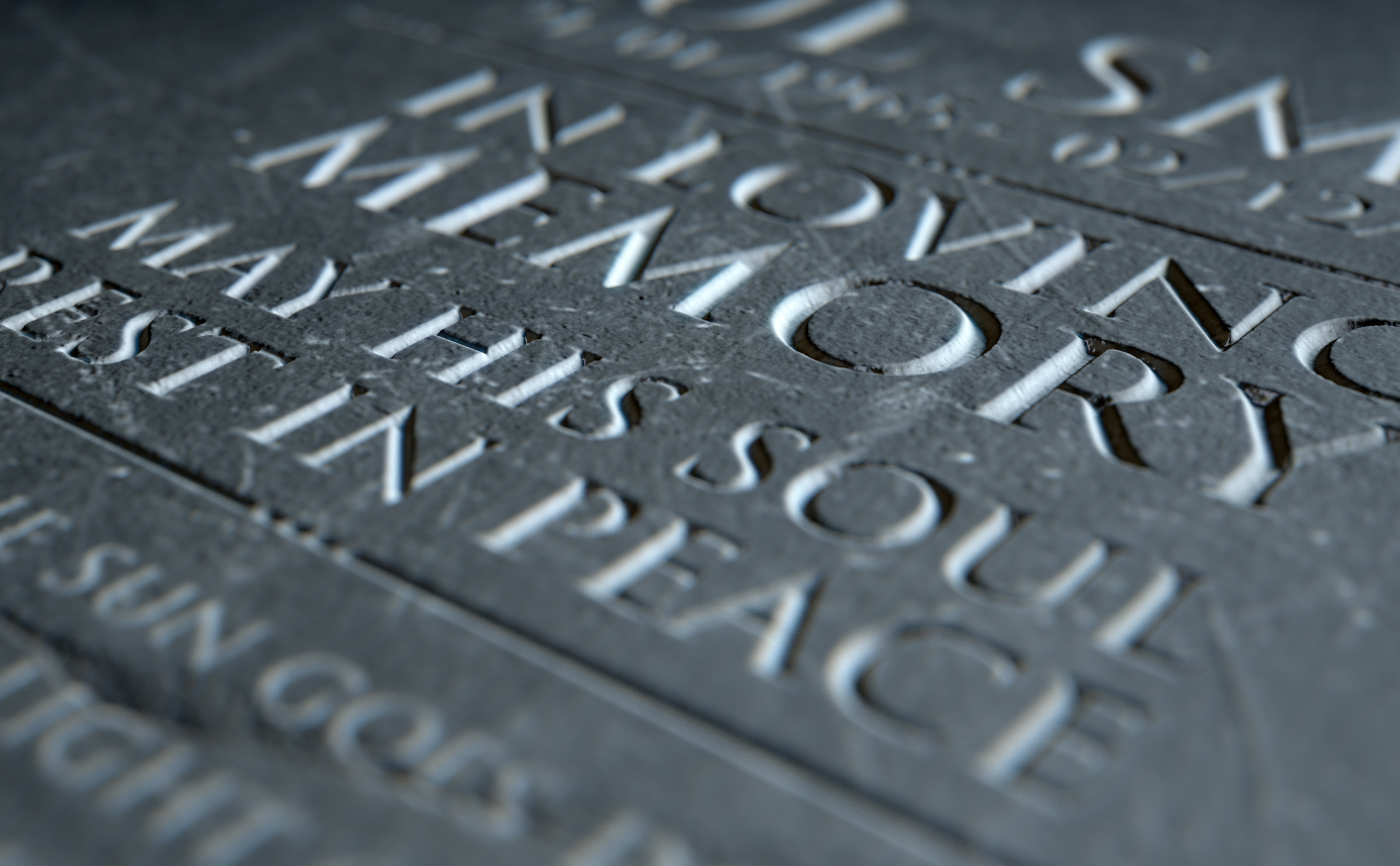
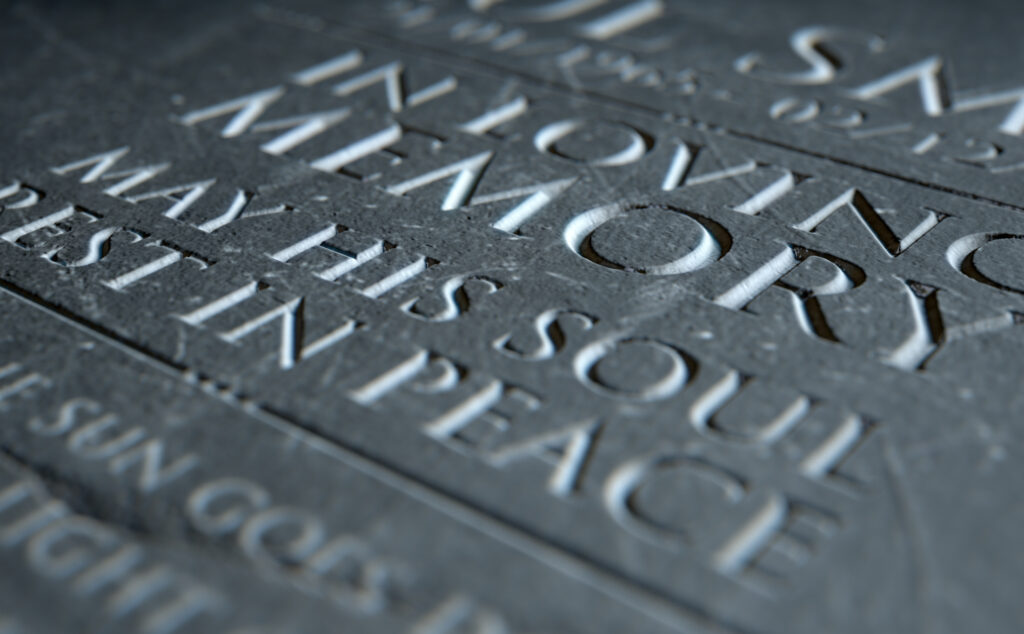
Traditional incised lettering frequently uses angled cuts that meet within the letter. The changing surfaces catch light and shadow, helping the inscription remain visible without relying solely on added colour.
Although the finished result may look simple, achieving consistent letters across an entire inscription requires considerable control.
Differences of only a few millimetres can become noticeable when repeated across several lines.
The mason therefore needs to maintain both technical precision and a sense of visual rhythm.
What types of designs can be hand carved?
Hand carving can be used for a wide range of memorial details.
Traditional motifs remain popular because they translate naturally into stone and have a long association with memorial design.
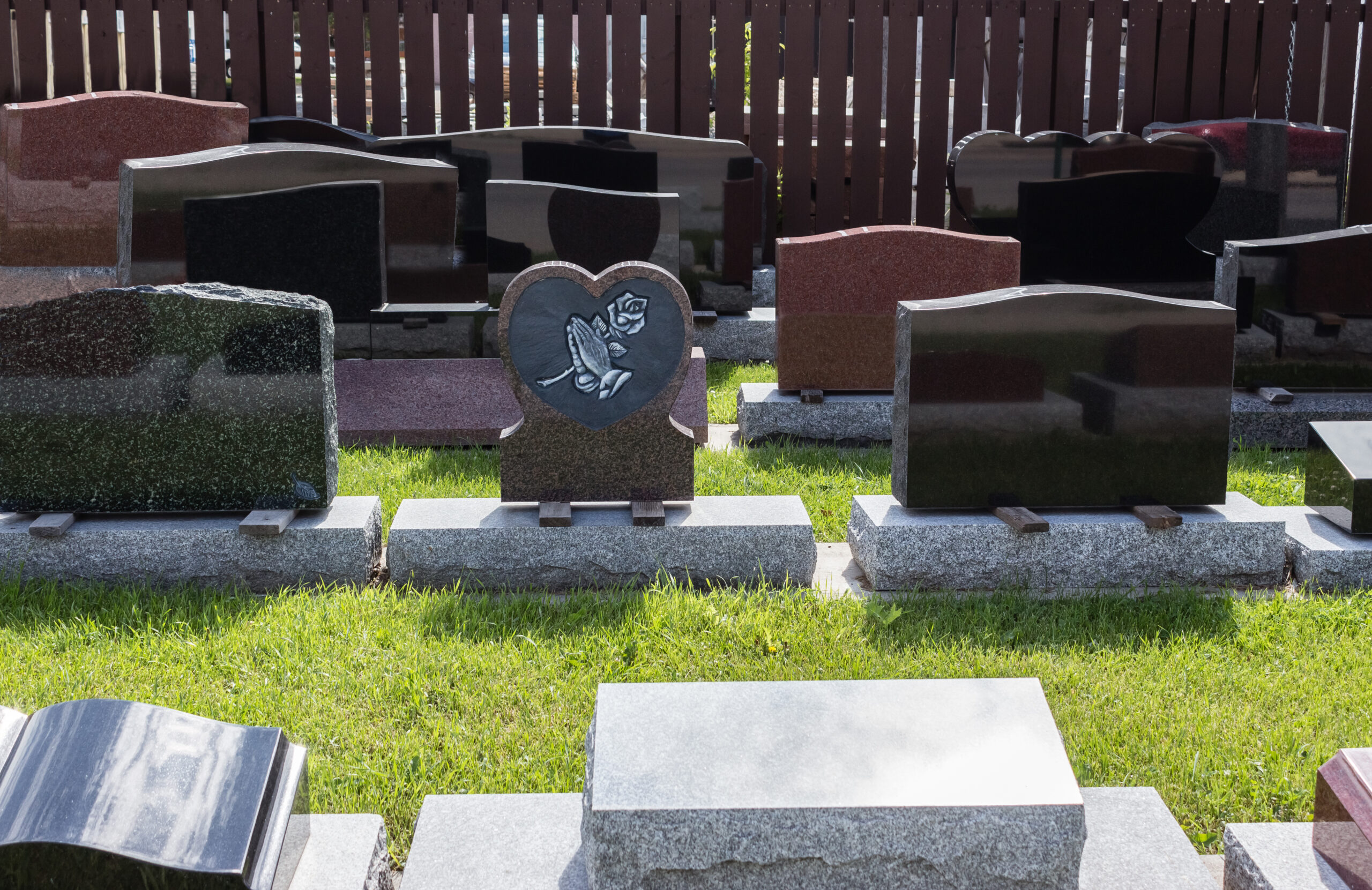
Flowers are a common example. Roses, lilies and other floral motifs can be carved at different levels of detail depending on the stone, available space and desired style.
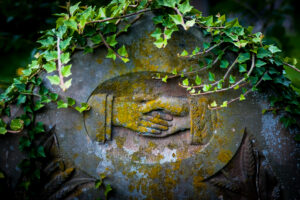
Leaves, vines and natural forms can also work particularly well because subtle differences created by hand contribute to their organic appearance.
Religious symbols such as crosses can be carved directly into a memorial, while borders and decorative flourishes can help frame an inscription.
More personal designs may also be possible where they can be adapted successfully for stone carving.
The important consideration is whether the subject can be represented clearly using shape and depth rather than relying on photographic levels of detail.
For extremely intricate images, portraits or tonal artwork, another engraving method may sometimes be more appropriate.
Why choose hand carving instead of machine engraving?
Neither method is automatically better.
They produce different results and suit different types of memorial.
Computer-controlled engraving can provide extremely consistent detail and is particularly useful where a precise design needs to be reproduced.
Hand carving offers a different aesthetic.
Because the mason works directly with the stone, carved details can have subtle variations in depth and form. These variations are often precisely what families value about traditional craftsmanship.
Hand carving may be particularly appealing when the memorial design is intended to feel classical, traditional or individually crafted.
It can also complement natural-edged or rustic headstones, where a perfectly uniform mechanical appearance might not suit the character of the stone as well.
The choice should therefore be based on the desired appearance rather than an assumption that one technique must replace the other.
How long does a hand carved memorial take to create?
There is no single timescale because the complexity of the work can vary significantly.
A small carved motif requires less work than a memorial containing extensive hand-cut ornamentation and lettering.
The type of stone, depth of carving and number of individual details all influence the process.
Planning also takes time.
A bespoke carving should be designed and positioned carefully before the physical work begins. Rushing the layout stage can create problems that are difficult to correct once stone has been removed.
For families, the important point is that hand carving is skilled work rather than an instant decorative process.
The time invested allows the mason to develop the design progressively and ensure it works as part of the memorial as a whole.
Do hand carved memorials weather differently?
Any decoration carved into natural stone will gradually change as the memorial is exposed to the elements.
Rain, frost, atmospheric deposits and biological growth can all influence the appearance of stone over many years.
Deep, clearly defined carving generally allows a design to remain recognisable even as edges gradually soften.
Very fine shallow detail may naturally become less distinct sooner.
Material choice therefore matters.
A monumental mason can advise whether the intended level of carving is appropriate for the chosen stone and how the appearance is likely to develop over time.
Weathering should not necessarily be regarded as a defect.
On traditional natural stone memorials, gentle ageing can become part of the character of the carving, particularly in older cemetery and churchyard settings.
How do families choose the right carved design?
The most successful designs usually begin with meaning rather than decoration for its own sake.
A family might choose a particular flower because it was associated with the person being remembered. A religious symbol might reflect their faith, while another motif could represent an important interest or aspect of their life.
Keeping the concept focused can often produce a stronger result.
Several unrelated symbols competing for space can make the memorial difficult to read visually.
It is also worth thinking about how the carved design interacts with the inscription.
The words remain an important part of the memorial, so decorative carving should normally complement rather than overpower them.
Discussing these considerations with the monumental mason early in the design process can help turn a broad idea into something practical and balanced.
Frequently Asked Questions
Is every hand carved memorial completely unique?
Hand carving naturally introduces individual craftsmanship, even where a familiar motif such as a rose or cross is used. Bespoke designs can provide further individuality by adapting the carving to a particular memorial, inscription or personal idea.
Can hand carving be added to granite headstones?
The suitability of hand carving depends on the particular stone and the intended design. Granite is a very hard material, so different techniques may be appropriate compared with softer natural stones. A monumental mason can advise which decorative method will achieve the best result.
Can hand carving and CNC engraving be used on the same memorial?
Potentially, yes. Different techniques can be combined where they suit the design. For example, one element may benefit from traditional carving while another is better produced through precise machine engraving. The overall memorial should still feel visually consistent.
Hand carved memorials demonstrate the combination of technical control and artistic judgement involved in traditional monumental masonry.
The process starts long before the physical carving. The stone, memorial shape, inscription and decorative design must all be considered together. The mason then transfers the design, gradually removes material and develops the required form through differences in depth, line and surface.
The result does not need to be elaborate to demonstrate craftsmanship. A carefully carved flower, border, cross or inscription can give a relatively simple headstone a distinctive character.
For families who value traditional workmanship, hand carving can provide a particularly personal way to create a lasting tribute while still allowing the finished memorial to remain respectful of its cemetery or churchyard setting.
Somerville Stone offers hand carved memorials alongside a wider range of bespoke memorial designs and can help families consider suitable materials, lettering and decorative details for an individual tribute.
Phone: 02392 824457
Email: info@somervillestone.co.uk
Find out more: https://somervillestone.com/