
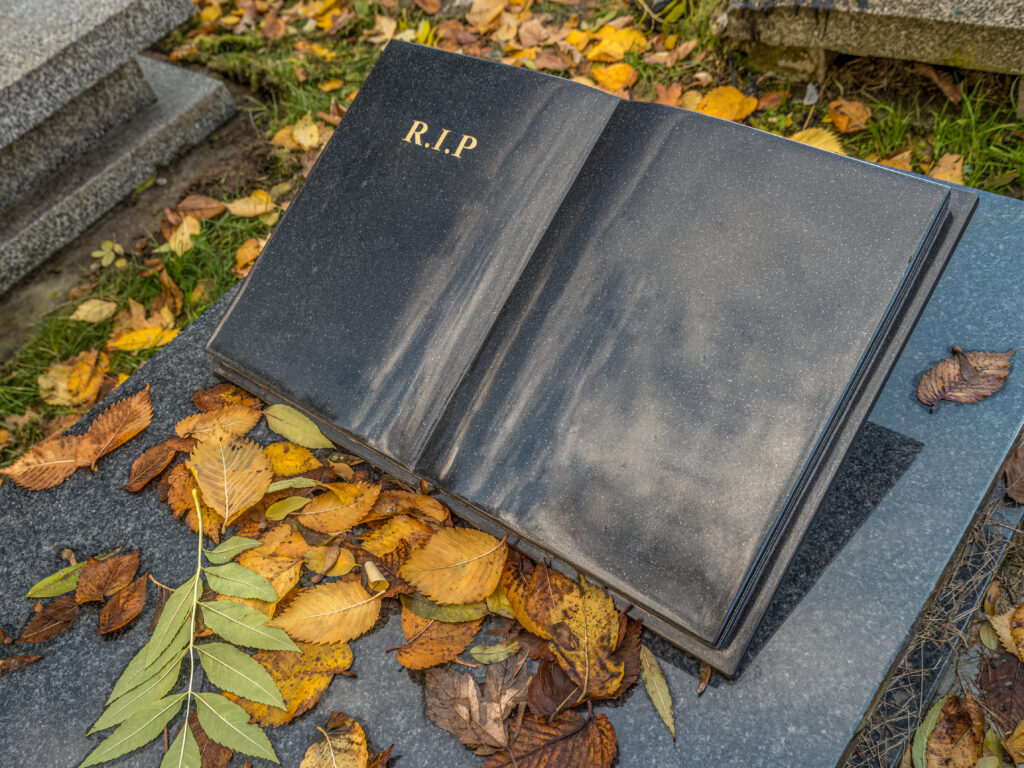
Marble memorial maintenance is an important consideration for families who want to preserve the appearance and condition of a loved one’s headstone. Although marble is a durable natural stone that has been used for memorials for centuries, its surface can gradually change through exposure to rain, atmospheric pollution, biological growth and everyday weathering.
Regular, careful attention can help prevent avoidable staining and keep inscriptions visible. However, marble requires a gentler approach than many people realise. Using inappropriate cleaning products or attempting to remove stubborn marks aggressively can cause permanent damage.
Understanding how marble behaves outdoors, which cleaning methods are appropriate and when professional assistance is needed can help families care for a memorial without compromising its long-term condition.
Why Do Marble Memorials Need Regular Maintenance?
Marble is a natural stone formed when limestone undergoes heat and pressure. Its composition gives it distinctive colouring and veining, making it a popular choice for traditional and decorative memorials.
However, marble is primarily composed of calcium carbonate minerals, which are vulnerable to acidic substances and certain environmental conditions.
Unlike many types of granite, marble can gradually lose its smooth finish as its surface weathers.
Its appearance can also change through the accumulation of dirt, algae and other deposits.
Several factors influence how quickly a marble memorial deteriorates:
- Location: Memorials beneath trees may accumulate leaves, pollen and biological growth more readily.
- Exposure: Headstones exposed to persistent rain, wind and pollution may weather differently from sheltered memorials.
- Stone condition: Older marble with an already weakened surface is more vulnerable to cleaning damage.
- Decorative details: Intricate carvings and inscriptions can collect moisture and dirt.
- Previous maintenance: Unsuitable cleaning products or abrasive methods may have damaged the original finish.
Not every change in appearance indicates that the memorial is deteriorating dangerously. Some weathering is natural and unavoidable.
The purpose of maintenance should be to preserve the stone and its inscriptions rather than attempting to keep it looking permanently new.
What Is the Safest Way to Clean a Marble Headstone?
For a modern marble memorial in sound condition, light surface cleaning can often be carried out using clean water and a soft, lint-free cloth.
However, the stone should always be inspected before cleaning.
If the surface is powdery, flaking, cracked or visibly deteriorating, cleaning should be left to a suitably experienced stone conservator.
Historic England advises that cleaning older monuments should involve the mildest methods possible, with the priority being preservation rather than restoring a new-looking appearance.
A simple approach to light cleaning
For a stable, relatively modern marble headstone with ordinary surface dust or dirt:
- Check the memorial’s condition. Look for cracks, loose material, movement or signs of surface deterioration before touching the stone.
- Remove loose debris carefully. Clear leaves and loose material without scraping the surface or disturbing decorative details.
- Use clean water. Lightly wet a soft, lint-free cloth and gently wipe accessible areas.
- Pay attention to inscriptions. Clean around lettering cautiously, especially where paint or gilding has been applied.
- Avoid repeated scrubbing. If marks remain after gentle cleaning, do not increase the pressure or introduce stronger products.
- Leave the memorial undisturbed. Allow the stone to dry naturally and inspect whether further specialist attention is necessary.
This approach is suitable only for sound marble surfaces where gentle cleaning is appropriate.
A heavily weathered or historic memorial may require a completely different conservation strategy.
Why should you avoid aggressive scrubbing?
Although marble feels solid, its surface can become increasingly fragile as it ages.
Repeated abrasive cleaning may remove small particles of stone. Over time, this can erode carved details and make inscriptions less distinct.
A roughened surface may also collect dirt more readily, creating a cycle in which increasingly frequent cleaning causes further deterioration.
The safest approach is therefore to clean only as much as necessary.
Which Cleaning Products Can Damage Marble Memorials?
One of the most common risks associated with marble headstone care is using ordinary household cleaning products.
Products suitable for kitchen surfaces, bathrooms or outdoor paving are not necessarily appropriate for natural stone memorials.
Acidic cleaners
Vinegar, acidic limescale removers and certain bathroom cleaning products should never be used on marble headstones.
Because marble contains calcium carbonate, acids can react with the stone and dissolve part of its surface.
This may result in dull patches, surface etching or permanent damage to polished finishes.
Even relatively mild acidic solutions can cause problems.
Bleach and strong detergents
Household bleach, strong detergents and general-purpose outdoor cleaning chemicals should also be avoided.
Some products can damage the stone or leave residues that contribute to staining and deterioration.
Marble can absorb moisture and certain contaminants through its pore structure, meaning chemical treatments may have consequences that are not immediately visible.
Pressure washers and abrasive equipment
High-pressure washing is particularly unsuitable for ageing marble memorials.
The force of the water can loosen weakened surface material, damage lettering and accelerate deterioration.
Wire brushes, abrasive pads, sandpaper and mechanical cleaning tools should also be avoided.
The safest principle is straightforward: if gentle cleaning does not remove the problem, seek specialist advice rather than using a more aggressive method.
How Does British Weather Affect Marble Headstones?
Marble memorials are exposed to changing environmental conditions throughout the year.
In the UK, frequent rainfall, seasonal temperature changes and biological growth all influence the appearance and long-term condition of outdoor stone.
Rain and atmospheric pollution
Rainwater can carry pollutants onto a memorial’s surface.
Marble is particularly sensitive to certain atmospheric pollutants, which can contribute to chemical deterioration and surface discolouration.
In polluted environments, deposits may eventually form dark crusts on parts of the stone.
These crusts should not automatically be scraped away. Some are closely associated with the deteriorated surface beneath them, and removing them incorrectly may remove original stone.
Frost and temperature changes
Water can enter existing cracks and pores within natural stone.
When temperatures fall below freezing, moisture may expand and contribute to deterioration, particularly where the memorial is already damaged.
This does not mean that every marble headstone will develop frost damage.
The risk depends on the condition of the material, the presence of existing defects and the amount of moisture entering vulnerable areas.
If a memorial develops visible cracks, attempting to fill them using ordinary household sealants is not advisable.
An experienced memorial specialist should assess the cause before repairs are undertaken.
Moss, algae and lichen
Green, dark or patchy deposits on marble memorials may be caused by algae, moss or lichen.
These organisms are more likely to develop in damp or shaded conditions.
Although biological growth can affect the memorial’s appearance, its removal is not always necessary.
Some established growth is difficult to remove without damaging the stone beneath it.
For older memorials, professional assessment can establish whether biological growth is contributing to deterioration or is primarily a cosmetic concern.
How Often Should Marble Memorials Be Cleaned?
There is no universal cleaning schedule suitable for every marble headstone.
A modern memorial in good condition may benefit from occasional gentle attention, while an older or fragile memorial may be better left undisturbed between professional inspections.
The amount of cleaning required depends on the memorial’s location, surface condition and exposure to dirt.
A useful approach is to inspect the memorial periodically rather than cleaning it automatically every time it is visited.
During an inspection, look for:
- Accumulated leaves, flower debris or soil.
- New staining around vases or decorative fittings.
- Changes in the visibility of inscriptions.
- Cracks, chips or loose sections.
- Movement or instability.
- Increasingly rough or powdery areas.
Light debris can often be removed without any washing.
If the memorial appears clean and stable, there may be little reason to intervene.
How Can Families Prevent Staining on Marble Headstones?
Preventing stains is generally easier and safer than attempting to remove them once they have penetrated the stone.
Take care with flowers and decorations
Fresh flowers are a meaningful way of remembering someone, but decaying petals, leaves and pollen can leave marks on natural stone.
Removing spent flowers and organic debris promptly can reduce the likelihood of staining.
Metal containers and florist wire also deserve attention.
Corrosion from unsuitable metal objects can leave rust-coloured marks that are difficult to remove from marble.
Using appropriate memorial accessories and checking their condition periodically can help prevent these problems.
Avoid placing unsuitable objects directly on the stone
Candles, decorative ornaments and containers may leave residues or trap moisture against the memorial.
Some items can also scratch polished surfaces if they are moved across the stone.
Before adding accessories, families should check the cemetery or churchyard’s regulations.
Be cautious about applying protective sealants
It may seem sensible to apply a waterproof coating to protect marble from rain.
However, not every stone sealant is suitable for outdoor memorials.
An inappropriate treatment may alter the appearance of the marble, trap moisture or make future conservation more difficult.
Protective products should only be considered following suitable professional advice.
When Does a Marble Memorial Need Professional Restoration?
There is an important difference between cleaning ordinary dirt and treating a deteriorating memorial.
Surface dust may require little more than gentle attention, but structural problems and material deterioration need specialist assessment.
Professional help is particularly appropriate when:
- The marble has developed cracks or fractures.
- The headstone is leaning or becoming unstable.
- Lettering has become difficult to read.
- The stone surface is visibly flaking or powdery.
- Deep staining cannot be removed through gentle methods.
- Previous cleaning has damaged the finish.
- Decorative carvings are deteriorating.
What is marble sugaring?
One form of deterioration associated with marble is known as sugaring.
This occurs when the stone’s crystalline grains begin to lose cohesion, leaving a granular or powdery surface.
The condition can make marble particularly vulnerable to further material loss.
A sugaring memorial should not be scrubbed, polished or pressure washed.
Professional conservation may be necessary to determine whether the stone can be stabilised and how further deterioration might be managed.
Can faded memorial lettering be restored?
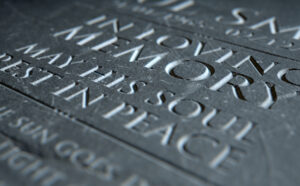
In some circumstances, memorial inscriptions can be made more legible through specialist cleaning, relettering or other appropriate restoration work.
The correct method depends on how the original lettering was produced and the condition of the surrounding stone.
Painted or gilded lettering requires different consideration from deeply carved inscriptions.
Somerville Stone provides memorial cleaning, restoration, additional inscriptions and lettering work. Its existing memorial services include helping families improve the appearance and legibility of older headstones.
However, restoring lettering should never come at the expense of damaging a fragile marble surface.
Should Older Marble Memorials Be Cleaned Differently?
Older memorials require particular care because historic stonework may have already undergone substantial weathering.
A Victorian marble headstone, for example, may have a very different surface condition from a recently installed memorial.
Its inscriptions, carvings and original finish may also have historical significance.
Attempting to make an old memorial look new could remove evidence of its age and craftsmanship.
Historic England’s guidance on caring for historic cemetery monuments emphasises careful conservation and minimal intervention.
For historic memorials, cleaning should usually be undertaken only where there is a genuine conservation need or where harmful deposits require attention.
Families should also establish whether the burial ground has restrictions on restoration work before arranging treatment.
Frequently Asked Questions
Can you use washing-up liquid to clean a marble headstone?
Clean water is the safest starting point for light cleaning. Although certain specialist cleaning solutions may be suitable for sound marble, ordinary washing-up liquid is not automatically appropriate. Product residues and unsuitable ingredients can create problems, so seek professional advice before using detergents.
Why has a white marble headstone turned grey?
Grey discolouration may result from atmospheric pollution, accumulated dirt, biological growth or changes to the stone’s surface. The underlying cause should be identified before attempting treatment, particularly where the marble is old or deteriorating.
Can marble headstones be polished again?
Some sound marble surfaces can be professionally refinished, but polishing is not suitable for every memorial. It removes or alters surface material and may damage historic features. The stone’s condition and significance should be assessed before any refinishing work.
Is marble harder to maintain than granite?
Marble generally requires more careful maintenance because its calcium carbonate composition makes it vulnerable to acids and certain environmental conditions. Granite is typically harder and more resistant to these effects, although it also requires appropriate care.
Can a marble memorial be repaired if it cracks?
Some cracks and fractures can be repaired by an experienced specialist. Whether repair is appropriate depends on the severity of the damage, the memorial’s structural condition and the location of the fracture. Unstable memorials should be reported to the burial authority and assessed professionally.
Preserving a Marble Memorial for the Future
Marble memorials can remain meaningful tributes for generations, but their long-term preservation depends on appropriate care.
Gentle cleaning, prompt removal of staining materials and periodic inspections can help families identify problems before they become more serious.
Equally important is recognising when cleaning should be avoided. Natural weathering does not always require treatment, and an older memorial’s appearance should be respected rather than aggressively altered.
For families concerned about staining, deteriorating inscriptions or the condition of an existing marble headstone, professional advice can help establish the safest next step.
Somerville Stone offers memorial headstone cleaning and restoration services in Portsmouth and surrounding areas, alongside bespoke marble and natural stone memorials. The team can advise on appropriate maintenance and potential restoration work.
Phone: 023 9282 4457
Email: info@somervillestone.co.uk
Find out more: https://somervillestone.com