
Choosing between a hand carved memorial and machine engraving is not simply a decision about how an image or inscription is applied to stone. It can affect the appearance, character, level of detail and individuality of the finished tribute.
A hand carved memorial is shaped or decorated using traditional masonry tools and the judgement of an experienced craftsperson. Machine engraving, by comparison, uses computer-controlled equipment to reproduce lettering, patterns or images with a high degree of consistency.
Both methods can produce attractive and lasting results. Machine engraving is particularly useful for precise lettering, detailed images and repeated ornamental patterns. Hand carving is often chosen when a family wants depth, texture and the visible qualities of traditional craftsmanship.
The right approach depends on the stone, the proposed design, the burial ground regulations and the person being commemorated. Understanding how the two methods differ can help families choose a memorial that feels genuinely appropriate rather than selecting a technique based on appearance alone.
What is a hand carved memorial?
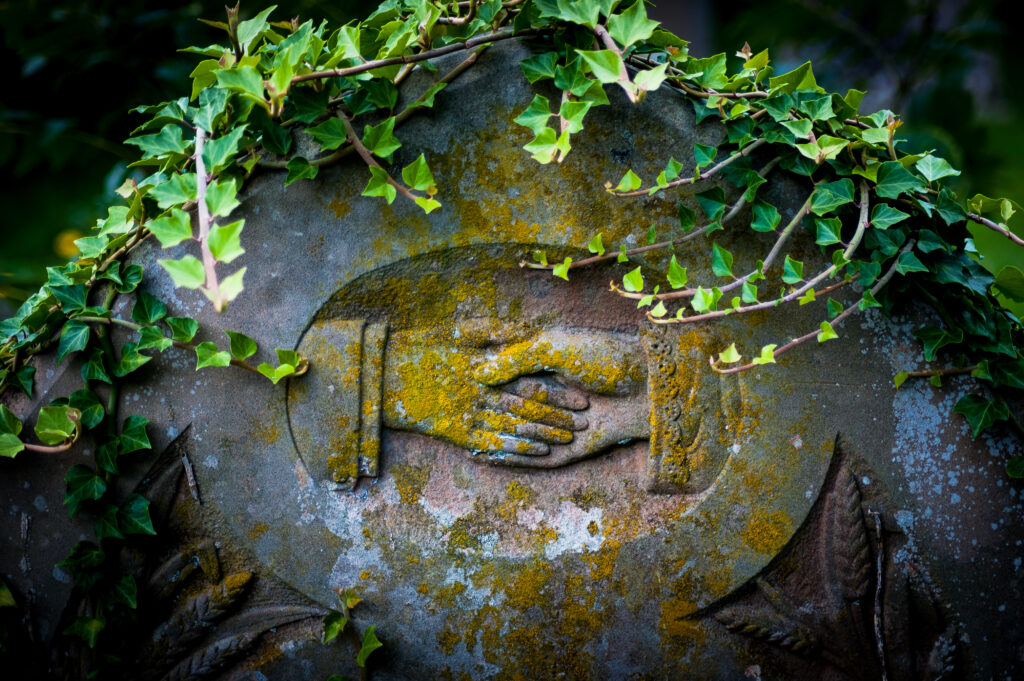
A hand carved memorial includes lettering, symbols or decorative features created directly by a skilled stone carver. The craftsperson uses chisels, mallets and other specialist tools to remove small amounts of stone and gradually form the required design.
The process requires careful planning. Before carving begins, the design must be accurately positioned and transferred to the stone. The carver then considers the depth, angle and direction of each cut.
Unlike a machine that follows a programmed path, a hand carver continually responds to the stone. Natural materials can contain variations in grain, colour, hardness and veining. The craftsperson may make subtle adjustments as the work progresses to preserve the design and work with the individual piece of stone.
Hand carving can be used for:
- Inscriptions and individual letterforms
- Flowers, leaves and natural motifs
- Religious and cultural symbols
- Borders and decorative panels
- Sculpted figures and three-dimensional details
- Bespoke images connected with a person’s life
The result may include slight variations that reveal the human process behind the work. These are not necessarily imperfections. They can give the memorial warmth and individuality.
How is machine engraving different?
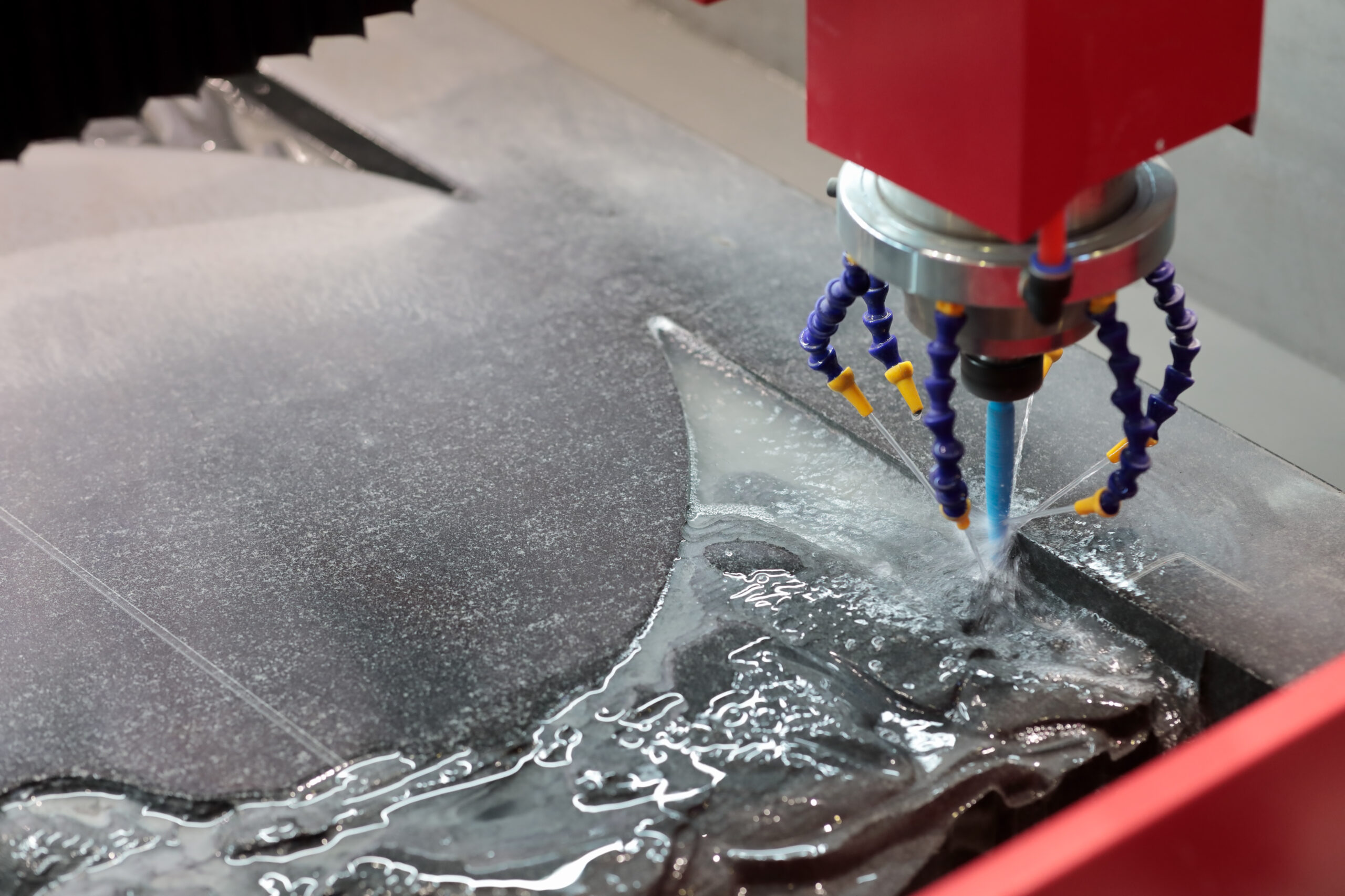
Machine engraving uses computer-controlled equipment to cut, etch or blast a design into the surface of a memorial. The chosen text or image is prepared digitally before the machine reproduces it on the stone.
Depending on the equipment and material, machine engraving may involve sandblasting, routing, laser etching or CNC-controlled cutting.
This approach can achieve a high level of precision and repeatability. It is well suited to clean typefaces, complex layouts and photographic images, particularly when applied to polished dark granite.
Machine engraving can also be efficient when a design contains repeated elements or requires very consistent line widths. Modern technology allows intricate artwork to be reproduced with impressive accuracy.
However, machine engraving and hand carving create different visual effects. Engraving often sits within or close to the surface of the stone. Traditional carving can create greater depth, stronger shadows and more pronounced three-dimensional form.
Neither method is automatically superior. They serve different purposes and can sometimes be used together on the same memorial.
Why does hand carving have a distinctive appearance?
The appearance of hand carving comes from the way light interacts with the cut stone. A carved letter or ornament contains angled surfaces, recesses and raised sections. These features create natural highlights and shadows as daylight changes.
This can give the design greater visual depth than a flat engraved image. A carved rose, for example, may have individually shaped petals with recessed areas beneath them. A machine-etched rose might reproduce more fine lines, but it will usually have less physical relief.
Hand carving can therefore make a memorial feel more sculptural. The design becomes part of the form of the stone rather than simply an image applied to its face.
The character of the carving may also complement traditional materials such as marble, limestone and sandstone. These stones have long been shaped by hand and can respond well to flowing ornament, raised lettering and deeply cut details.
A hand carved design can look particularly effective in a churchyard or historic cemetery where traditional masonry already forms part of the surrounding landscape.
Does hand carving make a memorial more personal?
Personalisation depends on the design rather than the tool alone. A machine-engraved memorial can be highly personal if it includes a meaningful photograph, inscription or image. Equally, a hand carved memorial can feel generic if it relies on a standard ornament with no connection to the person being remembered.
The main advantage of hand carving is the freedom it offers to develop an individual interpretation.
A family might request a carving based on:
- A favourite flower or tree
- A bird or animal with personal significance
- A religious or cultural emblem
- A landscape connected with an important place
- An object representing a profession or interest
- A completely original decorative pattern
The stone carver can adapt these ideas to the size, shape and material of the memorial. Rather than reproducing an existing image exactly, the carver may simplify certain elements, emphasise others and create a composition that works naturally in stone.
This collaborative process can make the memorial feel especially personal. Families are not merely selecting an ornament from a catalogue. They are helping to shape a design around the person’s identity, values and memories.
Which memorial designs are best suited to hand carving?
Hand carving can be used across many memorial styles, but it is particularly effective when depth, texture or organic form is important.
Floral ornamentation
Flowers are among the most common features on memorials because they can express love, remembrance, faith or aspects of an individual’s personality.
Roses, lilies, poppies, daffodils and other flowers can be carved with different levels of relief. Leaves and stems may be arranged around an inscription or used to soften the edges of a formal headstone.
The carver can adjust the design to suit the available space rather than forcing it into a predetermined template.
Natural and rustic memorials
Rustic headstones often retain irregular edges, visible textures and less formal shapes. Hand carving can complement these qualities because the design can follow the natural outline of the stone.
A machine-generated layout may look too rigid on an uneven surface, while hand lettering and ornament can be positioned in response to the stone’s individual features.
Religious and spiritual symbols
Crosses, angels, praying hands and other religious motifs are often suited to traditional carving. The depth of the work can give these features a strong presence without requiring additional colour.
Multi-faith and non-religious symbols can also be carved, provided the design is respectful and permitted by the burial authority.
Bespoke figurative details
Some families choose a carved scene, object or figure connected with the person’s life. These designs require particular skill because the carver must translate a detailed idea into a form that will remain legible and durable outdoors.
Not every photograph or illustration can be reproduced effectively as a carving. A good memorial designer will explain which features should be simplified and how the image can be adapted to the stone.
Traditional lettering
Hand-cut lettering can give an inscription distinctive rhythm and character. Each letter is individually spaced and formed, allowing the mason to respond to the wording and available surface.
Roman, italic and other traditional letter styles can be carved with varying depths and finishes. The inscription may be left natural or highlighted with paint, enamel or gold leaf where appropriate.
Is hand carving suitable for every headstone material?
Different stones respond to carving in different ways. The quality, grain and hardness of the material influence the type and level of detail that can be achieved.
Marble has historically been popular for sculptural and decorative work because it can hold flowing shapes and fine detail. Limestone can also be carved effectively and may suit traditional churchyard memorials.
Sandstone offers a warm, natural appearance, although its grain can affect how sharply small details are defined. Granite is considerably harder and requires different tools and techniques. It can be hand carved, but the work is generally more demanding and time-consuming.
A design that works well in fine marble may not be suitable for a coarse-grained stone. Delicate lines, narrow projections and very shallow features may weather quickly or become difficult to read.
The memorial mason should therefore consider the design and material together. Selecting the stone first and adding an unsuitable carving later can lead to compromises in appearance or durability.
How long does it take to create a hand carved memorial?
Hand carving usually takes longer than producing a standard machine-engraved design. The exact timescale depends on the complexity of the work, the size of the memorial and the availability of the chosen stone.
A simple carved emblem may require relatively little additional time. A full relief design, sculpted figure or extensive hand-cut inscription can involve many hours or days of skilled work.
The wider memorial process may also include:
- Preparing and approving the design
- Obtaining cemetery or churchyard permission
- Sourcing and cutting the stone
- Completing the lettering and ornamentation
- Preparing foundations and fixings
- Arranging installation after ground conditions allow
Families should not assume that a memorial can be designed, carved and installed immediately. Burial grounds may require a settlement period after interment, and formal approval is usually needed before work begins.
Where the carving is highly personal, allowing time for design development is especially important. Rushing the process can result in details being overlooked or a composition that does not suit the stone.
Is a hand carved memorial more expensive?
Hand carving generally costs more than standard machine engraving because it requires specialist skill and additional labour. The price will depend on the amount of carving, the complexity of the design and the chosen material.
A small hand-cut flower or simple symbol may add a modest amount to the overall cost. An original sculpted scene or large area of relief carving will require a greater investment.
The cost may also reflect the design stage. Bespoke work can involve sketches, revisions and discussions before carving starts. This preparation helps ensure the finished memorial is visually balanced and meaningful.
Families should request a detailed quotation that explains what is included. The price may cover the memorial stone, design work, carving, inscription, cemetery fees, foundation, approved fixings and installation.
Comparing quotations solely by the final total can be misleading. One estimate may include bespoke carving and all installation work, while another may cover only a standard memorial with additional costs charged separately.
Can hand carving and machine engraving be combined?
Yes. Many modern memorials combine traditional and contemporary techniques.
A headstone might feature hand carved flowers alongside a machine-cut inscription. Another may use traditional raised ornament with a laser-etched portrait. Machine equipment can also prepare certain areas before details are refined by hand.
Combining methods can provide the benefits of both. Machine engraving offers consistency and can reproduce complex surface imagery, while hand carving adds relief, texture and individual character.
The techniques should be planned as part of a single design. Adding unrelated elements without considering the whole memorial can make the final result appear crowded or inconsistent.
An experienced memorial mason can advise which details will work best in relief, which are better engraved and how the two approaches can be balanced.
Does hand carving last longer than machine engraving?
Longevity depends on the material, depth of the work, exposure and quality of craftsmanship.
Deep hand carving can remain visible for many years because the design is physically cut into the stone. Strongly formed letters and ornaments may continue to cast shadows even as the surface weathers.
However, very fine carved details can soften over time, particularly in porous or relatively soft stone. Shallow machine engraving may also become less distinct if the surface erodes or the highlighting fades.
Laser-etched images on polished granite can retain fine visual detail, but they may not have the same depth as traditional carving. Painted or gilded areas can require renewal regardless of whether the original lettering was cut by hand or machine.
The best way to support long-term durability is to choose a suitable stone, use an appropriate depth and design, and ensure the work is completed by a qualified craftsperson.
How should families choose between carving and engraving?
The decision should begin with the intended tribute rather than the production method.
Families can consider several practical questions:
- Does the memorial need to reproduce a photograph or highly detailed image?
- Would a sculpted or three-dimensional design better reflect the idea?
- Is a traditional, rustic or contemporary appearance preferred?
- Which stone has been selected, and what techniques suit it?
- What level of maintenance is acceptable?
- Are there cemetery or churchyard restrictions?
- What budget and timescale are available?
Machine engraving may be the stronger option for a photographic portrait, precise logo or complex line illustration. Hand carving may be preferable for raised flowers, traditional lettering, deeply cut symbols and original sculptural work.
The family should also look at physical examples where possible. Photographs are useful, but they do not always show the depth, texture and changing shadows of carved stone.
Why is the skill of the memorial mason important?
Hand carving requires more than technical ability. The craftsperson must understand design, proportion, letter spacing, stone structure and outdoor weathering.
A memorial can contain beautifully carved individual features but still feel unbalanced if the inscription, ornament and blank space do not work together.
The mason should also recognise the limitations of the chosen stone. Natural veins, fossils, grains or minor variations may influence the position of a delicate element. Working against these characteristics can increase the risk of breakage or produce an unsatisfactory finish.
Installation is equally important. A hand carved memorial must be supported by an appropriate foundation and fixing system. Skilled carving cannot compensate for inadequate structural work.
Before ordering, families should ask to see examples of previous memorials and discuss who will complete the carving. They should also receive a clear drawing or design proposal before the work begins.
Frequently Asked Questions
Can any picture be turned into a hand carved memorial design?
Many pictures can provide inspiration, but they may need to be simplified or adapted. Very small details, subtle shading and complicated backgrounds may not translate effectively into carved stone. The carver will normally identify the strongest shapes and create a design suited to the memorial.
Is hand-cut lettering harder to read?
Well-designed hand-cut lettering should be clear and legible. Readability depends on the typeface, spacing, depth, stone colour and finish. Decorative scripts should be used carefully, particularly for long inscriptions.
Can an existing headstone be hand carved?
It may be possible to add an inscription or ornament to an existing memorial, but the stone must first be assessed. Available space, surface condition, stability and burial ground permission will all influence what can be done.
Does hand carving require more maintenance?
The carving itself does not necessarily require more maintenance, although deep recesses may collect dirt or biological growth over time. Maintenance needs are influenced more by the stone type, location and finish than by the production method alone.
Are hand carved memorials allowed in churchyards?
Many churchyards permit traditional hand carved memorials, but each diocese and parish can apply specific rules. The material, dimensions, inscription and ornament may all require approval before work begins.
Creating a fitting and individual tribute
A hand carved memorial can offer individuality, physical depth and a clear connection with traditional stone craftsmanship. It allows families to move beyond a standard surface design and create ornamentation that responds to the stone and the person being remembered.
Machine engraving remains a valuable option, especially for precise lettering, photographic images and highly detailed surface work. The choice is not between a good method and a poor one. It is about selecting the technique that best serves the design.
Families who value flowing carved forms, traditional lettering, tactile detail or completely bespoke ornament may find that hand carving provides the character they are seeking. Those who want a portrait, intricate line image or highly consistent finish may prefer machine engraving or a combination of methods.
By discussing the design, stone and burial ground requirements with an experienced memorial mason, families can create a tribute that is both visually appropriate and made to endure.
For guidance on hand carved memorials, personalised designs and suitable natural stone, contact Somerville Stone on 02392 824457, email info@somervillestone.co.uk, or visit Somerville Stone. The team can help you explore respectful memorial options and develop a design that reflects the individual being commemorated.